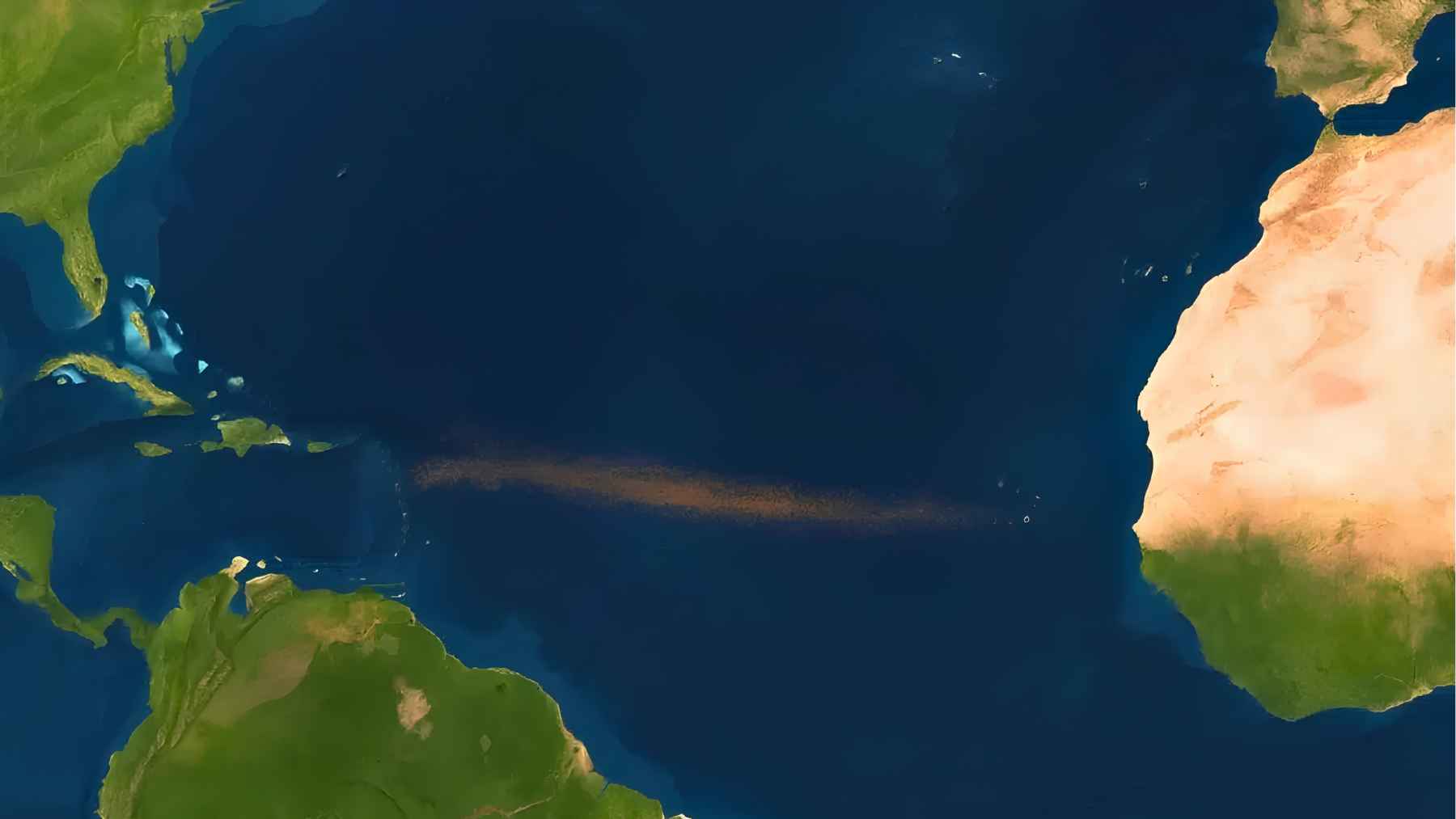
Seen from space, it looks almost unreal. A vast brown ribbon of floating algae now stretches across much of the Atlantic, linking waters off West Africa with the Caribbean, Florida, and the Gulf of Mexico.
In May 2025, satellite monitoring estimated the bloom at about 41 million tons, setting a new record for sargassum in the Atlantic basin. The algae itself is natural, and even useful in the open ocean, but scientists warn that its growing scale is turning a floating habitat into a coastal headache.
A belt that did not use to exist
For centuries, sargassum was mostly associated with the Sargasso Sea, a warm, open-water region of the North Atlantic. That picture changed in 2011, when scientists began tracking a recurring mass now known as the Great Atlantic Sargassum Belt.
Researchers describe this belt as stretching about 5,500 miles across the Atlantic in some years. It has appeared nearly every year since 2011 (except 2013), and the May 2025 record did not include the roughly 8 million tons historically estimated in the Sargasso Sea itself.
That is the strange part. What once looked like a scattered ocean plant has become a repeating basin-wide event, large enough to be watched from satellites and felt in daily life on beaches.
Sargassum is not the enemy at sea
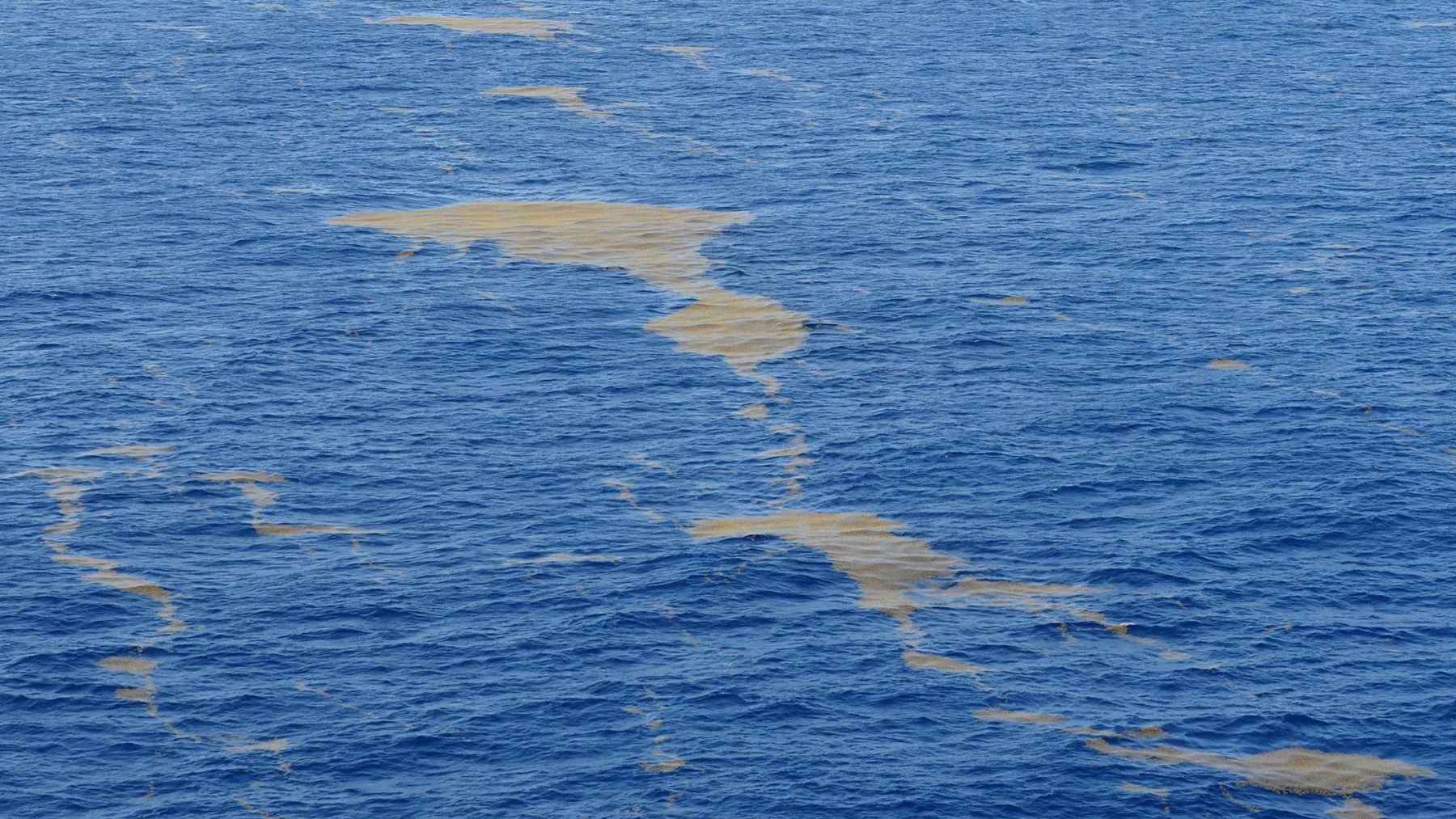
Sargassum is not just ocean clutter. In the open water, these floating mats provide food, shelter, and breeding grounds for fish, crabs, shrimp, sea turtles, and seabirds.
The National Oceanic and Atmospheric Administration (NOAA) designates some sargassum areas as Essential Fish Habitat because species such as mahi mahi, amberjack, and gray triggerfish use these floating rafts as part of their life cycle. Think of it as a drifting nursery, moving with the sun, wind, and current.
The problem begins when too much of it arrives at once. Offshore, it supports life. Onshore, in thick piles under summer heat, it can quickly become something very different.
What is feeding the bloom
A review led by researchers at Florida Atlantic University’s Harbor Branch Oceanographic Institute looked at four decades of satellite images, field observations, and chemical data. The findings point to a mix of natural ocean movement and nutrient enrichment, not one simple cause.
The study found that nitrogen in sargassum tissue has increased by 55% over the past four decades, while the nitrogen-to-phosphorus ratio has risen by 50%. The authors connect that shift to sources such as agricultural runoff, wastewater discharge, atmospheric deposition, coastal upwelling, and river inputs.
Brian Lapointe, lead author and research professor at FAU Harbor Branch, put it plainly, “the expansion of sargassum isn’t just an ecological curiosity,” he said, because the impacts now reach coastal communities.
Winds, currents, and a moving target
Other researchers have been studying what pushed sargassum into the tropical Atlantic in the first place. A University of South Florida team linked the shift to wind, ocean currents, nutrients, and a strong negative phase of the North Atlantic Oscillation around 2009 and 2010.
That does not mean scientists have pinned everything on climate change. Julien Jouanno, lead author of a related Nature Communications study, cautioned that researchers cannot yet say with certainty whether the abnormal event was a direct result of climate change.
In practical terms, the belt is moving through a complex ocean system. Winds push it, currents carry it, nutrients feed it, and warm sunlight keeps the growth engine running.
What happens when it reaches shore
Anyone who has walked past rotting sargassum knows the smell. It can give off hydrogen sulfide, the rotten-egg gas that can irritate the eyes, nose, throat, and lungs, especially for people with asthma or other respiratory conditions.
Sargassum itself is not usually toxic, and small amounts on beaches are often more annoying than dangerous. But large, decomposing piles can release hydrogen sulfide and ammonia, attract insects, and grow bacteria, which is why beach crews often try to remove it before it breaks down.
The water suffers, too. EPA says major sargassum inundation events can block light from reaching seagrasses and corals, reduce oxygen, alter pH, and stress or kill fish, corals, shrimp, crabs, and other marine life.
Cleanup has no easy fix
At first glance, the answer seems simple: scoop it up, haul it away. Done.
Beaches are living systems, however, and heavy machinery can remove sand, damage habitat, and worsen erosion. EPA guidance notes that communities may use barriers, nets, or beach collection, but cleanup has to avoid chemicals, limit sand removal, and protect trapped marine life such as baby turtles.
Disposal is another problem. Decomposing sargassum can produce gases, and its leachates may contain metals, pesticides, or other pollutants, so landfilling it is not a perfect solution, either. That is why some communities are exploring reuse, but experts warn that safety testing matters.
What scientists are watching now
The next step is not to panic. It is better forecasting, faster response, and a clearer understanding of what is feeding these blooms.
NOAA and its partners now track sargassum with satellite-based tools and risk maps, helping coastal communities prepare before mats wash ashore. For hotels, fishermen, beach workers, and families planning a day by the water, that kind of warning can make a real difference.
At the end of the day, the Great Atlantic Sargassum Belt is a signal. Not every brown patch is a disaster, but a record-breaking belt across the ocean suggests that land, sea, climate, and pollution are more connected than we like to imagine.
The study was published in “Harmful Algae” through ScienceDirect.