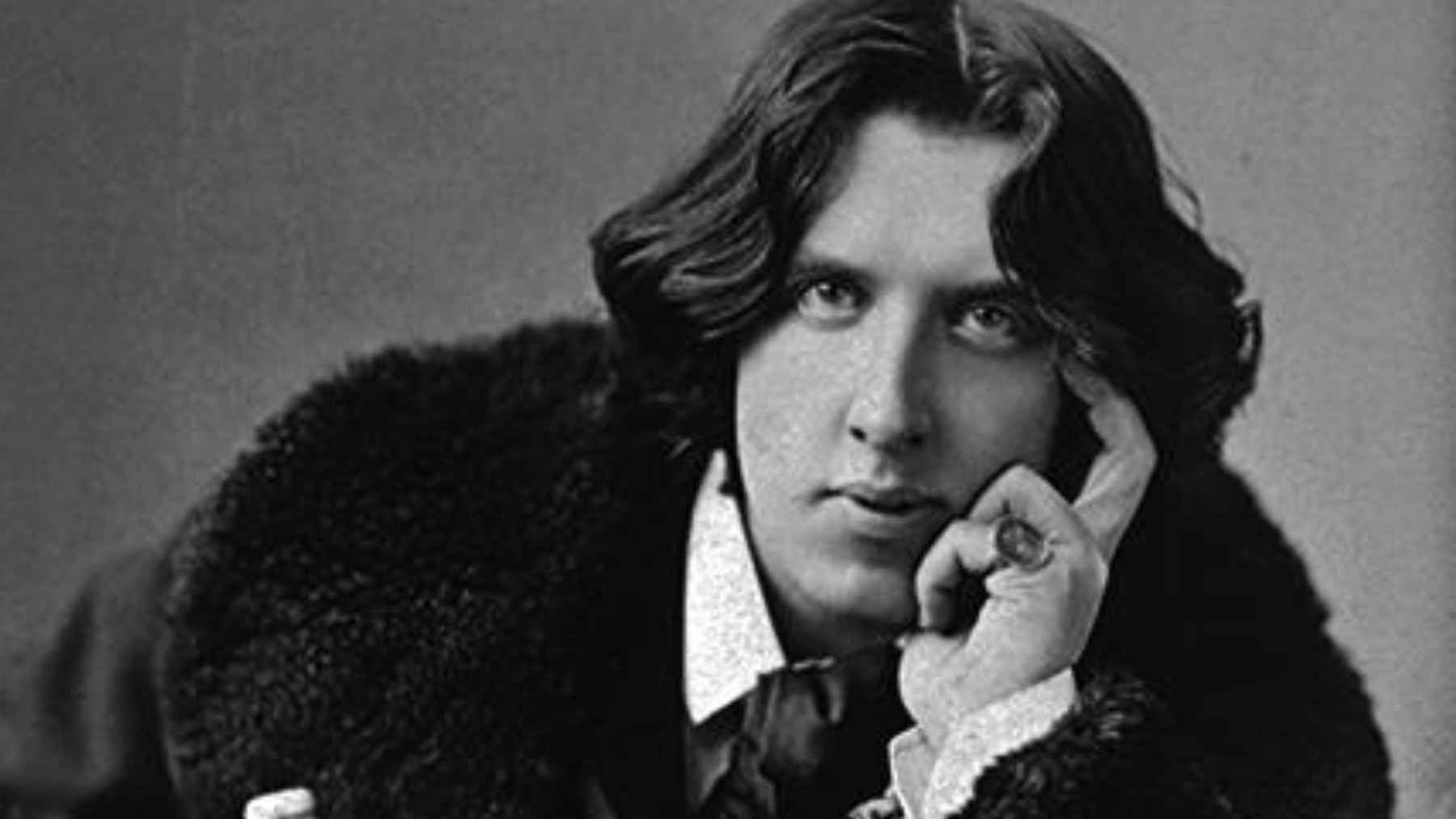
Oscar Wilde had a gift for making one sentence do the work of a mirror. His famous line, “When a man has once loved a woman, he will do anything for her, except continue to love her,” is often read as a joke about romance, but it is also a sharp little warning about how feelings can shift after the first bright rush of attraction.
It lands because the subject is ordinary. People can still care, still remember, still answer the phone, and yet feel the old romantic charge fade. That is the uncomfortable part. Love is not always gone when romance changes, and that is where Wilde’s sentence begins to bite.
The sting behind the joke
The line appears in Wilde’s play “An Ideal Husband,” where Mrs. Cheveley says it to Lord Goring during a tense exchange about love, leverage, and old desire. His reply is just as cold as the quote itself, “Yes, except that.”
In practical terms, Wilde is separating several things we often bundle together. Affection, loyalty, duty, attraction, and romance can overlap, but they are not always the same thing. Anyone who has watched a relationship turn quieter over time knows the difference.
Wilde’s life behind the wit
Oscar Fingal O’Flahertie Wills Wilde was born in Dublin on October 16, 1854, and died in Paris on November 30, 1900. Britannica describes him as an Irish wit, poet, and dramatist whose lasting fame rests on works such as “The Picture of Dorian Gray,” “Lady Windermere’s Fan,” and “The Importance of Being Earnest.”
He came from a remarkable family. His father, William Wilde, was a leading ear and eye surgeon in Ireland, while his mother, Jane Francesca Wilde, wrote poetry under the name “Speranza.”
Wilde later studied at Trinity College Dublin and Magdalen College, Oxford, where writers such as John Ruskin and Walter Pater helped shape his ideas about beauty and art.
Why it still feels modern
What makes the quote feel current is not just its humor. It is the way it questions the tidy story people like to tell about love. We often talk as if real love should keep the same shape forever, but daily life is rarely that neat.
Modern relationship research does not prove Wilde “right,” of course. Still, it does show that romance changes across time and relationship stages. A 2023 study of 1,102 Brazilian participants found that passion, intimacy, and commitment relate to relationship satisfaction in different ways depending on the stage of a relationship.
Passion is not endless
A 2026 Kinsey Institute report adds another useful detail. In a survey of 10,036 single U.S. adults between 18 and 99, people reported an average of about two experiences of passionate love across their lifetime. Fourteen percent said they had never experienced it, while 30 percent said they had experienced it twice.
That does not make love rare in a cold way. It makes it precious. It also suggests that the most intense version of romance may be less like a permanent climate and more like weather, powerful when it arrives, impossible to command, and sometimes gone before anyone is ready.
A play about ideals
“An Ideal Husband” was first produced in 1895, and Project Gutenberg describes it as a four-act play about blackmail, public reputation, private truth, and the pressure to appear morally perfect.
That context matters because Wilde’s line is not floating in space. It belongs to a story about people trying to manage secrets while pretending they are above them.
So the quote is not simply saying men are fickle or women are naive. It is poking at a broader human weakness. People love the idea of being noble in romance, but when the bill comes due, emotional honesty can be the hardest payment to make.
Fame, scandal, and survival
Wilde’s own life gave his writing a painful second layer. In 1895, after a series of trials, he was sentenced to two years of hard labor for “gross indecency” at a time when homosexuality was criminalized in Britain. After his release, he lived in France in reduced circumstances and died at 46.
That history does not explain every line he wrote, but it does remind us that Wilde understood the cost of social performance. His comedies sparkle because the dialogue is funny. They endure because under the sparkle, people are trapped by pride, fear, desire, and reputation.
What readers can take from it
The quote should not be treated as a rule for relationships. It is not a scientific law, and it is not a reason to become cynical. Read closely, it is more useful than that. It asks us to notice when affection has become habit, when loyalty has become guilt, and when romance has quietly turned into memory.
At the end of the day, Wilde’s sentence still hurts because it says something many people would rather avoid. Love may begin as a firework, but keeping a relationship alive usually takes less glamorous things, such as honesty, patience, and the courage to admit when something has changed.
The study on passionate love was published in the journal Interpersona.