A custom drone called “Blackbird” has pushed the speed race for small aircraft into strange new territory. Built by Australian aerospace engineer Ben Biggs and Aidan Kelly, the craft reportedly hit about 435 mph in one downwind pass and posted a two-way average of about 426 mph during testing.
That is faster than the current listed official record for a battery-powered remote-controlled quadcopter, a four-propeller drone controlled from the ground, though the run is still unofficial.
The catch is simple: speed on video is not the same as a verified world record. Guinness World Records still lists Luke and Mike Bell’s Peregreen V4 at 408.60 mph, achieved in Cape Town on December 11, 2025, so “Blackbird” remains an unofficial challenger for now.
Why the Blackbird is causing a stir
Most drones are built to hover, take photos, avoid obstacles, and come home in one piece. “Blackbird” is different. It was made for straight-line speed, the kind of test where tiny design choices can decide whether the aircraft flies cleanly or disappears in seconds.
The timing adds drama to the story. Biggs had already been part of a 389-mph flight before the Bell team pushed the official mark higher with Peregreen V4. In practical terms, this has become a fast-moving contest between small teams trying to squeeze more speed out of custom hardware.
The propeller trick behind the speed
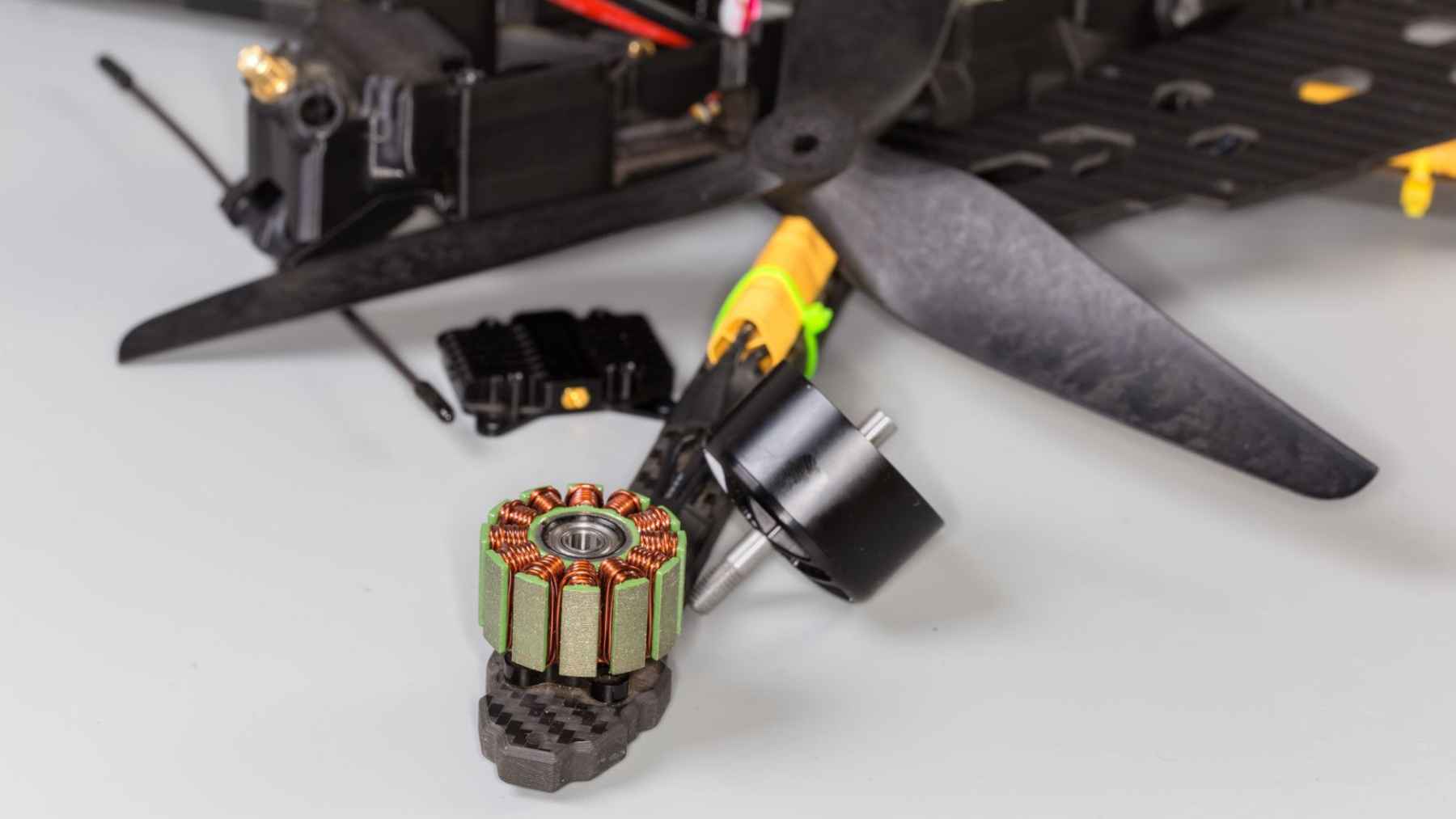
At the center of the story is not a bigger body or a flashy camera, it is the propeller. The “Blackbird” used handmade carbon fiber blades with an unusually steep pitch, meaning the blades were angled more aggressively into the direction of flight.
Why does that matter? At very high speed, air is already rushing past the drone so fast that ordinary propellers can start working against themselves. By tilting the blades closer to the incoming airflow, the team tried to make each spin push air backward more efficiently instead of wasting energy.
Why the blades look almost strange
The second change is easier to spot. The leading edges of the blades have small sawtooth shapes, not a smooth curve. Those teeth create tiny swirls of air that help keep airflow attached to the blade instead of peeling away too soon.
Think of it like trying to keep water flowing smoothly over your hand when you move it through a pool. If the flow breaks away, you lose movement capability. On a drone propeller moving at extreme speed, that loss can mean less thrust, more drag, and a flight that ends badly.
A record attempt is not just one fast pass
This is where the excitement gets more complicated. The current recognized record is not just a claim of one impressive number. It comes from a process, with timing, evidence, and conditions that are meant to make the result fair.
That is why “unofficial” matters. A downwind run can look spectacular, but the return run helps balance the effect of wind. For fans, the two-way average may feel like enough; for record keepers, verification is part of the race.
What went wrong in testing
High-speed drone flight is not gentle. In an earlier run, the team reportedly lost connection with the drone after it was already moving at extreme speed. At that pace, a small control or video-link problem is not a nuisance; it can become a crash almost instantly.
That is especially important in “FPV,” short for “first person view.” The pilot flies using a live video feed from the aircraft. Losing that feed at 435 mph is much more serious than losing a picture on a normal camera drone.
There are trade-offs, too. The steep propeller angle that helps at high speed can make takeoff and hovering less efficient, forcing the motors and batteries to work harder at low speed. Reports after the run also raised concerns about battered batteries and the stress placed on the aircraft, a reminder that this is closer to an engineering stress test than a weekend park flight.
Why this matters beyond YouTube
The fun part is obvious. A small drone moving at highway speeds several times over is hard to ignore, but the bigger story is how much speed can come from shaping air, not just adding power.
For the most part, this kind of design will not change the drone someone buys to film a vacation or inspect a roof. It may matter more for racing, experimental aircraft, and the growing community of builders who use 3D printing, custom electronics, and real flight data to test ideas quickly. The “Blackbird” is a flying reminder that aerodynamics is not only for jets.
What happens next
The next step is likely a cleaner attempt under official conditions. To turn the claim into a recognized record, the team would need to repeat the performance with the required verification in place. That means the same brutal speed, but with less room for doubt.
Still, the pressure is now back on the record books. The Peregreen V4 remains the official holder, but “Blackbird” has shown that the ceiling may be higher than expected.
The official flight demonstration has been published by Drone Pro Hub.