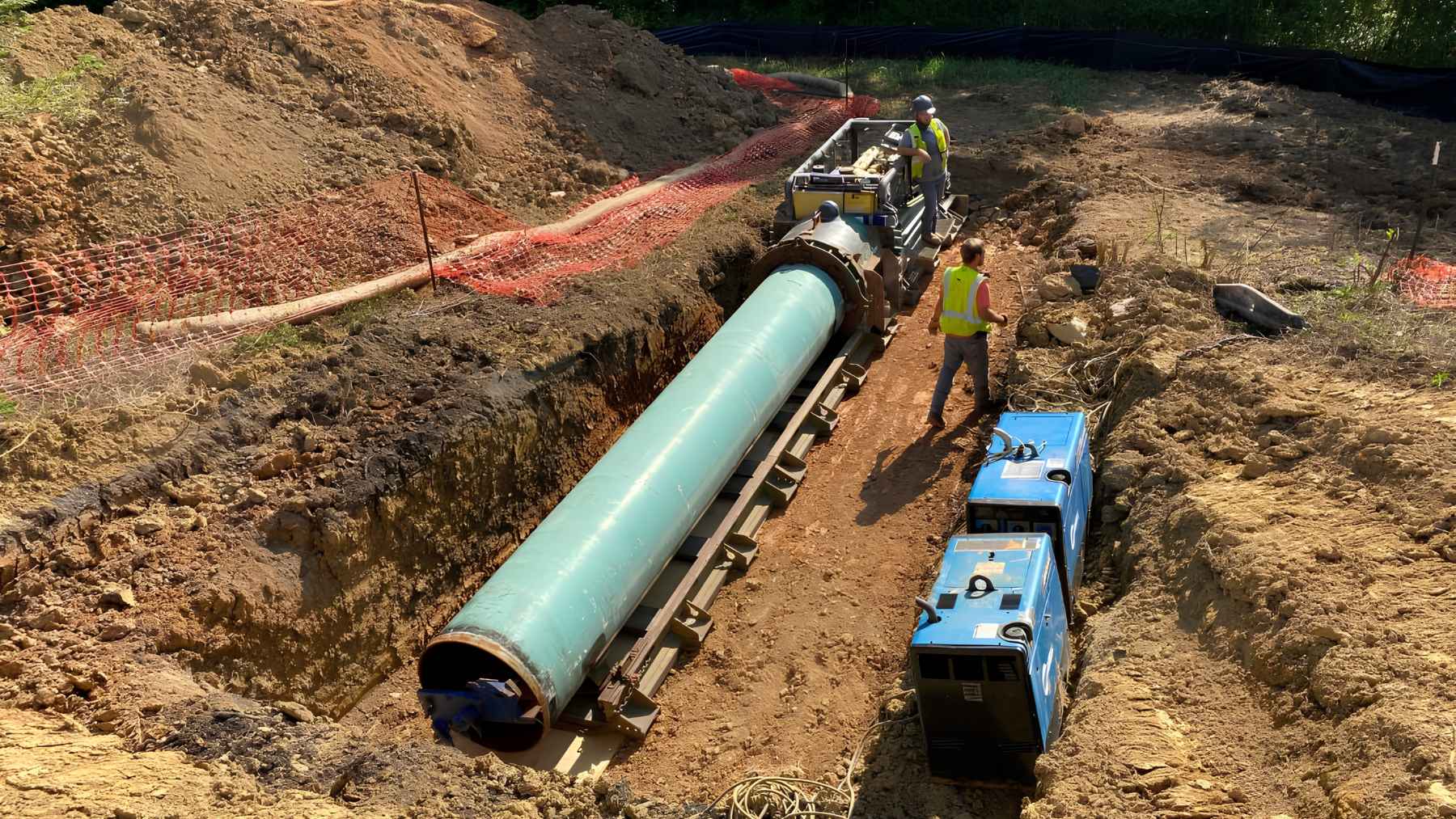
A hidden tunnel under a road or railway is not the kind of danger most drivers think about on the morning commute. Yet underground voids can weaken soil, shift loads, and create quiet risks that may only become obvious when pavement cracks, tracks move, or the ground starts to fail.
Now, researchers at the Department of Energy’s Oak Ridge National Laboratory in Tennessee have demonstrated a new acoustic method that flips the usual search strategy. Instead of sending signals from the surface down, the team sent sound from below the target upward, revealing a buried tunnel through a distinct low-frequency response.
A new way to listen underground
For decades, engineers have searched for tunnels and cavities by looking down from the surface. That can work, but it is not perfect, especially when the soil is clay-rich or the underground setting is messy and hard to read.
The ORNL team tried a different angle. By placing the sound source below the suspected tunnel and recording vibrations at the surface, researchers captured signal behavior that might otherwise be lost.
“Our hypothesis was that if we reversed direction, sending the signal from below a potential tunnel instead of above, we could improve detection by capturing signal scatter that otherwise is lost,” said ORNL’s Mike Kass, lead researcher on the study.
Why surface signals miss clues
Surface-based methods can struggle because the ground filters sound and energy in complicated ways. Higher-frequency signals may spot smaller cavities, but they fade quickly as they move through soil.
Lower-frequency signals travel farther, but they can miss fine details. That is a problem when the target is not a giant cavern, but a narrow man-made tunnel beneath infrastructure people depend on every day.
The new method looks for a subharmonic signal, which is a lower-frequency response created when sound waves bend around a tunnel. Effectively, the buried structure changes the sound pattern, and geophones at the surface can pick up that change.
The field test in Tennessee
To test the idea under real-world conditions, researchers built a 40-foot steel tunnel about 10 feet below the surface on ORNL’s campus in Oak Ridge, Tennessee. They then placed an acoustic source in vertical boreholes as deep as 30 feet underground.
On the surface, the team installed arrays of geophones, which are sensitive vibration sensors. These instruments recorded how sound moved through the ground before and after the steel tunnel was installed.
That before-and-after comparison mattered. It helped the team separate the tunnel’s acoustic signature from background noise and ordinary soil behavior.
The signal that gave it away
The key finding was not just that the sensors heard something. It was that they heard the right kind of signal only under the right conditions.
“During testing, the geophones detected a distinct subharmonic signal,” said ORNL’s Charles Finney, a senior research and development researcher. “Subsequent measurements showed the signal consistently appeared only when the tunnel was present and only when the sound originated beneath it.”
That consistency is the point. For the most part, detection tools are only useful if they can tell engineers what is probably real and what is just noise in the ground.
Borrowed from oil and gas
Vertical seismic profiling, a technique widely used in oil and gas exploration, inspired the approach. In the traditional setup, energy is usually generated at the surface while sensors in boreholes record what happens underground.
ORNL reversed that configuration. The team placed the acoustic source below the target and measured the vibrations above ground, using acoustic-range frequencies suited to small subsurface features.
That may sound like a small adjustment, but underground sensing often comes down to angles, timing, and what the instrument is able to catch. Sometimes, listening from the other side changes the whole picture.
Why roads and railways matter
The biggest promise of the method is infrastructure safety. Hidden tunnels or voids can alter ground stability beneath roads, rail lines, and facilities, creating risks that may stay invisible until damage appears.
Anyone who has sat in a traffic jam beside a construction crew knows how disruptive ground repairs can be. If engineers can find underground problems earlier, they may be able to reduce costly closures, delays, and emergency repairs.
There is also a resilience angle. As cities manage aging infrastructure, heavier traffic, and more extreme weather, knowing what lies beneath the surface becomes part of keeping communities moving.
What still needs work
The researchers are not presenting this as a finished tool ready for every road crew tomorrow. The technical repor notes that while detectability improved, accurate localization and imaging will require more research.
Next, the team plans to test the method in different soil types and refine signal analysis. They also want to see whether timing and signal strength can produce more detailed underground images.
That is where the work gets practical. Detecting a tunnel is useful, but mapping its depth, shape, and location would make the method far more valuable for engineers.
A quieter safety tool
This research points to a future where infrastructure inspections may rely more on subtle underground clues. Not everything dangerous announces itself with a sinkhole or a cracked rail bed.
By sending sound from below and listening carefully from above, ORNL’s team has shown a new way to detect hidden structures before they become visible problems. It is a quieter kind of warning system, but one that could matter a great deal.
The official statement was published on Oak Ridge National Laboratory’s website.