A freezer works because time almost stops inside it. Food can sit there for months, sometimes years, as long as the cold never fails. In the far north, Earth has its own frozen storage system, and new research suggests its door is starting to crack open.
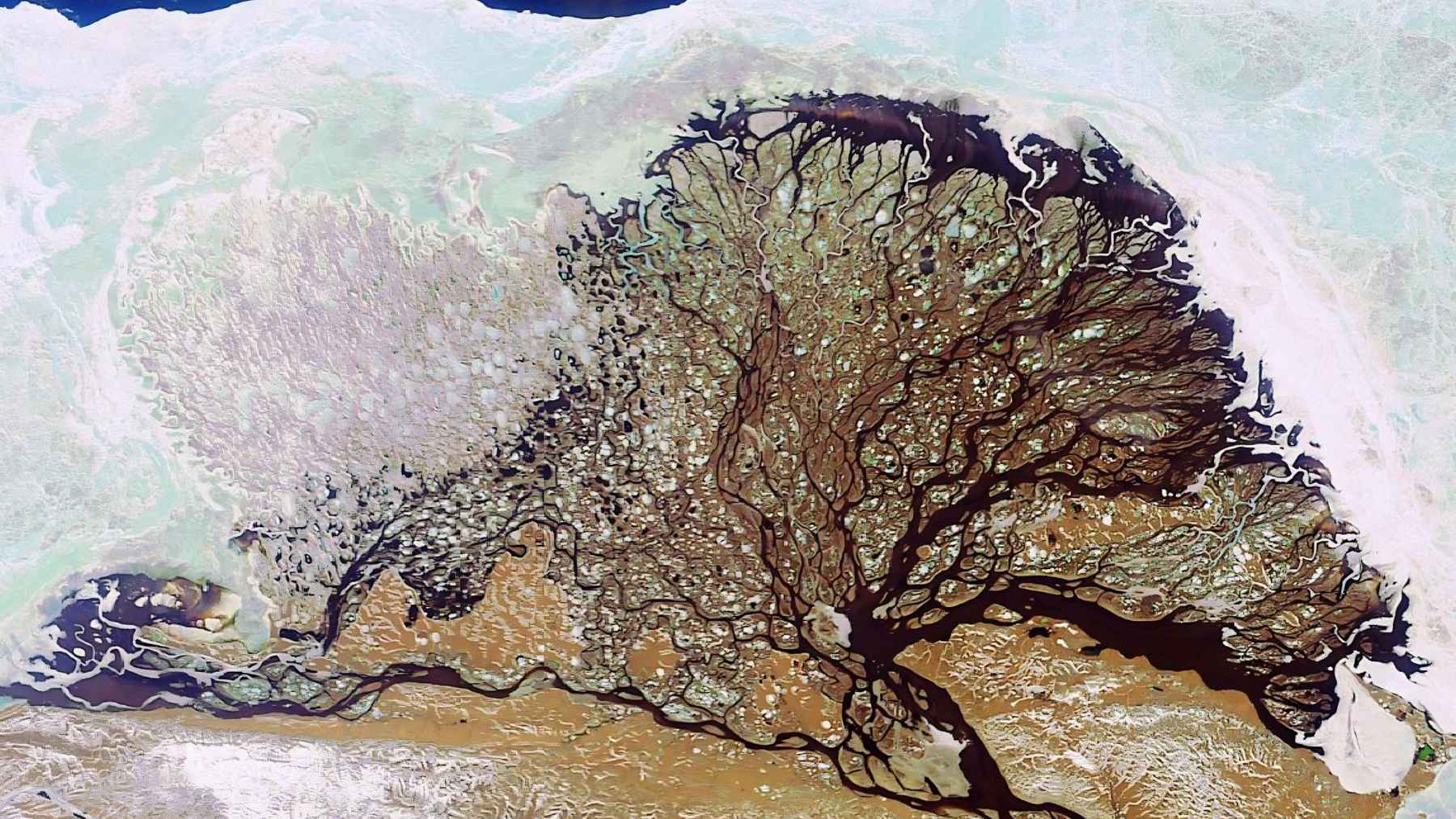
Arctic river deltas, where rivers spread out before meeting the Arctic Ocean, hold far more frozen carbon than scientists had clearly counted before. The new estimate puts the stockpile at about 63 billion tons of carbon and about 4.2 billion tons of nitrogen, locked into frozen soils across an area of nearly 39,000 square miles.
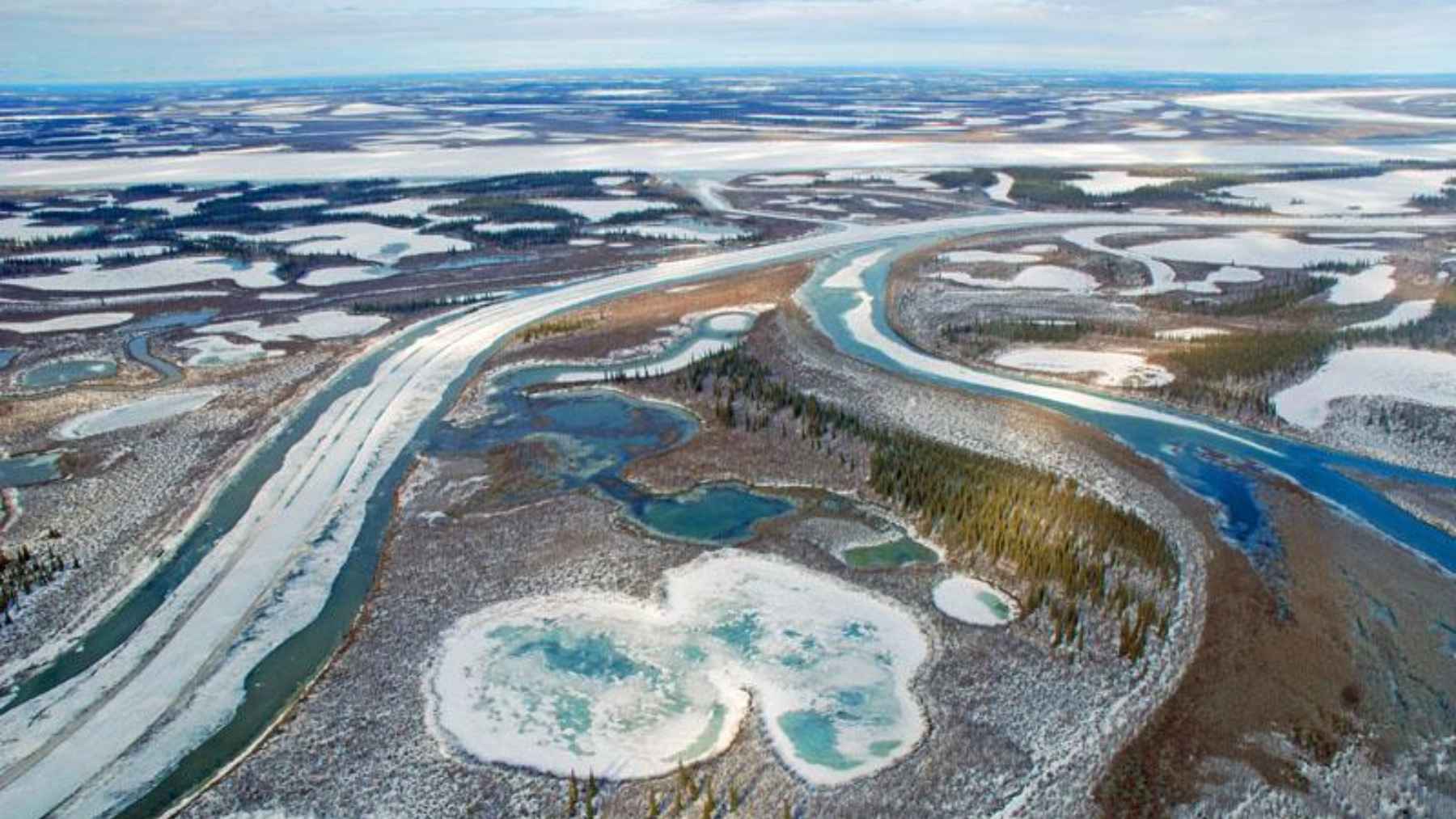
A frozen Arctic freezer
Permafrost is ground that stays frozen for at least two years. In many Arctic places, it has stayed frozen for much longer, trapping dead plant material that never fully rotted away.
Think of it like leaves sealed in a freezer bag. As long as they remain frozen, microbes have little chance to break them down. Once the ground warms, those tiny organisms can get to work.
What scientists measured
The new work was led by Matthias Fuchs, who is now continuing his research at the University of Colorado (Boulder) after working as a postdoctoral researcher at the Alfred Wegener Institute.
The international team pulled together newly published and partly unpublished data from more than 1,600 soil samples across 17 Arctic deltas, including major systems such as the Lena River in Siberia and the Mackenzie River in Canada.
That larger dataset matters. Earlier work focused mostly on a few sampling locations in the biggest river mouths, while many smaller deltas stayed in the background.
Why deltas are under pressure
Deltas are messy places even in normal times. Rivers drop sediment, tides push back, ice comes and goes, and shorelines shift. In the Arctic, that natural movement is now being hit by several climate pressures at once.
Sea ice is retreating, sea level is rising, river water and soils are getting warmer, and the thawing season is lasting longer. Some coastal land is also slowly sinking, which gives the sea an easier path inland.
Guido Grosse, who studies permafrost, summed up the problem in simple terms. “All these destabilizing factors come together,” he said, making deltas especially vulnerable in a region already changing fast.
Why the number matters
At first glance, 39,000 square miles may sound large. On a map of the Arctic, though, it is a small slice. The striking part is how much carbon is packed into that space.
The deltas appear to hold about 5% of the carbon stored in permafrost soils while covering only about 1% of the global permafrost surface. Compared with all soils on Earth, they hold about 2% of global soil carbon on just 0.08% of the planet’s land area.
Here is another way to picture it: human activity increases the amount of carbon in the atmosphere by about five billion tons each year. The Arctic delta stockpile is more than twelve times that annual increase, although researchers are not saying it will all escape at once.
Microbes enter the story
Carbon in frozen ground does not warm the planet by simply existing. The problem begins when thawing makes ancient plant remains available to microbes, which digest that material and release carbon dioxide and methane.
That process is not hard to imagine: leave food out on the counter after a power outage, and the change begins quickly. In Arctic soils, the timeline is different, but the basic idea is familiar.
Nitrogen adds another layer. It is a key nutrient for plants and microbes, so newly available nitrogen can change how soils, rivers, and coastal waters function. That is why the study does not treat it as a side detail.
A bigger Arctic pattern
The delta findings fit into a wider scientific picture. A 2018 study in Biogeosciences examined carbon and nitrogen in thaw-sensitive Siberian permafrost landscapes, showing how ice-rich ground can store large amounts of organic matter that becomes more available as thaw deepens.
More recently, a 2025 Biogeosciences study on the outer Mackenzie Delta looked at thermokarst lagoons, which are water bodies formed as ice-rich permafrost collapses and connects with the sea. The researchers found that young, partly connected lagoons can produce more greenhouse gases than more open lagoon systems, a sign that the land-to-sea transition deserves close attention.
The point is not that every Arctic delta will behave the same way. Some carbon may stay buried, some may wash into rivers or the ocean, and some may become greenhouse gas. The trouble is, the clock is moving faster than old maps and old climate models expected.
What comes next
This study gives scientists a better baseline. In practical terms, that means they can feed more realistic numbers into climate models, the computer tools used to explore possible futures.
It also shows where fieldwork needs to go next. Smaller deltas, coastal transition zones, and places where river heat meets thawing ground may hold clues that broad Arctic estimates have missed.
For most people, this is not a story about a faraway swamp. It is about a hidden part of the climate system that helps decide how much heat remains trapped in the atmosphere, the same heat that shows up later as higher electric bills, stronger storms, and on hotter summer days.
The official study has been published in Nature Communications.