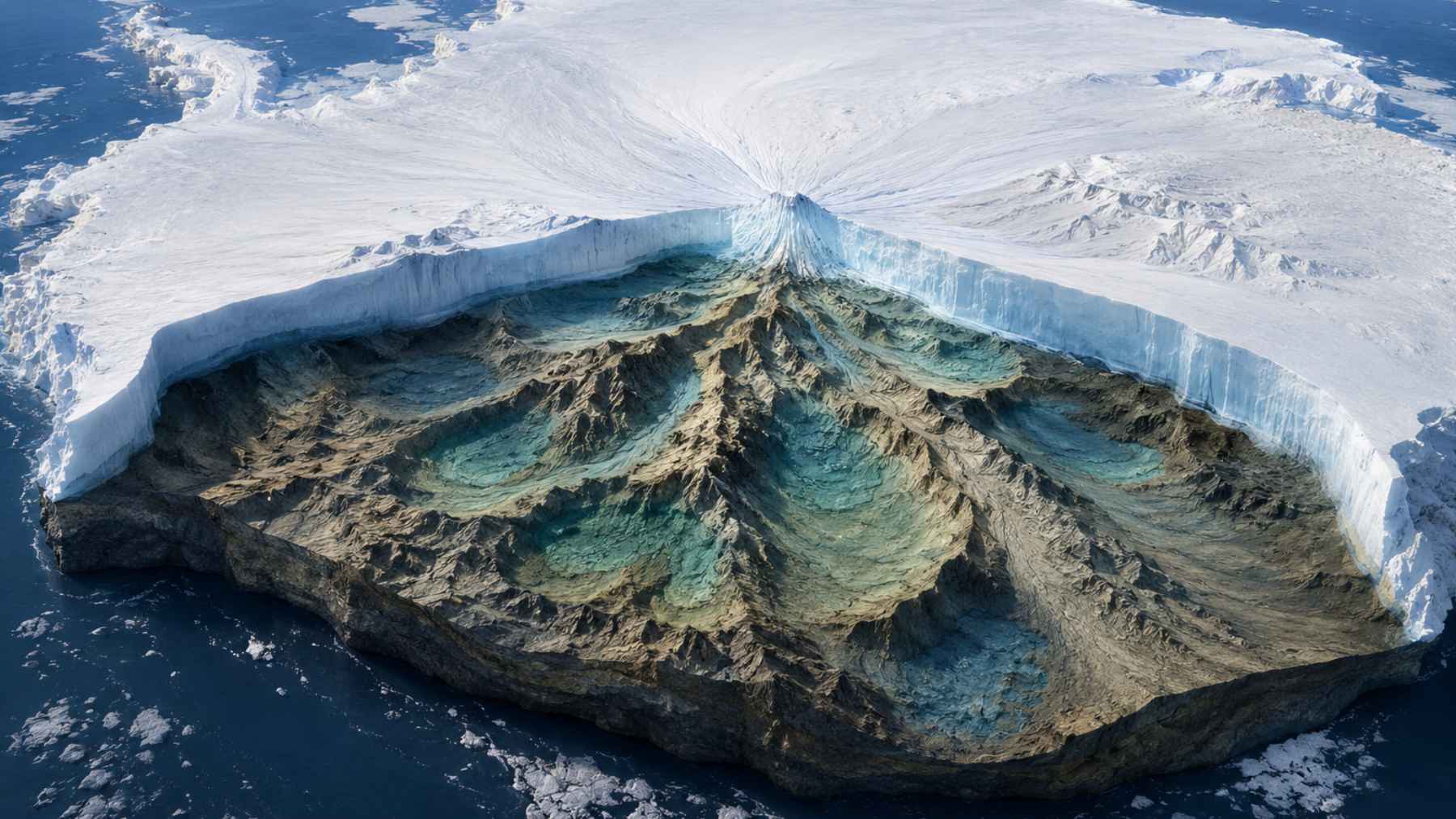
Scientists have identified a vast fan-shaped structure buried beneath East Antarctica, hidden under ice that is nearly 2 miles thick in some places. The discovery links several huge basins that were once studied separately, suggesting they are actually parts of one enormous geological system.
Why does that matter? Because this buried “fan” may help explain how the ancient supercontinent Gondwana cracked apart, how Antarctica later separated from Australia, and why some parts of the modern Antarctic ice sheet move the way they do today.
Egidio Armadillo of the University of Genoa led the study, with an international team that included researchers from Durham University, ETH Zurich, the British Antarctic Survey, and other institutions.
A hidden fan
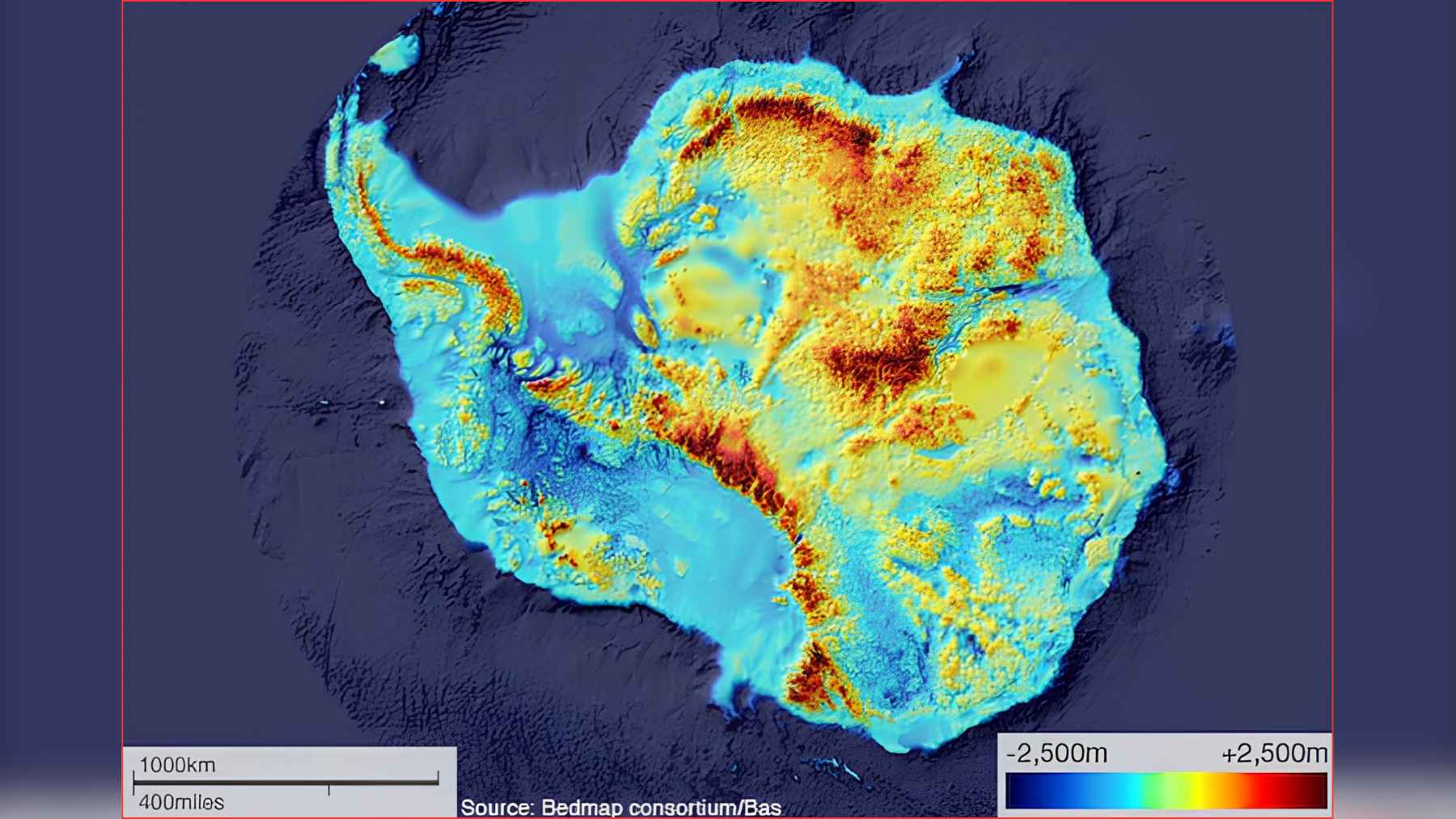
The structure has been named the East Antarctic Fan-Shaped Basin Province. It includes the Wilkes and Aurora basins, along with the basin that holds Lake Vostok, the largest known lake trapped beneath Antarctic ice.
For years, these features looked like separate pieces of Antarctica’s buried landscape, but when scientists combined radar, gravity, magnetic, seismic, and topographic data, a bigger picture appeared. The basins radiate from a focal area near the South Pole, much like the ribs of a handheld fan.
The team described the basins as “not simply isolated depressions beneath the ice,” but part of a much larger unit. That is the key shift. Antarctica’s hidden floor may be telling one connected story, not several smaller ones.
How they found it
No one can simply walk across this landscape and map it with a notebook. More than 99% of Antarctica’s bedrock is buried under ice, so scientists must rely on indirect tools that can see below the surface.
Radar can trace the shape of the ground beneath the ice. Gravity and magnetic measurements help reveal changes in buried rock, while seismic data can show deeper structures inside Earth’s crust. Put together, these tools act a little like a medical scan for a continent.
The result was striking. The team found a semi-continental-scale pattern that stretches across a major sector of East Antarctica, with a coastline and buried basin layout that fit the shape of an opening fan. This means an old tectonic process may have left a fingerprint big enough to organize half of East Antarctica’s hidden ice-bed landscape.
Gondwana’s breakup
Gondwana was a giant southern supercontinent that once included Antarctica, Australia, Africa, South America, India, and other landmasses. Over many millions of years, it split apart, helping form the continents we know today.
The new study suggests that the fan-shaped province formed through a process called distributed rotational extension. That phrase sounds heavy, but the idea is simple enough. Earth’s crust stretched and rotated around a pivot area, like fingers spreading from the base of a hand.
That stretching may have weakened the northern edge of East Antarctica. The authors argue that this weak zone later helped guide the separation between Antarctica and Australia, shaping the curved continental margins that face each other today. This does not mean the fan was the only cause of the breakup, but it may have been a major piece of the machinery.
Still shaping ice
This discovery is not only about ancient rocks. The buried structure may still affect how ice moves above it, including the routes taken by some of East Antarctica’s major outlet glaciers.
The study says the fan’s structural boundaries appear to line up with glaciers such as Totten, Vanderford, Denman, Frost, and Amery. Think of it like water running along grooves in a driveway after a storm.
The ice is much thicker, slower, and colder, but the basic idea is similar. The shape of the ground below can steer what happens above.
That matters because some basins in East Antarctica sit below modern sea level. When ice rests on low ground connected to the ocean, warm seawater can make it more vulnerable over long periods. The team estimates that ice over the fan-shaped province represents about 92 feet of possible global sea-level rise, although that does not mean it is about to melt all at once.
Climate clues
Recent research has already warned that the physical conditions below Antarctic ice are crucial for understanding future sea-level projections. A 2025 study in Communications Earth and Environmentfound previously unrecognized structures beneath the Wilkes and Aurora basins, pointing to different heat and mantle conditions than earlier models assumed.
Another 2026 study in Nature Climate Change concluded that Antarctica should not be treated as one single tipping system. Different basins can respond differently as the planet warms, with some areas losing ice gradually and others facing sharper thresholds.
That is where better maps of Antarctica’s buried geology become more than academic detail.
Still, the researchers are careful about what remains unknown. The exact timing of the rotational extension is uncertain, and the deep forces that started it are still being investigated. “Some of the most important questions remain unresolved,” Armadillo wrote in a Springer Nature research note.
Why it matters
At the end of the day, this hidden fan is a reminder that Antarctica is not just a frozen white sheet at the bottom of the world. Beneath the ice is an old, broken, complicated continent whose scars still influence today’s glaciers.
For scientists, the discovery offers a new framework for reconstructing Gondwana and improving ice-sheet models. For the rest of us, it adds one more piece to a question that reaches far beyond Antarctica. How will hidden geology shape the future of the ice, the oceans, and the coasts where people live?
The official study has been published in Nature Geoscience.