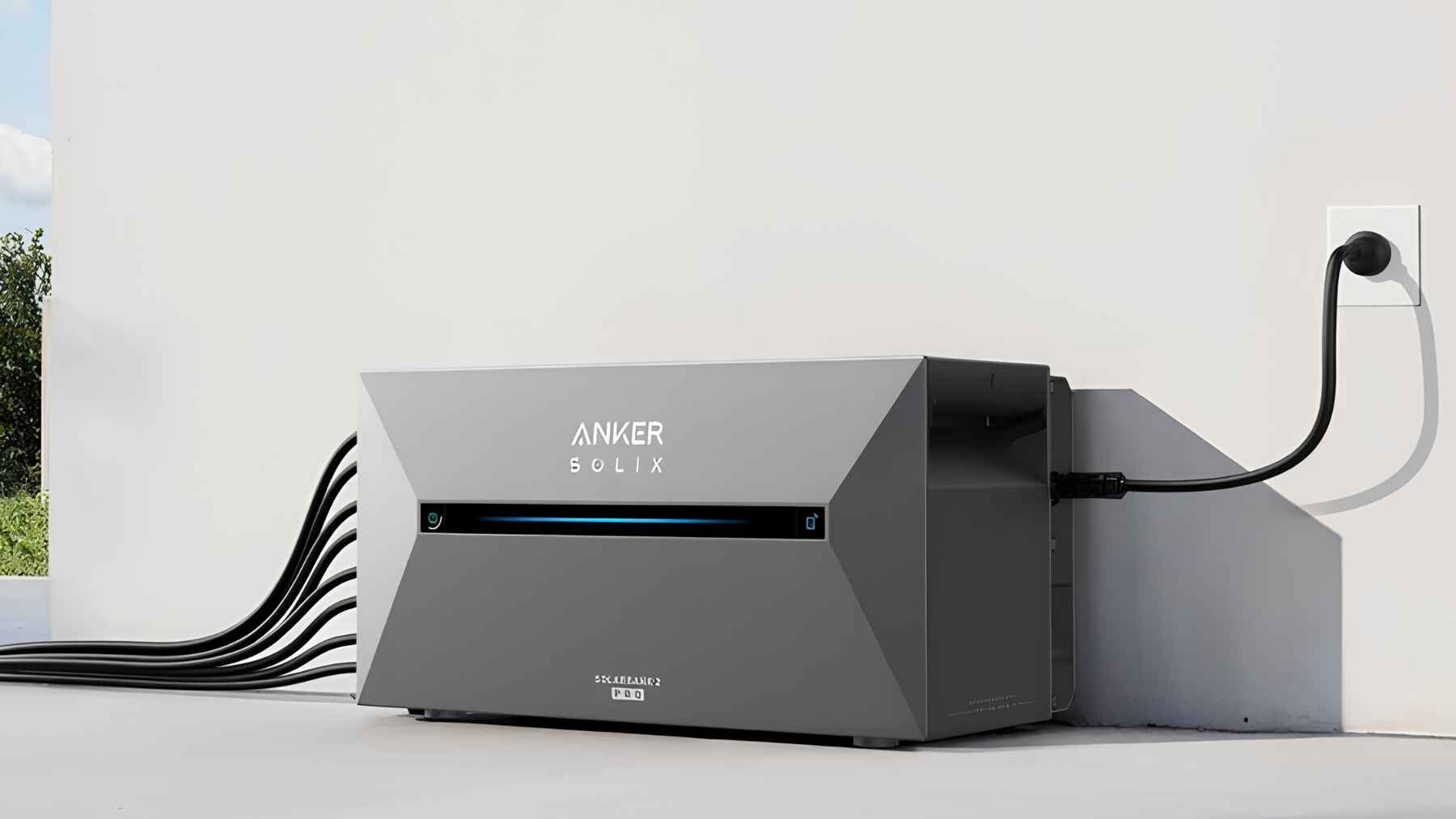
For years, solar companies sold home batteries strictly as bulky, expensive companions to rooftop panels. Now, a new generation of compact power banks is targeting renters and apartment dwellers by exploiting a simpler strategy: time-shifting the grid. By hoarding cheap overnight electricity to run appliances during expensive daytime peaks, systems like Anker’s 5 kWh Solarbank 4 E5000 Pro claim to save users up to £398 a year — without requiring a single solar panel.
Sounds simple enough. Yet as of Aug. 18, 2026, the U.K.’s new plug-in rules cover solar panels only, and Anker says the battery still requires hardwired installation by a Part P-registered electrician.
How the battery cuts the bill
These systems do not generate electricity. They move it through time, filling up overnight or during low-price periods, then supplying up to 800W back to the home while the fridge, television, washing machine, and other everyday loads are drawing more expensive power.
Anker’s worked example assumes a 5 kWh battery, 95% charging and discharging efficiency, an 8.5 pence off-peak rate, a 29.37 pence peak rate, and one cycle a day. That model produces about £346 in annual tariff savings, while the larger “up to £398” figure remains a best-case manufacturer estimate.
Solar panels are optional
The money-saving mechanism works without sunshine because grid electricity charges the battery. Solar can be added later, but the battery-only case depends heavily on access to a time-of-use tariff (an electricity plan where prices fluctuate based on grid demand, much like surge pricing for ride-shares) with a wide price gap and enough daytime use to consume the stored energy.
Octopus Energy is taking the same idea mainstream with the Nook Cube, a 2 kWh model announced for 2027 that can expand to 10.5 kWh and carries a 12-year warranty. Founder Greg Jackson called home batteries “one of the smartest ways to cut energy bills right now.”
The U.K. rule change has a limit
New plug-in solar regulations come into force on Aug. 27, 2026. However, the government’s interim specification explicitly applies to solar products without batteries and does not create a standard-socket pathway for plug-in battery storage.
That distinction matters. Anker says the Solarbank hardware is plug-in-ready, but until separate regulations and British standards arrive, a Part P-registered electrician must complete the U.K. installation using a hardwired connection.
Other batteries make smaller promises
Windfall Energy’s 2.5 kWh battery uses LFP cells (lithium iron phosphate) cells — the same highly durable battery chemistry utilized in modern electric vehicles — supplies up to 800W, and carries a listed retail price of £1,200. The company advertises savings of up to £250 a year, although its own breakdown puts direct tariff shifting at about £150 and assumes roughly another £100 from grid-flexibility rewards that are still being finalized.
That is a useful reality check. The biggest number on the box may blend several income streams, while the dependable portion comes from the difference between what a household pays to charge and what it avoids paying later.
Why companies are moving early
Octopus says the U.K. has more than 10 million renting households, a huge group largely left out of traditional home battery installations. That is why its Nook Cube is deliberately compact and marketed to renters and apartment dwellers.
Manufacturers are positioning themselves before the socket rules are settled. Anker plans to open its U.K. launch offer on Aug. 27, 2026, while Octopus says the Nook range will reach the U.K., Germany, France, Italy, and Spain in 2027.
Payback can stretch beyond four years
The financial reality, however, is steeper. At Windfall’s £1,200 retail price, £150 of annual tariff savings implies an eight-year simple payback, while £250 would shorten it to about 4.8 years. Those calculations exclude financing, changing tariffs, battery degradation, and any installation cost.
Anker’s advertised 3.3-year payback comes from a £2,510 package with four solar panels and about £770 in combined solar and tariff savings. It is not the payback period for battery-only operation, and Anker says actual results may vary with consumption, rates, weather, battery aging, and system configuration.
What buyers should check
Before paying a deposit, shoppers should confirm whether the product can legally connect through a standard socket, whether an electrician is required, and whether the savings model assumes solar panels, grid rewards, or a tariff they cannot access. A long warranty and LFP chemistry can be reassuring, but certified grid connection, thermal protection, and clear installation instructions matter just as much.
The technology has real potential to bring energy storage to homes that cannot fit rooftop solar. For now, though, “plug-and-play” in Britain describes the direction of travel more accurately than the installation experience.
The official government response on the new framework was published on GOV.U.K..