If you live in a small house or apartment with a tiny patio, choosing a tree can feel like a gamble. You want shade, flowers, maybe even fruit, but you do not want roots lifting the floor or cracking the tiles around your home. So is there a tree that behaves well underground and still earns its space in the garden?
Horticulture experts and recent gardening features are increasingly pointing to the home plum tree as a smart answer to that problem. This medium-sized fruit tree usually stays around 13 to 16 feet tall in small gardens, has a relatively non-invasive root system, and produces juicy plums during summer.
Once established, several popular plum varieties also tolerate stretches of low rainfall better than many other fruit trees, which helps in hot summers when every extra watering shows up on the water bill.
A compact tree with roots that respect your floors
The typical home plum tree is considered medium sized, especially when grown on dwarf or semi-dwarf rootstocks in restricted spaces. In many small yards it reaches roughly 13 to 16 feet rather than the towering canopy of large shade trees. That scale already makes it easier to tuck beside a terrace or driveway without overwhelming the space.
Just as important is what happens under the soil. An environmental gardening article on the “plum tree for home” describes its roots as non-invasive and moderately spreading, not strong enough to lift tiles or break pipes when it is planted at a sensible distance from walls or sidewalks. In simple terms, the roots tend to stay compact and flexible instead of pushing hard against concrete.
Guides on trees with non-invasive roots list dwarf plum trees among safer choices for built-up areas, provided they are pruned and managed so the canopy stays modest in size. Experts still advise basic precautions, like keeping any tree a few feet away from a house foundation and avoiding cramped planting holes in very shallow soil.
At the end of the day, a well-sited plum is far less likely to disturb paving than deep-rooted giants that were never meant for narrow patios.
Spring blossoms and summer fruit in a small space
Visually, the home plum tree pulls double duty. In spring, branches cover themselves with soft white or pink blossoms that stand out even in a tight courtyard or along a narrow driveway. The flowers are followed by fresh green leaves that create a neat, light canopy instead of a heavy wall of shade.
Those blossoms are more than decoration. They draw bees and butterflies looking for nectar, which gives a small but real boost to urban biodiversity right outside the living room window. When trees like these are planted across a neighborhood, they help stitch together tiny pockets of habitat for pollinators that usually have to dodge traffic and concrete all day.
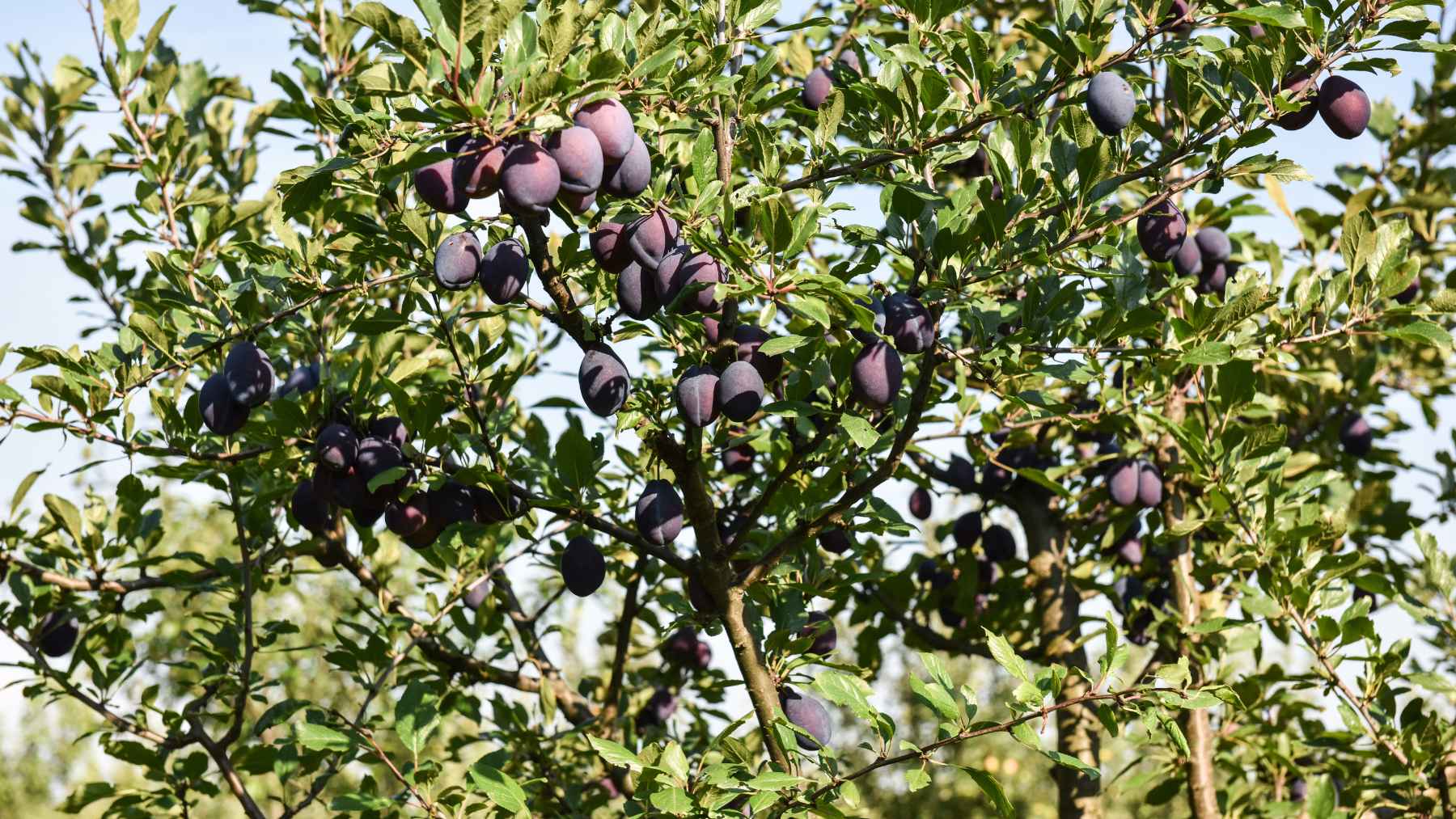
During summer, the flowers give way to sweet, juicy plums that can be eaten straight from the tree. Depending on the variety, the fruit can be yellow, red, or a deep purple, but in every case it adds the sort of fresh snack most people expect to buy at the store.
Many home cooks turn part of the harvest into jams, compotes, or simple cakes, which means one small tree can show up at breakfast and dessert for weeks.
University extension bulletins on plums in home gardens point out that many varieties need a partner tree nearby for reliable crops, even though some are self fertile. In practical terms, that means checking the label when you buy and, if needed, planting two compatible trees or choosing a self pollinating cultivar if you only have room for one.
For balconies or terraces, recent guides on growing plums in containers recommend dwarf, self-fertile types in deep pots with good drainage so roots have enough room to explore.
Low maintenance care and drought resistance
Once established, many plum trees cope reasonably well with hot, dry spells compared with thirstier fruit species, especially if the soil drains well and is covered with mulch.
Some native plum relatives such as Chickasaw plum are described as able to tolerate drought and poor soils while still producing fruit in warm southern climates, which shows how adaptable the wider plum group can be. That does not mean they never need water, but they are more forgiving if you miss a watering during a busy week.
Experts on drought tolerant gardening still recommend regular deep watering during the first year so new trees push roots downward instead of staying at the surface. After that establishment period, occasional deep watering during long dry stretches is usually enough in many climates, which keeps maintenance low for people who cannot fuss over the garden every day.
For container plums on balconies, checking the top layer of soil and watering when it feels dry helps prevent stress that could cut next season’s fruit.
Recent university extension materials on home garden plums explain that light pruning once a year keeps the crown in an open vase shape so air and sunlight reach the fruit. Most guides suggest pruning in late winter or early spring and removing crowded or inward growing branches, which keeps the tree compact and makes harvesting easier from ground level.
A balanced fertilizer in spring, applied in a wide ring around the tree rather than in the planting hole, supports steady growth and fruiting without risking burned roots.
Choosing a plum tree for a small home is, in many ways, a bet on quiet practicality. You get flowers in spring, fruit in summer, helpful pollinators in the yard, and roots that are far less likely to attack your floor, all in one modest package.
The main guidance on home garden plum cultivation has been published by the University of Georgia College of Agricultural and Environmental Sciences.