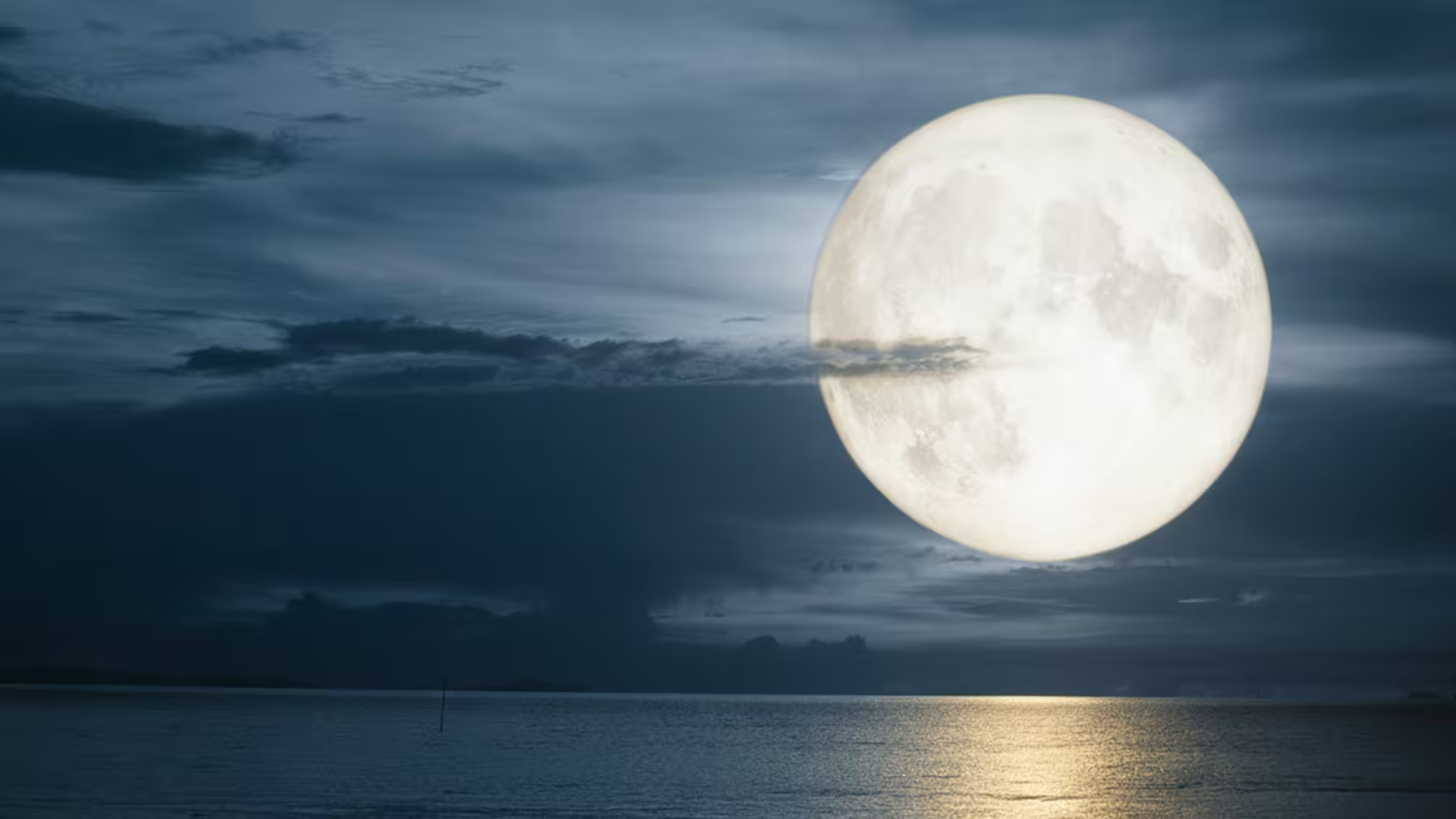
Stargazers across America are gearing up for an extraordinary event in the celestial world that would light up the night sky in a manner unlike any other lunar spectacle in 2025. The Hunter’s Moon would light up the night sky on November 5, 2025, with the most spectacular supermoon of the year. The extraordinary event in the celestial world would be 7.9% larger and 16% brighter than the normal full moon.
The Hunter’s Moon takes on the usual Beaver Moon in November
Unlike most November full moons that bear the Beaver Moon name, in 2025, there is a rare occurrence in the world of astronomy where the Hunter’s Full Moon takes center stage instead. The reason for this is that the Hunter’s Full Moon is the first full moon after the occurrence of the Harvest Full Moon, which happened in early October of this year.
The Hunter’s Moon has served as an essential light source for agriculturists and hunters who would complete their seasonal activities before winter sets in. The light from the full moon made it possible for these hunts to take place in the evening, even after the harvest season was over. The origin of the name relates to agricultural practices where the cycles of the moon influenced the seasonal work and food preparation to be done before winter.
The last Hunter’s Moon in November happened five years ago
This unusual happenstance in November happened last in 2020 and won’t occur again until 2028. The unusual occurrence makes the 2025 Hunter’s Full Moon an extraordinary event in the celestial world that contains aspects of importance in addition to being full of light for visibility.
Supermoon status brings about the brightest lunar spectacle of the year
The November 5 full moon becomes a supermoon because it takes place close to the lunar perigee, where the moon is at its closest point to planet Earth. The supermoon on November 5 is expected to occur at a distance of about 221,817 miles, which is closer to Earth than the average distance when full moons occur, measuring 238,900 miles.
The full moon phase reaches its culmination only nine hours before the lunar perigee at 13:19 GMT on November 5 (8:19 a.m. EST). The close alignment between these two lunar events amplifies the supermoon effect to offer the best possible viewing conditions for the brightest supermoon of 2025. The supermoon event can result in higher-than-normal tides in coastal regions.
The moon’s orange or reddish appearance near the horizon results from Earth’s atmospheric scattering of blue light, allowing red wavelengths to reach observers’ eyes. This natural phenomenon occurs with all full moons but appears more dramatic during supermoons due to their enhanced brightness and visual prominence.
Peak viewing times stretch across several nights in America
The Hunter’s Full Moon will be full for a series of nights centered on November 5, giving stargazers multiple chances to observe the sight across the nation. The moon will rise in the east near sunset and be visible across the night sky before setting in the west just before sunrise. Observers in the Northern Hemisphere can take advantage of the relatively short intervals between consecutive moon rises, resulting in an extended period of luminous light from the night moon.
Prime Viewing Schedule:
- November 4 to 6: Brightness and size of peak
- Moonrise: About 30 minutes after sunset every day
- Duration: The complete appearance was maintained for three nights
The Hunter Supermoon in November is one of the most harmonious alignments of stars with timelines and visibility in the annals of space exploration and astronomy in recent years, and it won’t occur for at least a few years. It doesn’t matter if you’re an amateur stargazer or not, because November 5 is the best day to catch the most spectacular event in the lunar calendar of 2025.