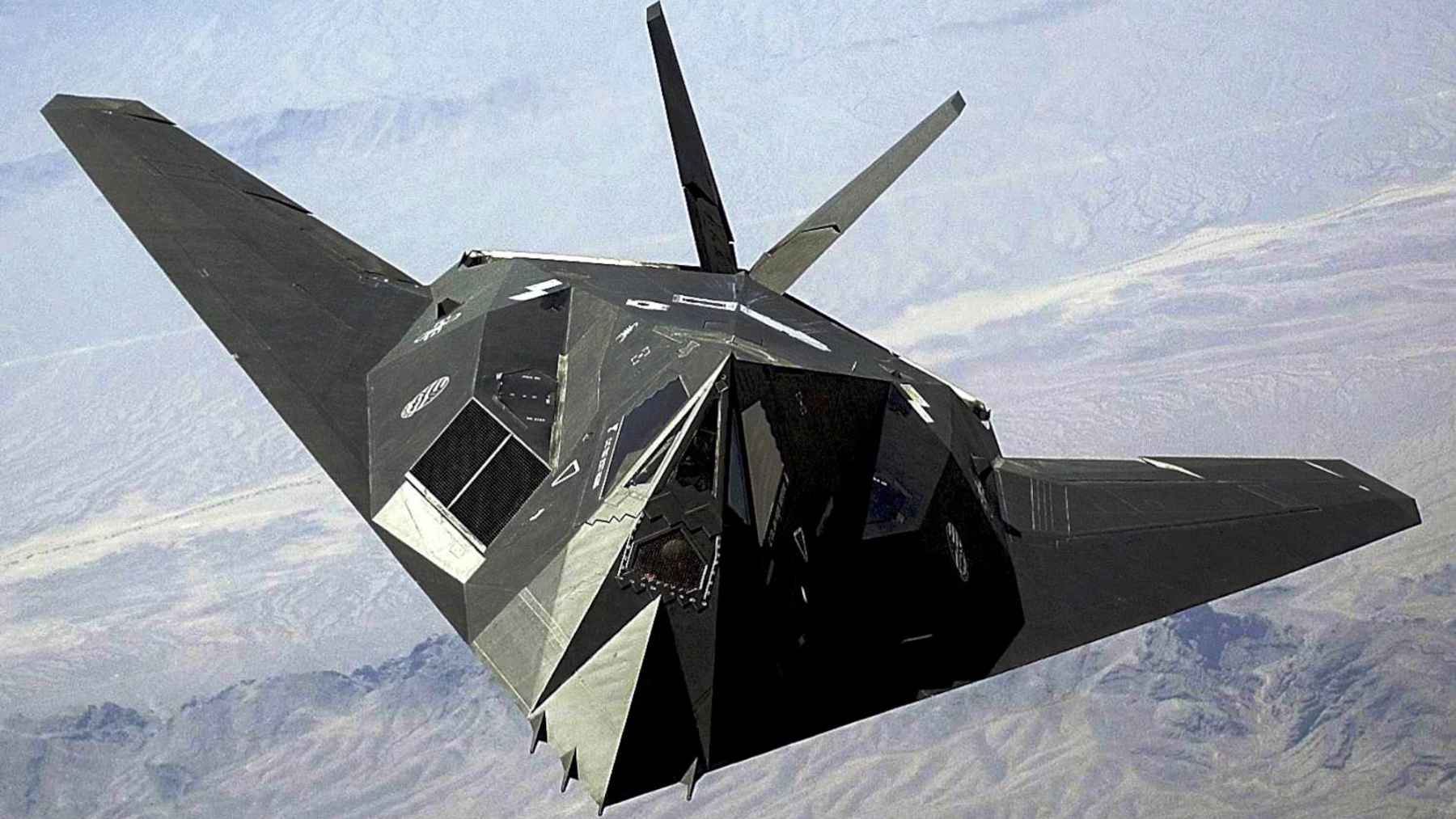
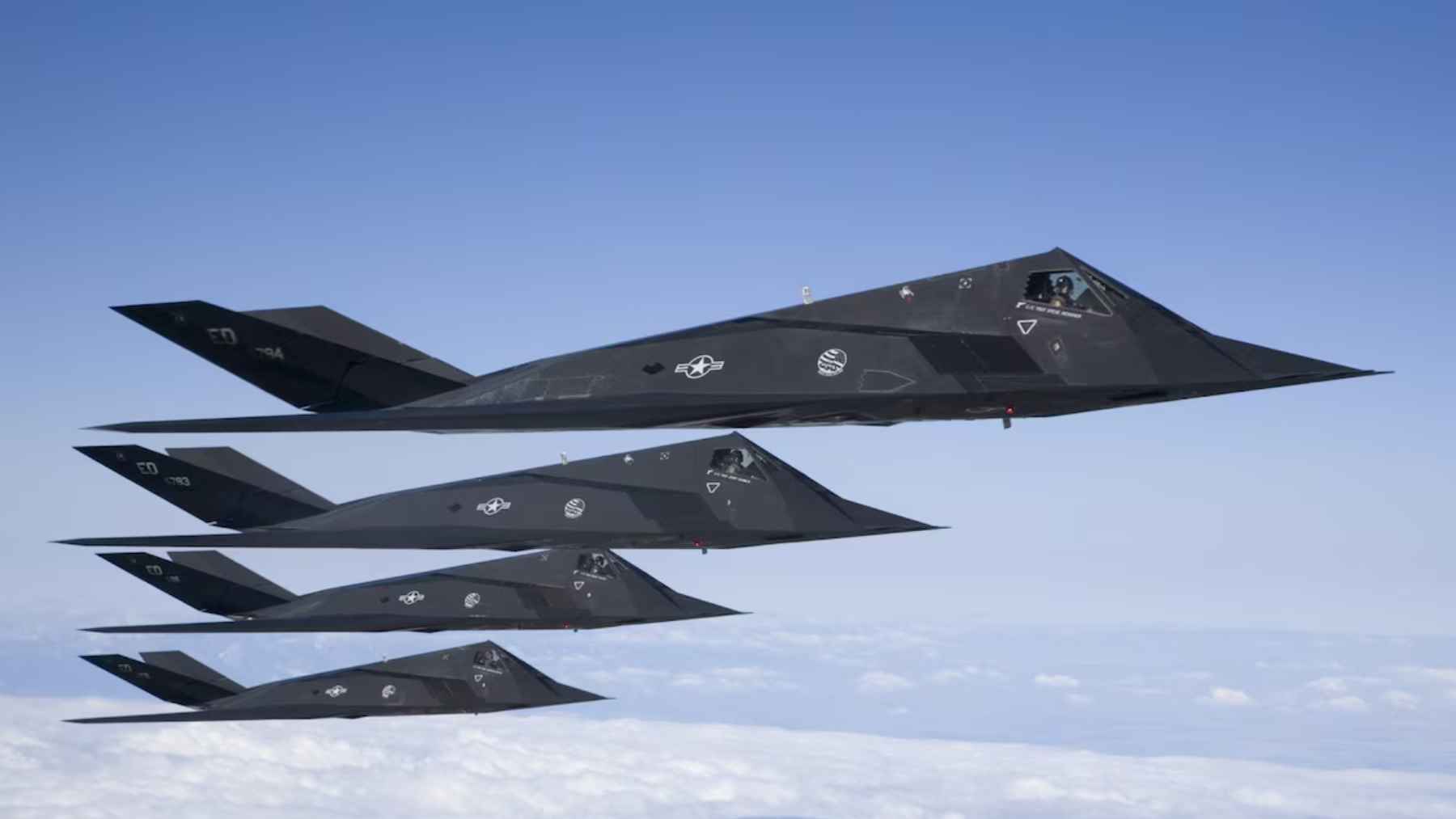
In the Nevada desert, a shape straight out of a science fiction movie still slips into the night. The F-117 Nighthawk, the world’s first operational stealth aircraft, was officially retired from combat in 2008. Yet the United States Air Force has confirmed that around forty five of these jets will keep flying for limited research and training missions until at least 2034. Aviation fans might cheer. For the climate, the picture is more complicated.
A stealth icon that refuses to retire
Air Force spokesperson Ann Stefanek has explained that the service still operates some F-117A Nighthawks and flies them “on occasion” for “limited research and training activities.” The jets are not kept in a combat-ready state. Instead, they act as stealthy stand ins for enemy aircraft or cruise missiles and as flying laboratories for new radar, infrared and other detection systems.
Most of the remaining fleet operates from the remote Tonopah Test Range in Nevada, inside the wider Nevada Test and Training Range near Nellis Air Force Base.
The Nighthawk itself is a landmark in aerospace history. Conceived in the 1970s under the secret Have Blue program and built by Lockheed’s Skunk Works, it used sharp facets and radar absorbing materials to become extremely hard to track.
Internal bomb bays and laser-guided munitions allowed the aircraft to hit heavily-defended, high-value targets while avoiding dense surface-to-air missile belts. During the first Gulf War, F-117s flew a relatively small share of sorties yet struck a disproportionate number of strategic targets, cementing their reputation as precision tools of modern warfare.
Old jets, new missions
So why hang on to a fleet designed in the slide rule era. For the Air Force, the answer is partly about cost and partly about risk. Using already paid for F-117s as aggressor aircraft and cruise missile surrogates allows engineers to test new sensors or tactics without tying up frontline fighters such as the F-22 or F-35. The Nighthawk’s unusual radar and infrared signature makes it a useful stand-in for the stealthy threats that pilots could face from rival air forces in the future.
In practical terms, that means more hours in the air for a jet that many assumed would live only in museums. Every sortie helps refine detection systems that could, in theory, reduce the need for real combat missions later. The trouble is that each of those training flights carries a sizable environmental price tag today.
The carbon cost of keeping ghosts in the sky
From an environmental point of view, the Nighthawk flies inside a much larger, largely hidden system. Research from Brown University and other teams shows that the US Department of Defense is the world’s largest institutional consumer of petroleum and energy and a major source of greenhouse gas emissions. Globally, recent estimates suggest that militaries account for roughly 5.5% of total climate warming emissions, more than civil aviation and shipping combined.
A single F-117 will not decide the fate of the planet. Still, getting a sense of scale helps. Technical sources indicate that an F-117 can carry on the order of 2,700 to 2,800 gallons of jet fuel internally. Official emission factors from energy and transport agencies show that burning one gallon of jet fuel leads to about 9.75 kilograms of carbon dioxide. A full internal load for a single Nighthawk therefore corresponds roughly to 25 to 30 metric tons of CO2 once that fuel is burned.
Not every training mission uses a completely full tank and some fuel may remain when the aircraft lands. Even so, a handful of extended sorties can easily release emissions comparable to what an average person produces in an entire year. In the United States, per capita carbon footprints are around 14 to nearly 18 metric tons of CO2 equivalent annually, while the global average remains well below that.
Most of us are told to fly less, take the bus and switch to efficient appliances to shrink our footprint and monthly electric bill. Meanwhile, legacy jets like the F-117 quietly add tonnes of emissions in training airspace that most people will never see. That tension is not unique to the Nighthawk, but it makes the aircraft a useful symbol of a bigger blind spot.
Recycling hardware, not yet recycling carbon
There is another side to the story. Keeping older airframes as testbeds can be seen as a type of reuse. Instead of building entirely new experimental aircraft, the Air Force is stretching the life of existing ones while gradually demilitarizing the rest for museum display or scrapping. Manufacturing new jets or test platforms has its own steel and concrete footprint, sectors that are also major emitters.
Experts on military climate impacts argue, however, that hardware reuse is only a first step. A 2025 peer-reviewed study on military emissions notes that the world’s armed forces likely account for up to 5.5% of global greenhouse gases yet are not required to report these emissions under international climate agreements.
The authors call for mandatory reporting and life cycle assessments covering everything from fuel burned to concrete poured for bases and blast walls. The F-117’s extended career slots neatly into that discussion.
If militaries had to disclose detailed emissions from training, testing and operations, programs that keep older jets in the air for decades might be evaluated differently.
Planners could weigh the benefits of live flight testing against alternatives such as advanced simulators, more efficient scheduling of exercises or investment in lower-carbon fuels. For now, those trade offs mostly happen behind closed doors.
What this means for climate policy
At the end of the day, the Nighthawk’s extra decade in the sky is a small slice of a very big pie. Yet it shows how easily high-carbon activities can persist once they are embedded in powerful institutions and technical cultures. The same stealth technology that made the F-117 hard to detect on radar has, in a way, helped hide part of the military’s climate footprint from public view.
As record global CO2 levels and increasingly extreme weather underline the urgency of cutting emissions, scrutiny is growing over every sector, from shipping to private jets. Military aviation cannot remain a permanent exception. Keeping iconic aircraft like the F-117 flying may be justified for safety and research, but only if the true environmental costs are counted and actively reduced.
The study was published by ScienceDirect.
Images credits: U.S. Air Force