The famous paintings of Lascaux sit beneath a wooded hill near Montignac in southwestern France, and most travelers will never see the original. The cave has been closed to general visitors since 1963 because people did not just come to look – they changed the cave’s air and biology.
What stands out today is how modern the problem sounds. Conservators are juggling carbon dioxide, moisture, and microscopic life the same way environmental scientists track the health of a wetland or coral reef, and replicas plus digital tools are doing more of the public access heavy lifting.
The day Lascaux opened under our feet
On September 12, 1940, four local teenagers widened a small opening and slipped underground with a hastily made lamp. France’s Ministry of Culture says they walked along a passage about 98 feet long before spotting the first paintings in what is now called the Axial Gallery.
You may have heard a version involving a dog named “Robot.” Some sources say the dog helped lead them to the opening, while others note the story is uncertain, and the official Ministry account focuses on the boys’ exploration.
Either way, the next step was dramatic. The Ministry reports that they returned with a rope and descended a shaft roughly 26 feet deep, where one of Lascaux’s most discussed scenes appears, a human figure facing a bison.
What the walls actually show
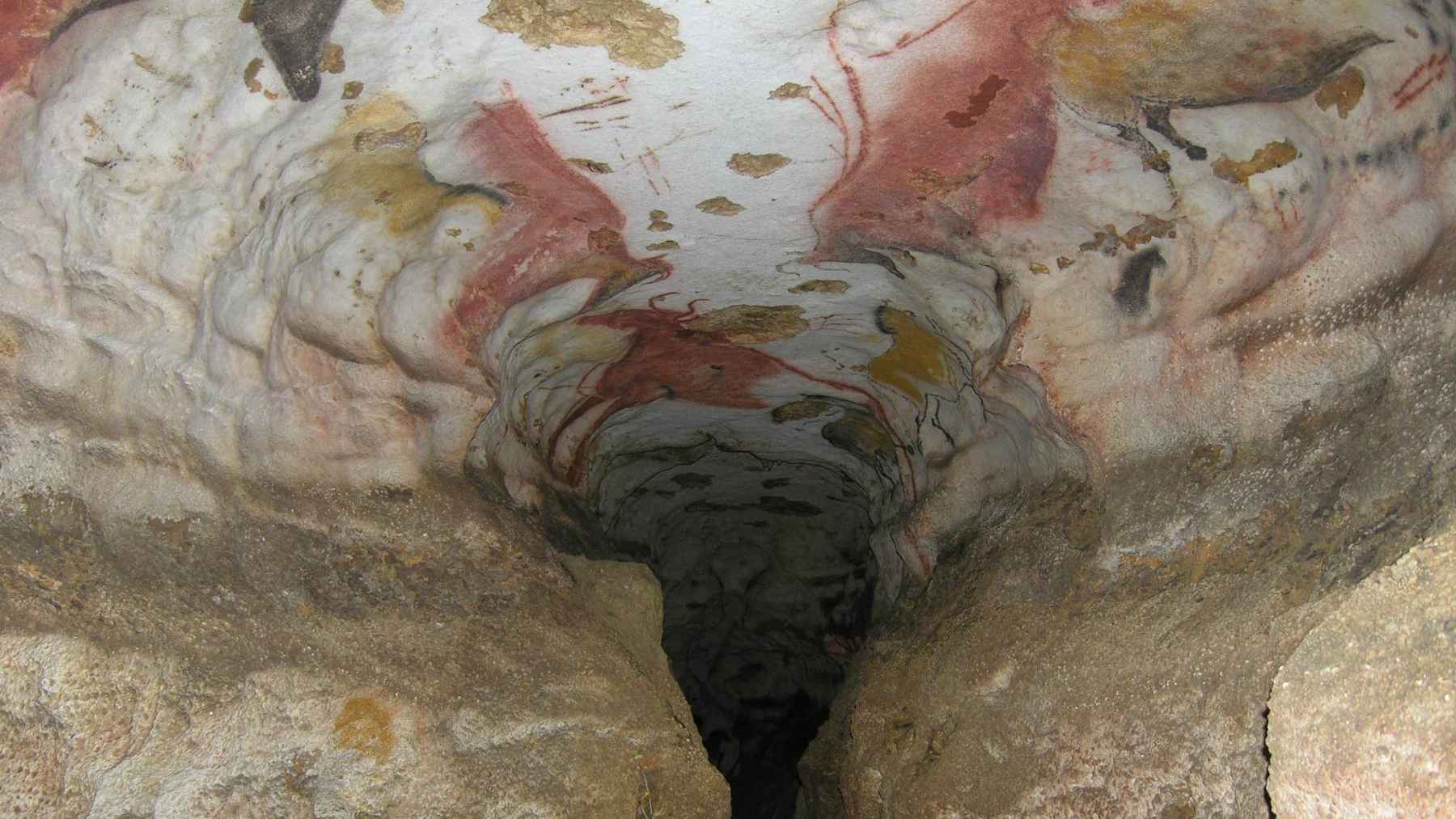
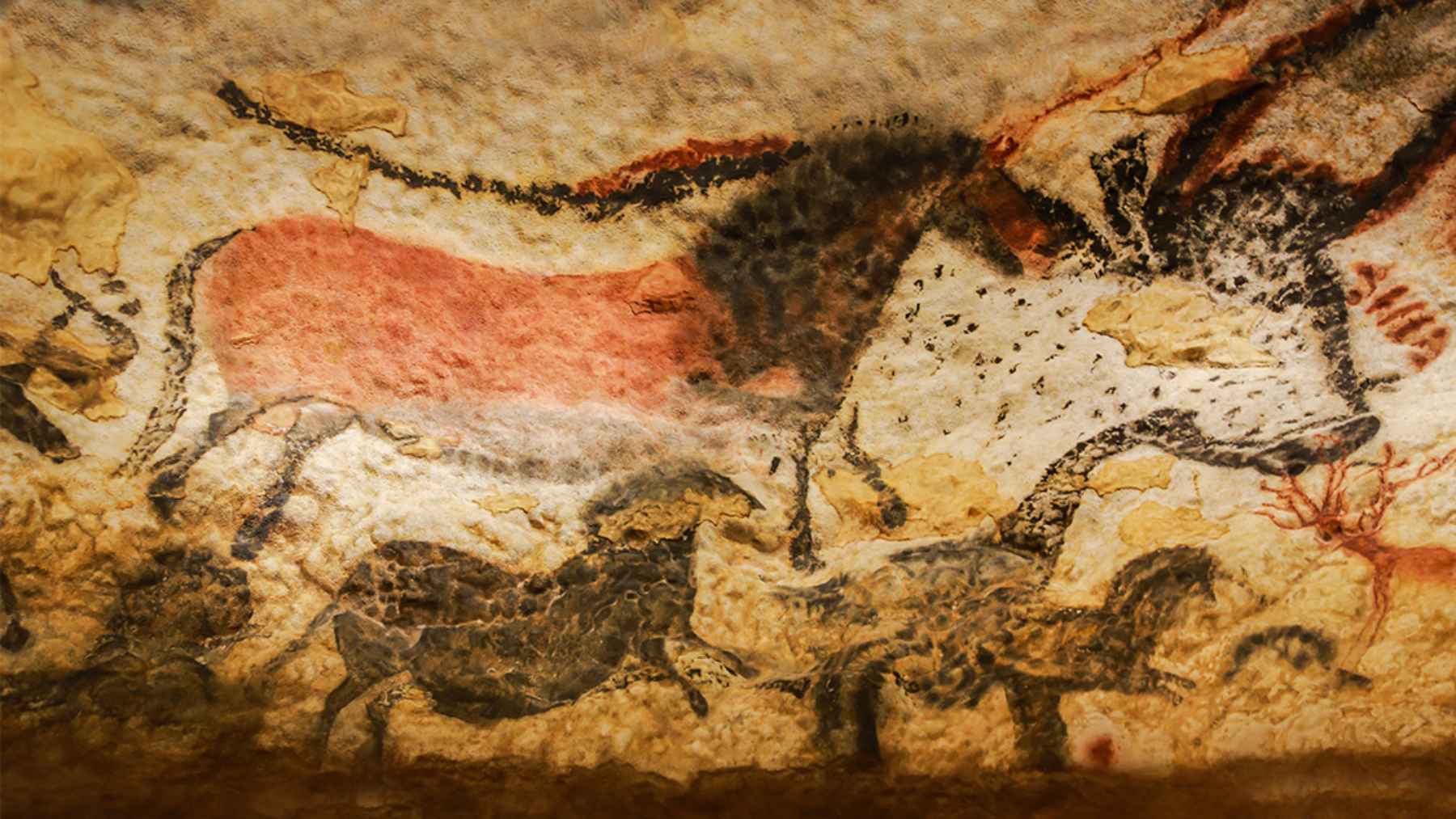
Lascaux is not one mural – it is a network of decorated spaces. Official documentation from the Ministry of Culture counts about 680 painted figures and around 1,500 engravings, spread across passages that total about 771 feet in length.
Animals dominate the imagery, from bulls and horses to deer and more abstract signs. Some figures stretch beyond 6.5 feet, which hints at planning and careful execution in a place that was never naturally well lit.
How old is the art? Radiocarbon dates cited by the Ministry fall across a range, with results roughly between 15,500 and 18,900 years before present depending on the sample and method.
The cave that could not handle fame
Lascaux opened to visitors in 1948, and it quickly became a magnet. The Ministry notes that two of the original discoverers later guided tours and were among the first to flag green algae appearing in 1958 and 1959.
By 1960, one scientific review reports the cave had received up to 1,800 visitors a day. In a confined space, that kind of foot traffic brings body heat, water vapor, and a steady stream of exhaled CO2, so authorities shut the cave to the public in 1963.
Ever been on a packed train when the windows start fogging up? Lascaux faced a similar physics problem, except the walls are coated with pigments that survived millennia and can still be pushed out of balance.
CO2 and water move like weather underground
Today, conservation is not only about the painted chambers. The Ministry of Culture frames the mission as protecting Lascaux “as well as possible, for as long as possible,” and part of that work tracks how water and carbon dioxide move through the epikarst above the cave.
Based on results from that research, the Ministry notes that a scientific committee voted in January 2015 to end CO2 extraction from the lower cave network. That is a reminder that even well-intentioned fixes need constant rechecking.
The surface above the cave is being managed too, in ways that feel familiar to anyone who has hunted for parking near a crowded attraction. Nearly 250,000 people a year visit the nearby Lascaux II replica site, and since 2014 vehicles have been prohibited on the road leading to the cave area.
A microbial battle that science is still learning from
The biggest conservation shocks have not always been visible right away. Peer-reviewed research and conservation reporting describe how Lascaux suffered a major outbreak of the fungus Fusarium solani in 2001, followed by years of chemical controls to try to stop it spreading.
Here is the uncomfortable part. A UNESCO monitoring document from 2008 describes fungicides and antibiotics being applied after a new air system was installed, with concerns from some observers that the measures were drastic.
That history helps explain the shift in tone among specialists. The Ministry of Culture describes research programs aimed at understanding the cave’s microbial communities and their dynamics, because long term stability matters more than a quick sterilization.
Replicas and virtual tours that protect the original
Once you accept that seeing can also mean damaging, replicas become a conservation tool, not a consolation prize. The Ministry says Lascaux II opened in 1983 and reproduces major panels, while Lascaux III has toured as a “nomadic” exhibition since 2012.
The most ambitious step is Lascaux IV, the International Centre for Parietal Art. According to the Ministry, it opened in December 2016 and is built around a near-complete reproduction of the cave, paired with imaging and virtual technologies designed for public outreach.
To sum it all up, Lascaux is now a case study in environmental stewardship underground, where CO2, moisture, and microbes set the limits and humans have to adapt. For most of us, the takeaway is simple: the safest visit is the one that leaves the original cave untouched.
The official virtual visit was published on the French Ministry of Culture’s website