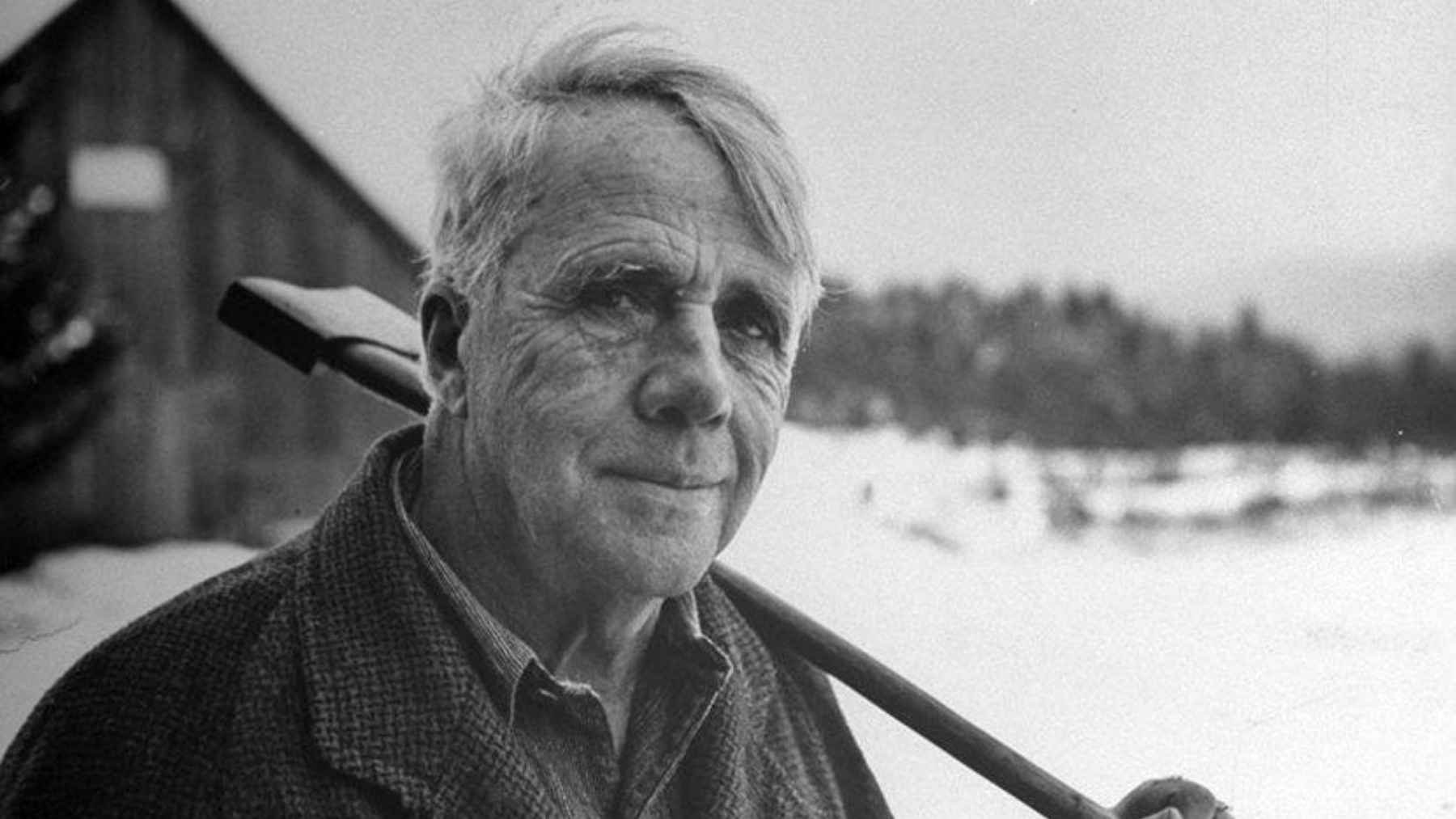
A quote attributed to Robert Frost has been circulating in offices around the world for decades and remains unsettling for one reason: his explanation of when the brain stops thinking has lost none of its power
Ever feel sharp the second you wake up, then a little foggy once the workday begins? A line often credited to Robert Frost jokes, “The brain is a wonderful organ; it starts working the moment you get up in the morning and does not stop until you get into the office,” and it keeps resurfacing in classrooms, offices, and daily motivation posts.
Taken literally, it is not true. Your brain does not power down when you show up to work, but science does help explain why thinking can feel different once routines, deadlines, and notifications take over.
Why the line feels so real
The quote lands because it describes a common shift, from open-ended thinking at home to structured thinking at work. One minute you are planning your day, the next you are answering messages and trying to remember what you were doing before the last interruption. Sound familiar?
It also plays on a simple truth about routines. For many people, mornings come with a sense of possibility, while the office can feel like a place where your attention gets assigned to other people’s priorities. That contrast is easy to laugh at, even if the feeling is frustrating.
And the humor is doing work of its own. A short joke can be a safe way to talk about mental load, burnout, and focus without turning it into a heavy conversation.
A quote with a shaky paper trail
In most places online, the line is presented as a quip from that poet, usually without a clear book, speech, or letter attached to it. Some reputable looking quote collections still share it that way, which helps explain why it keeps circulating.
At the same time, the attribution is not consistent. One university maintained quotation list credits the same wording to David Frost, a sign of how easily authorship can drift as lines get reposted and remixed.
That does not mean the quote is useless. It means it should be treated like an attributed one liner, not a verified line you can track to a page and date.
Your brain is running even when you are “doing nothing”
If the joke implies the brain stops, biology points the other way. Even at rest, the brain uses a large share of the body’s energy, because signaling between brain cells is expensive. One explainer puts it at about one-fifth of the body’s energy use for an average adult at rest.
So why do mornings feel different from afternoons for so many people? Part of it comes down to your circadian rhythm, which is your internal body clock that follows a roughly 24-hour cycle and is strongly influenced by light and dark.
The National Institute of General Medical Sciences notes that these rhythms shape sleep and hormone release, among other daily functions.
There is also a well-known morning surge in a hormone called cortisol, which helps your body mobilize energy after you wake. Research reviews describe a typical peak within about 30 to 60 minutes after awakening, though the size of the rise varies from person to person.
The office effect is often about task switching
What the quote captures best is not a shutdown, but a shuffle. Psychologists describe “switching costs,” meaning you lose time and accuracy when you bounce between tasks, even if each task is simple on its own. The American Psychological Association describes this as the measurable cost of moving from one task to another.
Modern work and school can multiply those switches. In a 2009 Stanford study on media multitasking, researcher Eyal Ophir and colleagues found that heavy multitaskers had more trouble filtering distractions and keeping information sorted.
Another idea helps explain the sluggish feeling after an interruption. Management researcher Sophie Leroy described “attention residue,” when part of your mind stays stuck on the previous task, especially if it is unfinished, making the next task harder to do well.
Small changes that protect focus
The most basic lever is sleep, and it is boring for a reason. The Centers for Disease Control and Prevention recommends that teens ages 13 to 17 get about 8 to 10 hours of sleep per night, while many adults need at least 7 hours.
After that, consistency helps more than people expect. Waking up at roughly the same time, getting morning light when possible, and keeping caffeine later in the day in check can make your alertness feel less like a roller coaster. For most people, it is the steady habits that matter.
Finally, reduce the number of micro-interruptions where you can. Turning off nonessential notifications, batching email, and finishing a small step before switching tasks can lower that lingering unfinished feeling.
What the poet’s real career tells us
Beyond any one quote, the writer linked to this line had a long public life and a serious body of work. The Library of Congress notes the American poet was born in San Francisco, published more than 30 collections, and won Pulitzer Prizes for books that include New Hampshire, Collected Poems, A Further Range, and A Witness Tree.
His career also shows why people love attaching short, punchy lines to famous names. A recognizable author makes a message feel official, even when the source is not spelled out. That is how a joke can travel faster than a footnote.
In the end, the line works best as a mirror, not a medical fact. It reminds you to notice what happens to your attention when the inbox opens and the day becomes a series of demands.
A team of journalists specializing in socio-environmental news, sustainability, climate change, the environment, responsible consumption, and innovation. At EcoNews, we provide clear, reliable, and relevant coverage of the environmental and social challenges shaping our era.