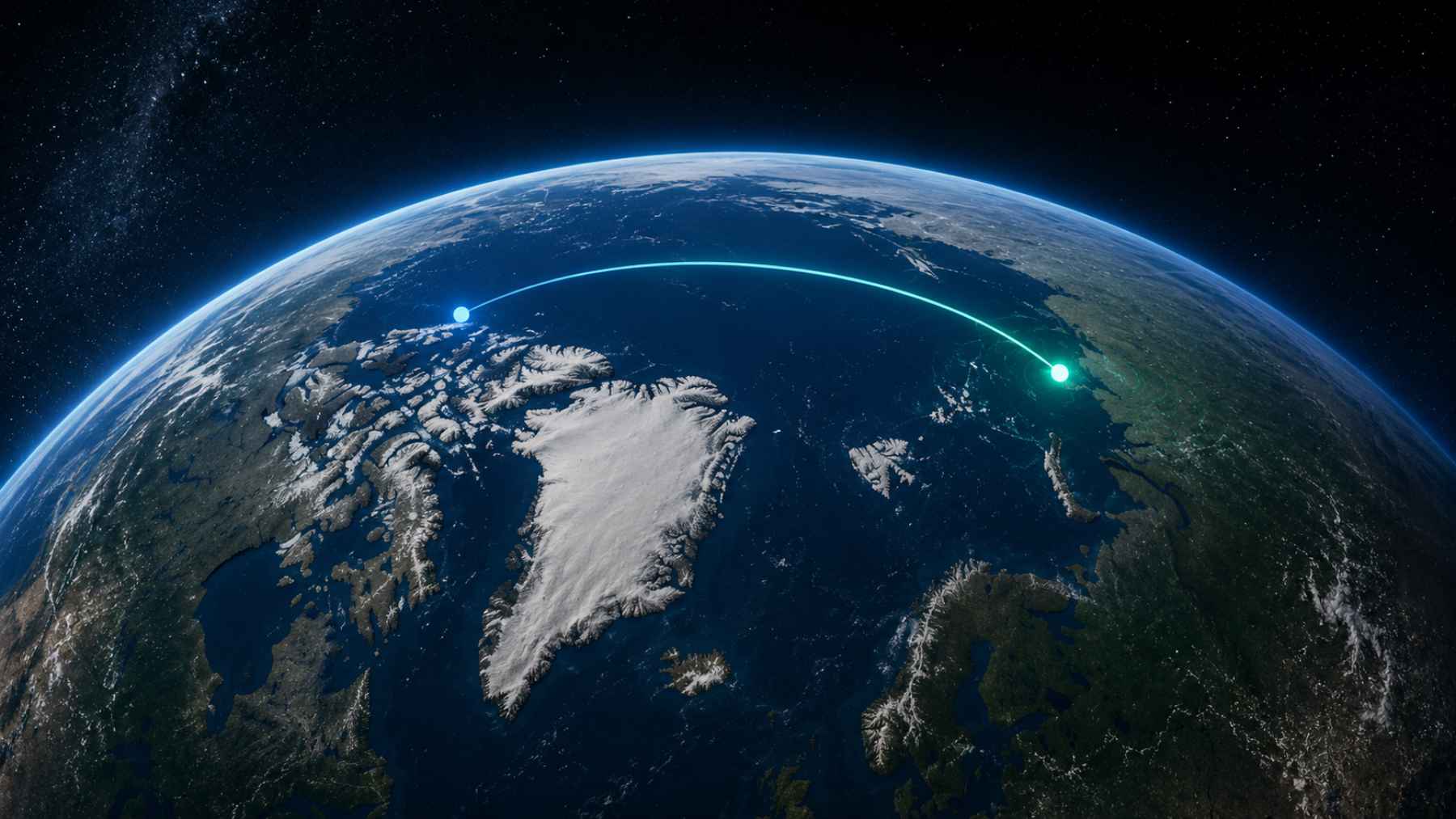
The point that a compass follows in the Northern Hemisphere has been drifting for decades. It has moved away from the Canadian Arctic toward Siberia, with some reports putting the total shift at more than 1,400 miles. That sounds dramatic, but the bigger story is not a sudden natural disaster – it is the behind-the-scenes work needed to keep navigation accurate.
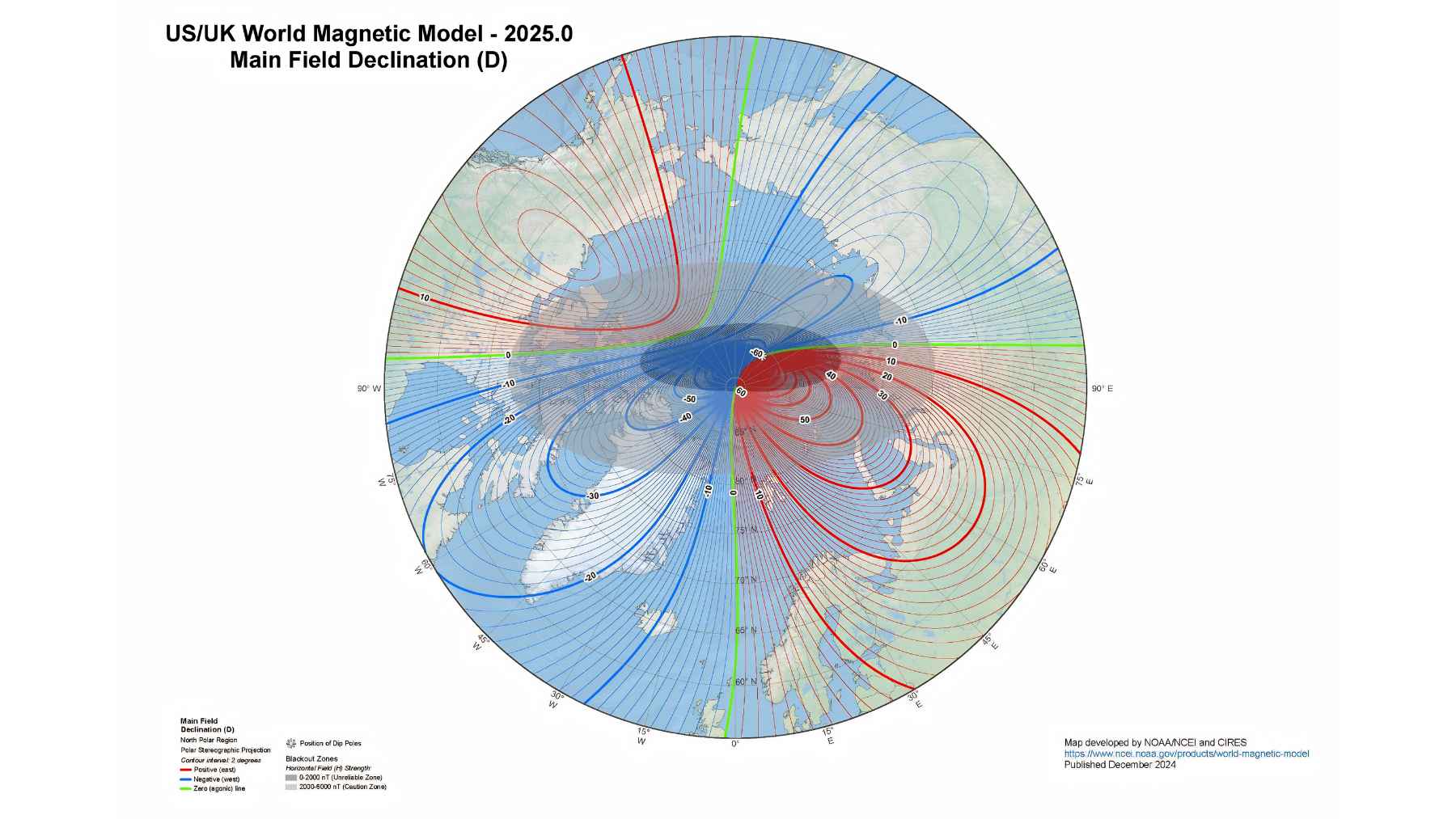
As of June 8, 2026, the official reference behind much of that work is the World Magnetic Model 2025. Released on December 17, 2024, WMM2025 remains valid until December 31, 2029, and helps aircraft, ships, submarines, GPS units, and phone compasses keep pointing the right way.
What changed in 2026?
On January 9, 2026, the National Centers for Environmental Information said WMM2025 and its high-resolution version had proven accurate during their first year of operation. The agency compared the models with fresh data from the European Space Agency’s Swarm satellites, which monitor Earth’s magnetic field from orbit.
That is the important part. The magnetic north pole is still moving, but the systems that depend on magnetic direction are being recalibrated, not bracing for the end of the world.
For 2025, officials also released a higher-detail version of the model for the first time. It improves spatial resolution near the equator from about 2,050 miles to roughly 186 miles, giving compatible heading systems a more precise magnetic map.
Why magnetic north moves
Magnetic north is not the same as the geographic North Pole. The geographic pole marks the top of Earth’s rotation axis, while magnetic north is the area where the planet’s magnetic field points downward. In simple terms, it is where a compass needle wants to aim.
Earth’s magnetic field changes because the planet is active deep inside Earth. Most of its magnetism comes from moving, electrically charged molten metals in the outer core, far below the ground beneath our feet.
Those slow changes alter magnetic declination, which is the difference between true north and compass north. This means a map, a compass, and a navigation system have to keep agreeing with each other. Otherwise, a tiny directional error can grow into a real problem over a long trip.
A strange slowdown
Dr. William Brown, a global geomagnetic field modeler at the British Geological Survey, described the recent behavior as unusual. “The current behavior of magnetic north is something that we have never observed before,” he said.
For centuries, magnetic north moved slowly around Canada. Then, during the past few decades, it picked up speed toward Siberia before slowing from about 31 miles a year to about 22 miles a year, the largest slowdown in speed seen in the modern record.
A 2020 study in Nature Geoscience by Philip W. Livermore, Christopher C. Finlay, and Matthew Bayliff linked the acceleration to a kind of tug-of-war deep inside Earth.
The researchers found that magnetic patches beneath Canada and Siberia helped steer the pole’s path, with the Canadian patch weakening at the surface and letting the pole move toward Siberia.
Who depends on it
The World Magnetic Model is not just for scientists staring at Arctic maps. The United States and United Kingdom governments, the Federal Aviation Administration, the U.S. Department of Defense, the North Atlantic Treaty Organization, the International Hydrographic Organization, and the U.K. Hydrographic Office all use the model.
That sounds remote, until you think about everyday travel. If you have flown on an airplane, sailed on a ship, used a phone map, or watched your blue dot rotate as you turned on a sidewalk, you have brushed against the same basic problem.
Arnaud Chulliat, a senior research scientist for the Cooperative Institute for Research in Environmental Sciences working with the model, put it plainly. “Satellite GPS is an important tool for determining your location, but knowing your orientation depends on Earth’s magnetic field.”
Not a pole-flip warning
So, should people be worried? For the most part, no. The current shift is best understood as a navigation challenge, not a warning that Earth’s magnetic field is about to collapse.
Magnetic reversals have happened in Earth’s deep past, yet the U.S. Geological Survey says there is no evidence that mass extinctions correlate with magnetic pole reversals. That does not make the topic unimportant, but it does keep the fear in check.
There are real limits to remember. The National Oceanic and Atmospheric Administration’s (NOAA) 2026 annual report noted that magnetic storms can temporarily reduce model accuracy, especially at high latitudes, though the models include space weather in their error estimates.
What happens next
For most people, the change will stay invisible. Phones update their software, aviation systems adjust, ships refresh their navigation data, and specialized users download the latest model files.
Behind the scenes, the model is checked every year and updated every five years. That quiet schedule is what keeps the moving magnetic planet from turning into a navigation mess.
Published on NOAA’s website.