The National Oceanic and Atmospheric Administration, better known as NOAA, has officially declared the return of El Niño in the equatorial Pacific. The agency’s June 11 synopsis put it plainly, saying, “El Niño conditions are present and expected to strengthen” into the Northern Hemisphere winter of 2026 to 2027.
The announcement does not mean the ocean changed overnight. It means forecasters now see enough evidence that the ocean and atmosphere are working together in a familiar global climate pattern. For families, farmers, city planners, and energy managers, that can show up in practical ways, from flood risk to the electric bill during a strange warm spell.
El Niño is now official
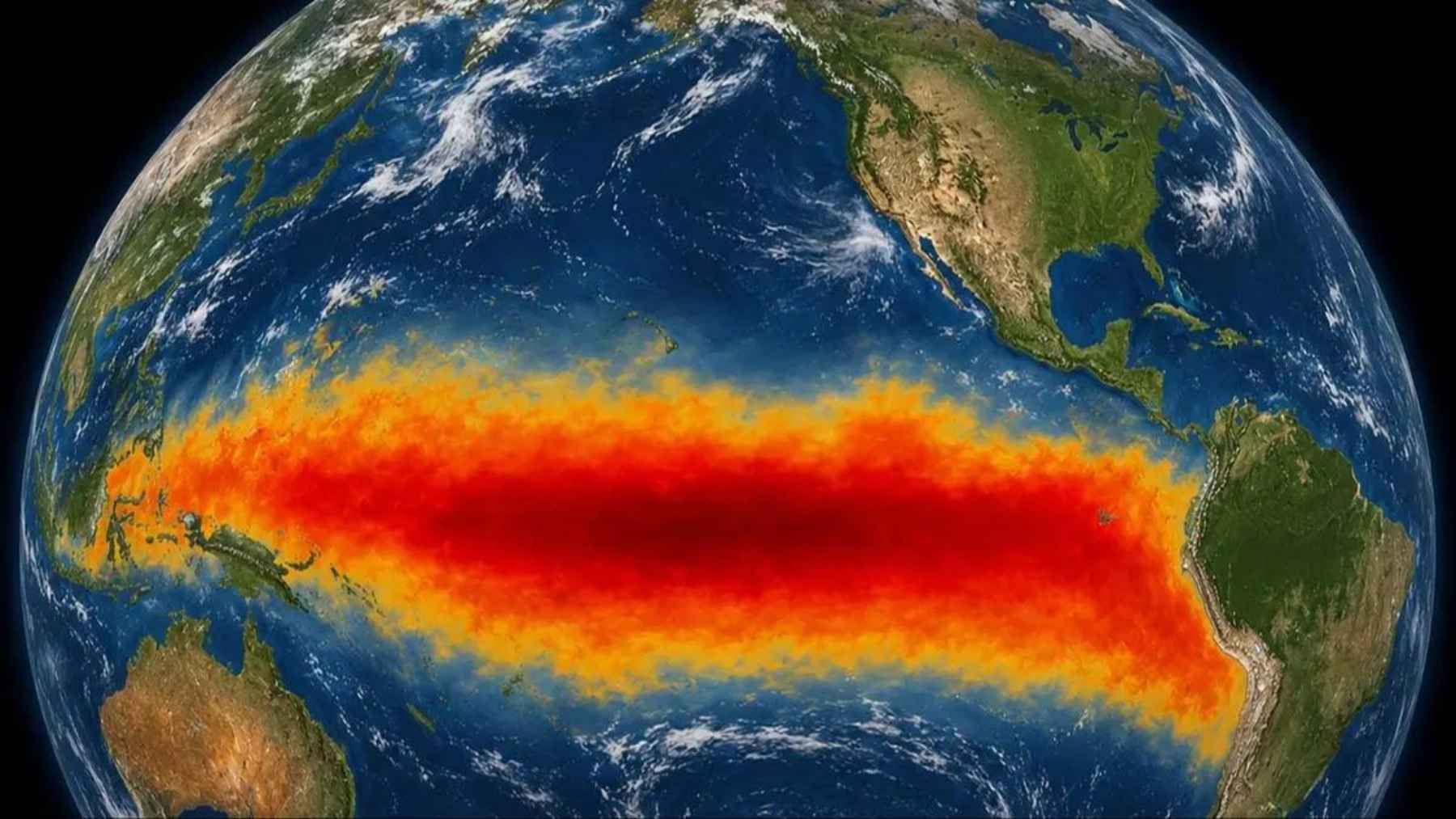
The new alert is called an “El Niño Advisory.” In simple terms, El Niño is the warm phase of a natural Pacific Ocean cycle known as the El Niño-Southern Oscillation (ENSO), when unusually warm water spreads across the central and eastern tropical Pacific and helps shift weather patterns far beyond the ocean itself.
That warm water is not enough by itself. For an official call, forecasters also look for changes in winds, clouds, and air pressure above the Pacific. Think of it like a dance. The ocean can take the first step, but the atmosphere has to follow.
In this case, it did. Forecasters reported warmer-than-normal surface waters, unusual wind patterns near the equator, more storm-building clouds over parts of the central Pacific, and pressure readings that fit the El Niño pattern. That is the paperwork catching up with the planet.
What forecasters saw
The main monitoring zone, called Niño 3.4, was running about 1.3 degrees Fahrenheit above average in the latest weekly reading. Near the coast of South America, the Niño 1+2 region was much warmer, at about 3.8 degrees Fahrenheit above average.
Those numbers may sound small. In the open ocean, though, a difference of one or two degrees over a huge area can move heat around the planet like a giant engine. That is why scientists watch these patches of water so closely.
The deeper ocean also still holds a large amount of extra heat across the central and eastern equatorial Pacific. That matters because subsurface warmth can help feed the surface for months, giving the pattern more staying power as it heads toward winter.
Why the label came now
The declaration is best understood as a formal confirmation, not a sudden flip. The Pacific had been warming for months, and earlier forecasts already pointed toward El Niño becoming more likely during the summer of 2026.
The threshold is also technical. The agency now verifies probabilities with the Relative Oceanic Niño Index, which compares the monitored Pacific region with the broader tropical oceans. A warm event is marked when the three-month average rises above about 0.9 degrees Fahrenheit by that measure, along with other signs.
Why does that matter to everyday readers? Because a forecast label is not just a headline. It is a signal that weather agencies, water managers, emergency planners, and farmers can start treating El Niño as the main climate backdrop for the months ahead.
A winter peak is possible
The North American Multi-Model Ensemble, a group of forecast models used by scientists, points to strengthening through late 2026 and early 2027. The official June outlook gives the event a 63% chance of becoming “very strong” during November, December, and January.
That would put it among the largest El Niño events in modern records, which go back to 1950. Still, that does not mean every place will see extreme weather. Climate patterns raise the odds. They do not write a guaranteed script.
This is the part that can get misunderstood. A very strong El Niño can tilt the atmosphere toward certain outcomes, but local weather still depends on storm tracks, ocean temperatures, land conditions, and other climate drivers.
What it could change
El Niño often brings wetter conditions to the southern United States and parts of southern South America, the Horn of Africa, and central Asia. On the other hand, it is often linked with drier weather in Central America, northern South America, the Caribbean, Australia, Indonesia, and parts of southern Asia.
For people on the ground, that can mean flooded roads in one region and thirsty reservoirs in another. It can also affect food prices if drought hits crops, or public health if heat and heavy rain help mosquitoes spread in new ways.
The World Meteorological Organization warned earlier in June that El Niño typically increases global temperatures and drives more extreme rainfall patterns. It also stressed preparation, because seasonal forecasts give governments and communities time to act before the worst impacts arrive.
Not every El Niño behaves alike
No two El Niño events are identical. One may bring strong winter storms to one area, while another produces a weaker or shifted pattern. That is why experts warn against treating the forecast like a map of certain disasters.
There is also a climate change backdrop. A warmer atmosphere can hold more moisture, and warmer oceans can add energy to weather systems. So even when El Niño is natural, its impacts can unfold in a world that is already hotter than it used to be.
The careful message is not panic. It is preparation. Watch the seasonal outlooks, pay attention to local flood and drought updates, and remember that a Pacific warming thousands of miles away can still shape the weather outside your window.
The official ENSO Diagnostic Discussion has been published by NOAA’s Climate Prediction Center.