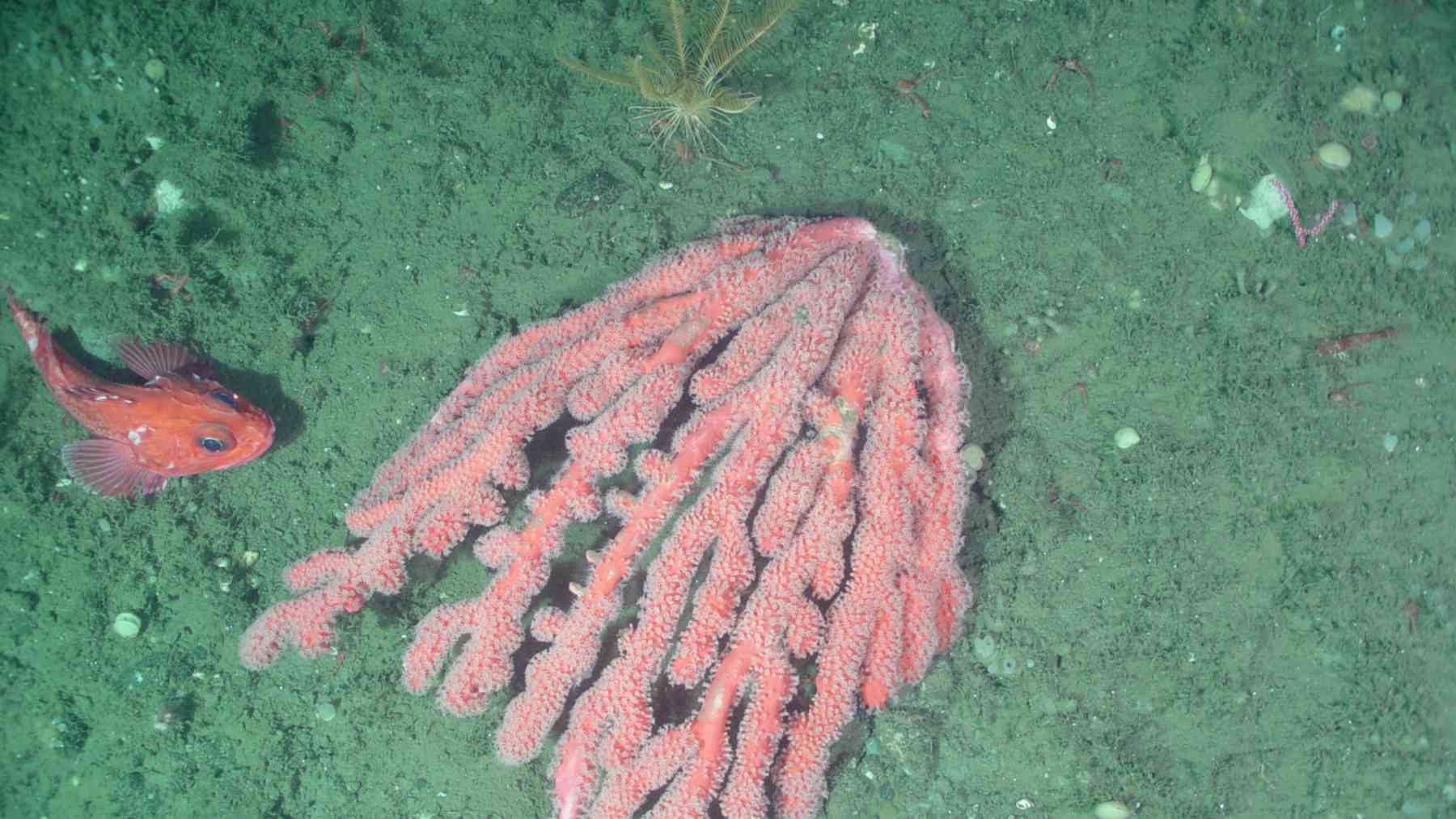
A newly described coral from the southeastern Pacific is helping researchers investigate a surprisingly basic question about life in the deep ocean. How do some corals build large, branching colonies without a continuous central skeleton? Inside Paragorgia quitinosa, scientists found evidence of chitin forming a network along the walls of internal channels.
The finding offers a possible explanation for how bubblegum corals maintain their shape while remaining flexible. Published September 13, 2026, the study identifies a previously overlooked component of their internal architecture, although exactly how much mechanical support it provides still needs testing. That distinction matters when understanding the living structures that shelter other ocean animals.
A pale coral from an underwater mountain
The specimen was collected on July 23, 2024, at a depth of 670 meters, approximately 2,200 feet, on an unnamed seamount along the Nazca Ridge. Researchers used the remotely operated vehicle SuBastian, deployed from Schmidt Ocean Institute’s research vessel Falkor (too), to retrieve the material from this underwater mountain chain.
The living colony was pale beige and stood less than half a meter tall, or about 20 inches. Its branches carried rounded bumps containing tiny coral animals called polyps, and two brittle stars accompanied the collected specimen. Genetic analyses helped establish its position within Paragorgia, the group commonly called bubblegum corals.
How branches stand without a central skeleton
Some other Paragorgia colonies grow several meters tall, making their internal support a longstanding puzzle. They lack the continuous skeletal axis found in many branching corals, yet contain countless microscopic mineral pieces called sclerites. Those pieces are embedded in tissue rather than joined into one solid central rod.
The newly studied coral adds another element to that picture, a network of channels with walls containing evidence of chitin. The researchers propose that this natural polymer helps reinforce the colony alongside its other components. Think of reinforcement distributed through a structure, with many small supports potentially contributing to the strength of the whole.
Following the chemical clues
The investigation combined microscopy with chemical analyses of the new species and a second, unidentified Paragorgia specimen. Infrared spectroscopy provided the strongest evidence for chitin, while another test detected N-acetylglucosamine, one of its molecular building blocks. Black corals already known to contain chitin served as comparison samples.
The researchers describe their findings as the “first analytical evidence of chitin in octocoral tissues.” Chitin had previously been reported in black corals and some sea anemones, so the novelty lies in finding it in this particular coral group. Here, the material appears associated with internal tubes running through the tissue connecting the polyps.
What remains to be tested
The chemical evidence has limits, which the paper acknowledges. Raman measurements detected calcite rather than a clear chitin signature, and the researchers recommend more thorough extraction and additional analysis to resolve the material’s precise structure. Identifying a building block alone does not establish every property of the finished polymer.
There is also a difference between locating a potential reinforcing material and measuring what it does. The study did not directly test how much force the branches withstand or how their flexibility changes when chitin is removed. Its proposed role in supporting large colonies remains an explanation to investigate through further experiments.
A coral colony is also a habitat
Why should a hidden network inside a coral matter beyond the laboratory? Branching corals create places where other animals can live, and the brittle stars collected with this specimen provide a small example of that connection. Understanding how those branches are built helps explain the physical structure of an entire habitat.
The conservation concern extends beyond this species. NOAA Fisheries explains that deep-sea corals and sponges are often slow-growing, long-lived animals vulnerable to disturbance from activities such as fishing and construction. Those general risks give researchers reason to study these communities carefully, although this paper did not measure human impacts on P. quitinosa.
What scientists need to find next
Only one specimen of the newly named species was available for the study, leaving basic questions about its distribution and abundance unanswered. Further exploration of the Nazca Ridge and neighboring seamount chains could reveal whether similar colonies are widespread or concentrated in particular locations. More samples would also allow scientists to investigate how commonly other octocorals use chitin in their internal architecture.
For now, the discovery supplies both a new species and a promising clue about how some deep-sea corals build their branches. The next challenge is connecting that chemistry to measurable strength, flexibility, and the broader ecology of these ocean habitats. The study was published in Scientific Reports.
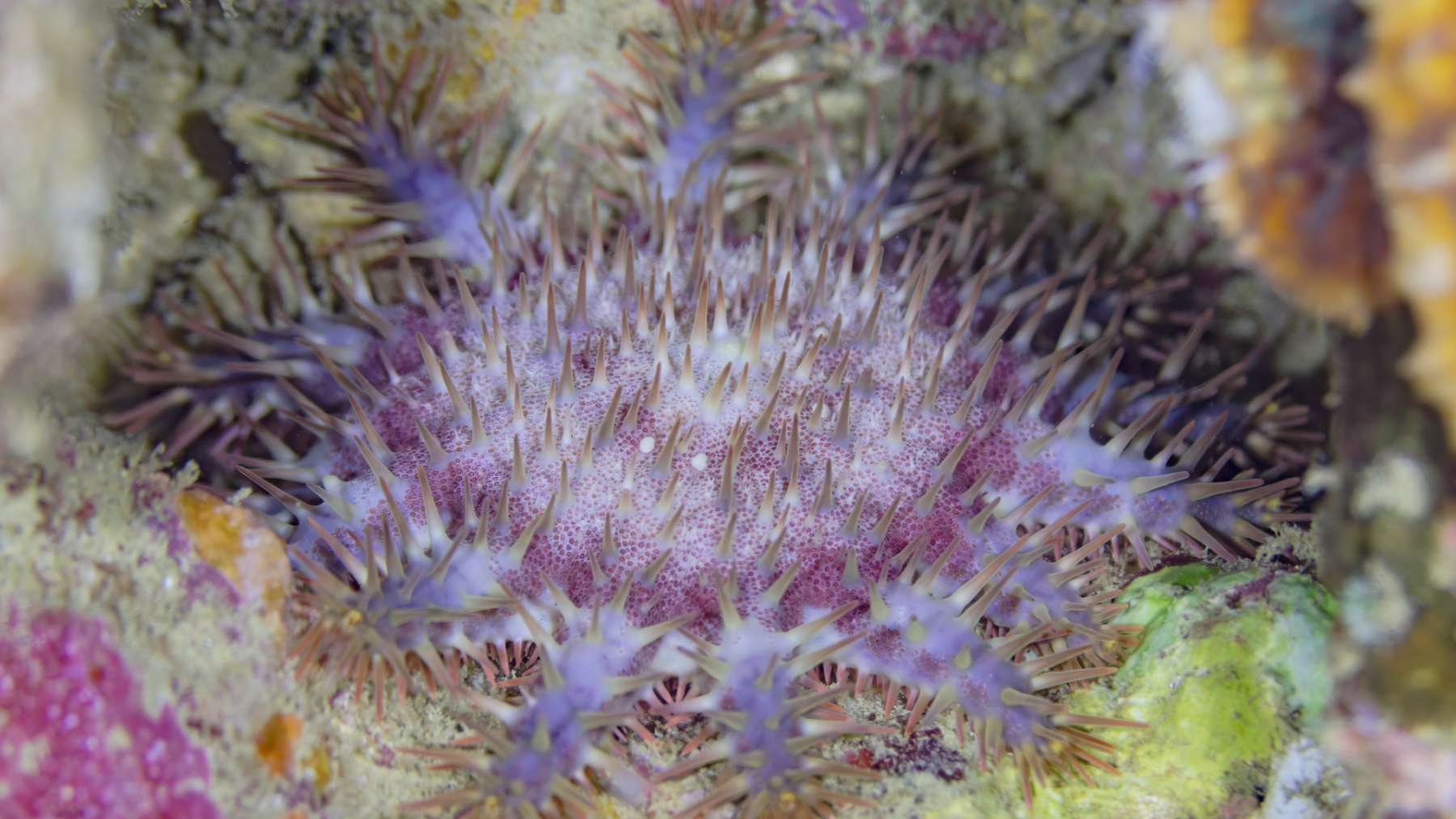
Photo: Ed Bowlby, NOAA/Olympic Coast NMS / Wikimedia Commons (Public domain)