In 2015, Luis Delgado-Aparicio, a physicist at a U.S. Department of Energy fusion laboratory in New Jersey, won a five-year, $2.6 million Early Career Research award from the department’s Office of Science to study impurities, the stray atoms that cool a fusion plasma and make fusion ignition harder to reach. The grant was meant to help remove what Princeton University called “a key barrier to developing fusion power as a safe, clean and abundant source of electric energy.”
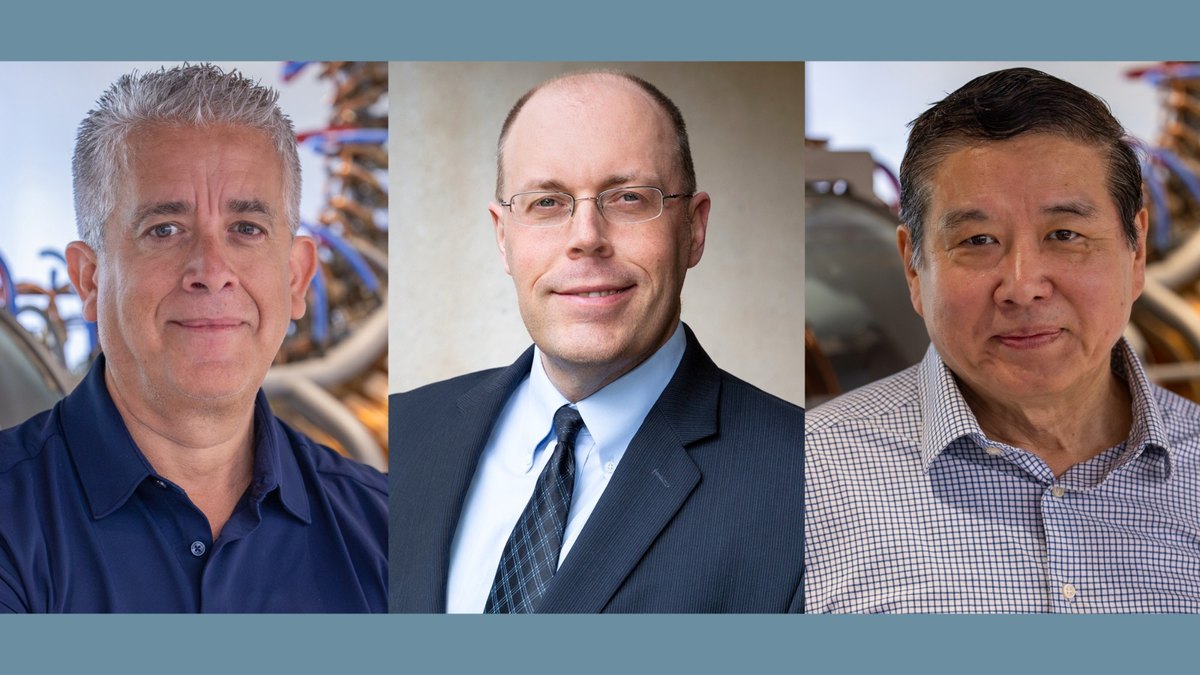
Eleven years on, Delgado-Aparicio is head of advanced projects at the Princeton Plasma Physics Laboratory (PPPL), and a paper he wrote with principal research physicist Masayuki Ono and chief scientist Jonathan Menard maps the route to fusion ignition that uses the least energy, with heating first and fuel after. “A lot of companies want to climb the mountain head-on and spend enormous energy to get there,” he said in the lab’s announcement. “Go around the peak instead. You reach the same place in a much smarter way, and you use far less energy.”
A test written in 1955
Ignition is the point where a plasma, a gas of charged particles, keeps itself burning on the heat of its own fusion reactions. The yardstick for it goes back to a British physicist, and as Samuel Wurzel and Scott Hsu put it in a 2022 review in Physics of Plasmas, “In 1955, J. D. Lawson identified a set of necessary physical conditions for a ‘useful’ fusion system.”
“Lawson’s analysis was declassified and published in 1957 and has formed the scientific basis for evaluating the physics progress of fusion research toward the key milestones of plasma energy breakeven and gain,” they wrote.
What Lawson gave the field was a finish line. “While that equation marks the finish line, also known as ignition, it says nothing about the best way to reach it,” the PPPL announcement says, and the new paper’s abstract describes fusion ignition as “a constrained dynamical pathway rather than a static threshold condition.”
Around the peak through the Cordey saddle
According to PPPL, “Many fusion efforts plan to climb straight to the summit by raising the plasma’s density first and then adding heat. The new map shows a better way to the peak: heating the plasma first, then raising its density once it’s hot.” Density-first plans also bump into a ceiling in the tokamak, the doughnut-shaped magnetic machine PPPL calls a leading candidate for fusion power, although U.S. teams have reported ways to exceed the Greenwald density limit.
The low pass on that map is the Cordey saddle, which PPPL describes as “the lowest point on a ridge that separates a plasma that still requires external heating from one that burns on its own.” With pure fuel it sits at a Q of about 5, so fusion is handing back roughly five times the heating power put in, and impurities or very strong magnetic fields slide it to a higher Q.
Tungsten at one part in 10,000
The new criterion folds in helium ash, which is spent fuel that dilutes the plasma, along with wall impurities, synchrotron radiation given off by electrons as they travel and heat leaking out of the plasma. In the paper’s simplified model, tungsten at one part in 10,000 inside the plasma can roughly double the pressure needed for ignition, according to PPPL. More than a dozen next-generation machines have chosen tungsten for their inner walls, and South Korea’s KSTAR has already upgraded to tungsten walls.
“When you leave these effects out, you say the design will work fine,” said Ono, who has worked at PPPL since 1978. “When you put them in, the picture changes, and it becomes quite important.”
In 2024 Delgado-Aparicio’s X-ray group measured a six-minute plasma at WEST, a tungsten-walled tokamak in France, a record for a machine clad in tungsten. “The tungsten-wall environment is far more challenging than using carbon,” he said in PPPL’s release on that record. “This is, simply, the difference between trying to grab your kitten at home versus trying to pet the wildest lion.”
“From the eight different intensity measurements, we got the best fit, which was between 4 and 4.5 kilovolts for the core plasma. This represents nearly 50 million degrees and for up to six minutes,” he said then.
Ono, for his part, proposed in 2021 putting light impurities into a tokamak on purpose, in its exhaust region, to spread out heat there. “The idea is to inject light impurities such as lithium, boron, or beryllium into the divertor region so as to radiate away much of the energy,” he explained. “The trick will be to go in quickly enough to protect the divertor with very little radiation affecting the plasma core.”
The new paper also finds an upside to the losses, which the authors call “a previously unrecognized stabilizing feedback arising from transport, impurity and synchrotron damping,” one “capable of reducing runaway growth and enabling steady-state burn.”
Lithium walls and lined-up fuel
Walls coated with liquid lithium can block tungsten from entering the plasma while improving heat retention, according to PPPL’s summary of the paper, and the lab already has a machine built around that idea. “Although LTX-β is a very modest-sized spherical tokamak, it is the first and still the only plasma confinement device in the world with a core plasma completely contained by a liquid lithium wall,” Richard Majeski, head of LTX-β, said in 2024. “The results from LTX-β have been very promising.”
“The purpose of these devices is to confine the energy,” PPPL staff research physicist Dennis Boyle said about that work in 2024. “If you had much better energy confinement, you could make the machines smaller and less expensive. That would make the whole thing a lot more practical, and cost-effective so that governments and industry want to invest more in it.”
PPPL principal research physicist Ahmed Diallo, a co-author of a 2024 study on spin-polarized fuel, in which the fuel nuclei are lined up before they fuse, compared the problem to a gas stove. “When gas comes out of a stove, you want to burn all the gas,” he said. “In a fusion device, typically, the tritium isn’t fully burned, and it is hard to come by. So, we wanted to improve the tritium-burn efficiency.”
“Fusion is really, really hard, and nature doesn’t do you many favors,” said Jason Parisi, first author of that study. “So, it was surprising how big the improvement was.”
Still only on paper
The work is theoretical, a 0D analysis in the abstract’s words, and no machine has tried the heat-first route, because, as PPPL puts it, “no experiment today reaches the temperatures where the Cordey pass sits,” so the team plans digital experiments first. Ono, who would like the field to share one realistic model for judging a design before it is built, said, “Fusion experiments cost a great deal of money, and you do not want to make mistakes you could have caught beforehand.”
“Implementing liquid lithium walls in a much larger tokamak will be difficult and expensive. In order to move confidently ahead with liquid lithium walls in a future phase of NSTX-U, exploratory experiments at a smaller scale are essential,” Majeski said in 2024. Diallo said of polarized fuel in 2024, “One challenge would be to demonstrate techniques to produce spin-polarized fuel in large quantities and then store them. There’s a whole new technology area that would open up.”
PPPL says the work could change how tokamaks and twisty stellarators are designed and built. Wurzel and Hsu, for their part, wrote that although their review focused on the Lawson criterion, “it is only one of many equally important factors in assessing the progress and ultimate likelihood of any fusion concept becoming a commercially viable fusion-energy system.”
The full study was published in Physical Review Letters on September 10, 2026, and PPPL described it in an October 5 release.
“While more study is needed, we are excited by these results, and they suggest a clear path forward for future research in this area,” said Menard.
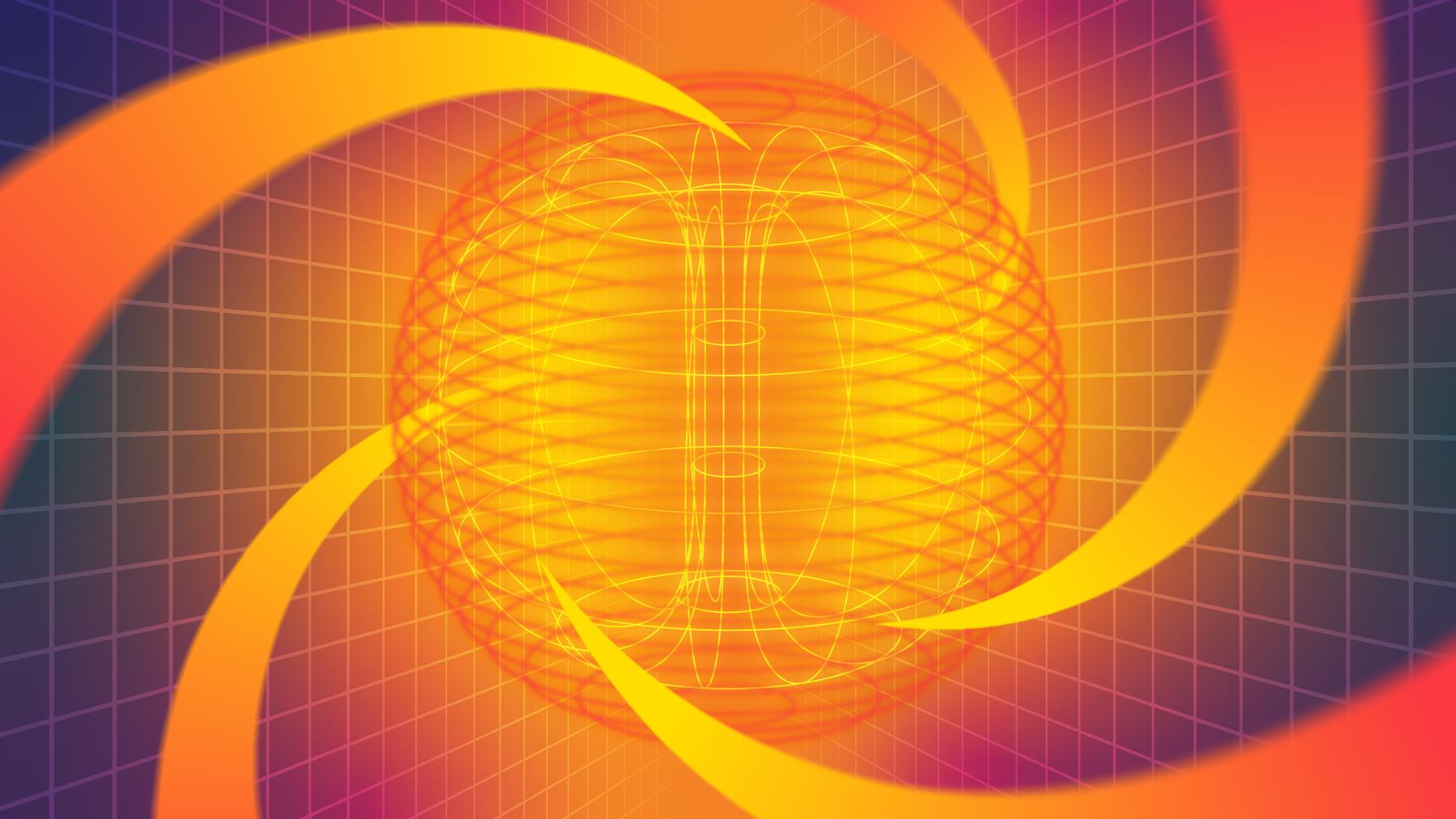
Image: Kyle Palmer / PPPL Communications Department