Nuclear fusion, the same reaction that powers the Sun, has for many years been predicted as the ultimate clean energy source. Since fusion has the potential to generate huge amounts of energy from minimal amounts of fuel with zero emissions of greenhouse gases, it will change the way we power the world.
Transforming Fusion: Plasma density soars to new heights
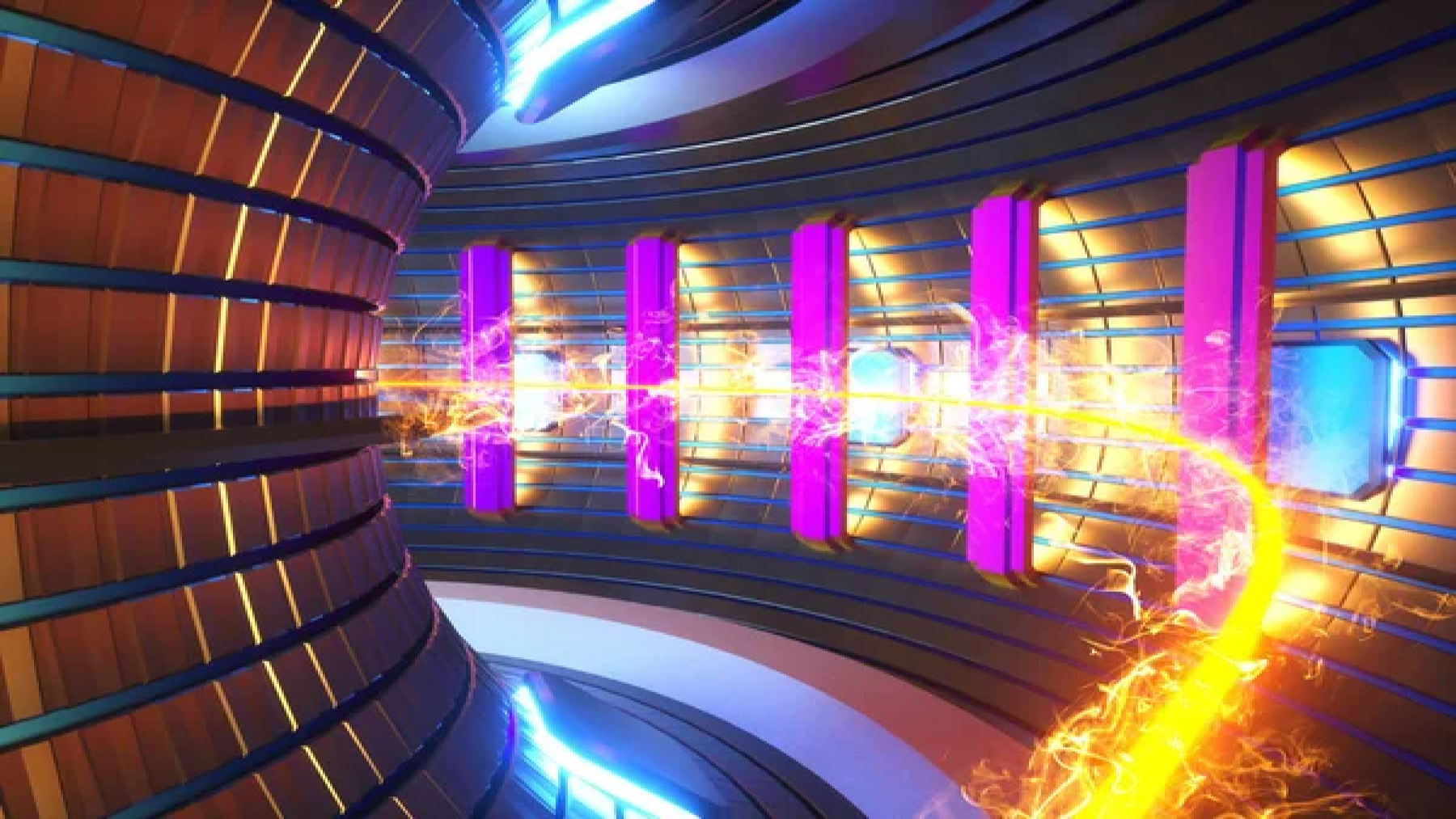
Achieving nuclear fusion on Earth is only practical under very extreme conditions, for example, plasma temperatures above hundreds of millions of degrees Celsius. This plasma, a gas of hot electrically charged matter, must be maintained at a stable state under strong magnetic confinement.
A key challenge has been to break the Greenwald limit which restricts the number of plasma’s in tokamak reactors, which are doughnut-shaped reactors at the core of fusion research. Scientists at General Atomics have recently accomplished a breakthrough, that is, it surpassed the Greenwald limit by 20% with the same plasma quality, 50% higher than the conventional high-confinement mode.
This progress is of major significance to fusion technology, relieving a major bottleneck hampering advancement. It establishes the path towards more efficient reactor designs able to maintain the high-density plasma required for net fusion reactions on a prolonged basis.
Nuclear fusion: Tackling energy inefficiencies with innovation
Plasma instabilities in the exterior of the plasma that jeopardize the operational capabilities of the reactor and subsequent energy drain has been a long-standing challenge. The General Atomics team has shown a new synergy between increased plasma density and improved stability, leading to a more stable confinement in which fusion reactions can occur with relative ease.
This result indicates that it may be possible to design future reactors to optimize the conditions with less disturbance, bringing the promise of practical fusion power closer to reality (just like the fusion reactor which produces 600 million neutrons per second).
Another promising advancement comes from the Princeton Plasma Physics Laboratory (PPPL), where researchers have tackled the problem of energy losses caused by unwanted electromagnetic waves, known as slow modes.
Researchers found that by placing a Faraday screen, a metal-clad shield, at particular angles, these energy-draining waves can be blocked while effective heating waves pass through. This innovation provides an advanced approach to increase the plasma temperature, as well as the fusion reaction efficiency.
Achieving temperature balance: A step toward the success of nuclear fusion
To succeed, nuclear fusion needs a truly exceptional temperature balance in the plasma. Although the core needs to be heated to hundreds of millions of degrees Celsius to sustain nuclear fusion, the outer boundaries must remain below freezing to protect reactor components.
Through their understanding of how to preserve this temperature gradient, the General Atomics team’s knowledge provides much-needed insight to design compact, efficient, and highly reliable reactors. Likewise, results from PPPL regarding Faraday screens provide an innovative route toward parameter control optimization.
Selection of slow modes by researchers enables improvement in thermal efficiency that facilitates the ultimate high temperatures needed for nuclear fusion reaction. These developments not only move us closer to commercial nuclear fusion power, but they also address fundamental engineering challenges that have plagued scientists for many years.
The dream of utilizing the Sun’s power on Earth is no longer just theoretical (just like this artificial sun which is being re-lit by China). Advances in the ability to overcome the Greenwald limit, control plasma instabilities, and achieve relatively precise temperature control are bringing fusion energy closer to being in the realm of commercially practical energy.
Although there are still some tasks that need to be accomplished, the work that has been done by researchers at General Atomics and PPPL is a clear demonstration that a clean, inexhaustible fusion energy fueled future is possible.