Sulfur dioxide levels now meet the EPA's tougher acid rain standard at every U.S. monitor with complete data, and one West Texas site sits right at the limit
Sulfur dioxide meets the EPA's 2024 acid rain standard at all 292 U.S. monitors with complete data; a Howard County, Texas, site sits right at the limit.

· 3 min read
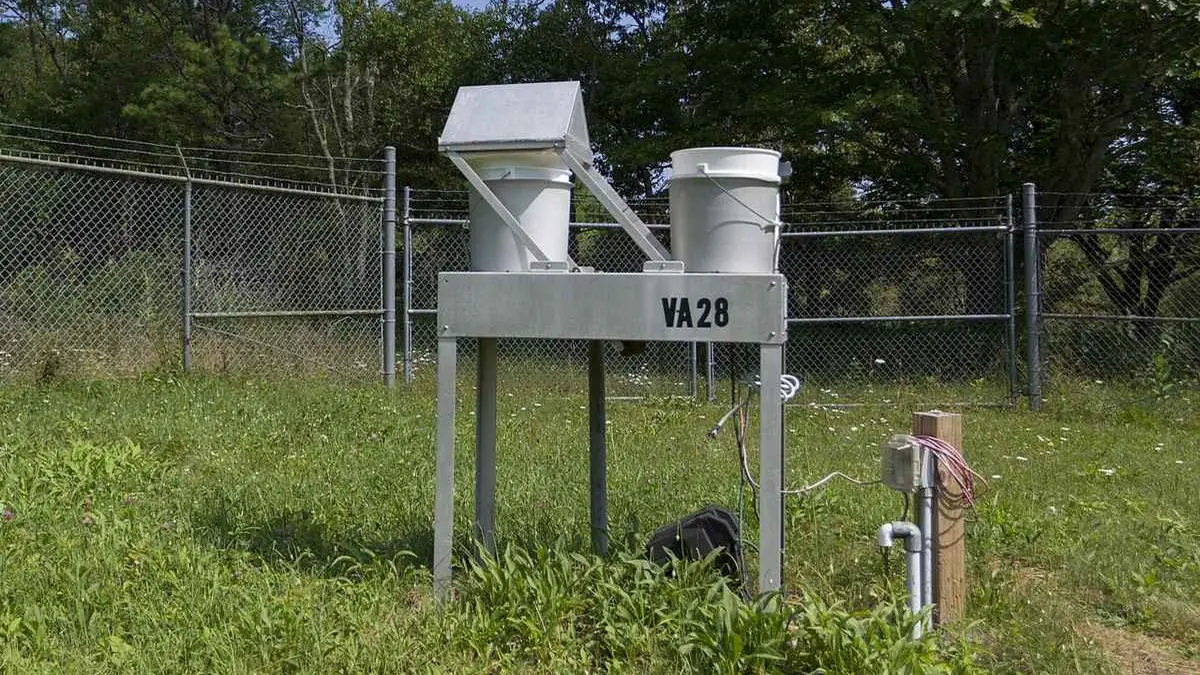
Sulfur dioxide, one of the two main gases behind acid rain, now meets a stricter federal limit across the country. The Environmental Protection Agency plans to classify every state and territory as meeting its 2024 standard, though the decision is not final and a public comment period runs until December 23, 2026. The new limit is an annual average of 10 parts per billion, averaged over three years. All 292 monitors with complete data for 2023 to 2025 meet it, and 136 of them recorded a value of zero once rounded. The closest call is in Howard County, in West Texas, where the three-year value is exactly 10 parts per billion. Concentrations have fallen sharply since 2000, but the rule notes that soils can take decades to recover. States have 30 days to object to any change before the agency issues final designations.
Key points
- sulfur dioxide
- acid rain
- EPA
Sulfur dioxide is one of the two main gases behind the acid rain that once damaged lakes and forests in the eastern United States. It now meets a stricter federal limit across the country. The Environmental Protection Agency plans to classify every state and territory as meeting its 2024 standard for the pollutant.
The agency told states of its plans on or about November 18. The decision is not final yet. A Federal Register notice dated November 23 opens a public comment period that runs until December 23, 2026.
A standard written for ecosystems
This is a secondary standard. Under the Clean Air Act, primary standards protect human health, while secondary ones protect public welfare, such as soils, water and vegetation.
The EPA set the new limit in a December 2024 rule. It is an annual average of 10 parts per billion, averaged over three consecutive years.
It replaced a limit set in 1971 that worked very differently. The old standard capped sulfur dioxide at 0.5 parts per million as a three-hour average. It was designed around direct injury to plants, while the new one tracks the long-term exposure that feeds acid deposition.
What the monitors show
The technical support document behind the decision lists 292 monitoring sites with complete, certified data for 2023 to 2025. Every one of them meets the new standard, and 136 of them recorded a three-year value of zero, once rounded.

Most readings are far below the limit, and a monitor in Jefferson County, Alabama, averaged just 1 part per billion. Apart from the Texas site, the highest values on the list are 4 parts per billion, at monitors in Hawaii County, Hawaii, and St. Lawrence County, New York.
The closest call is in Howard County, in West Texas. Its three-year design value is 10 parts per billion, the level of the standard itself.
That site's yearly averages were 8.5 parts per billion in 2023, 12.5 in 2024 and 8.7 in 2025. The middle year was above the limit. Still, the standard is judged on the three-year average, not on a single year.
Another 35 monitors were running but lacked enough data for a valid three-year value, usually because of gaps in data collection. For those areas, the EPA weighed older certified values and readings from neighboring counties. It also looked at recent uncertified data before concluding that they meet the standard too.
Where acid rain comes from
According to the EPA's acid rain guide, sulfur dioxide and nitrogen oxides react with water, oxygen and other chemicals in the air to form sulfuric and nitric acids. Those acids fall as rain, snow, fog, hail or dust. They can harm soil, forests, streams and lakes.
The agency says two thirds of the sulfur dioxide in the atmosphere comes from power plants that burn fossil fuels. Vehicles, heavy equipment, refineries and other industries add more. Wind can carry the pollution over long distances and across borders, so the problem is not limited to people who live near the sources.
The 2024 rule describes decades of evidence linking sulfur deposition to the acidification of sensitive soils and surface waters, particularly in the eastern United States. Sulfur dioxide can also harm plants directly by reducing photosynthesis and growth. As exposure declined, some studies in the East reported increased growth in certain sensitive tree species.
A long decline, but slow recovery
Concentrations have fallen sharply. The rule notes that the median value at monitors under the old three-hour standard dropped from about 50 parts per billion in 2000 to under 10 in 2021.
Recovery on the ground can lag behind cleaner air, however. The same rule cites soil studies in the Northeast that found acidity increased over several decades even as deposition declined. Soils first have to recover chemically before plants and animals can bounce back.
What happens next
For many states, the change is only a label. The EPA intends to switch some initial designations of "attainment" or "unclassifiable" to a combined "attainment/unclassifiable" category, which the agency says carries the same legal obligations.
Pennsylvania and Montana did not send initial designations, and neither did five territories or any tribe. States have 30 days from the EPA's letters to argue against any change, and the agency will issue final designations after reviewing that input and public comments.
The state-by-state letters and the EPA's responses are posted on the agency's designations page.
Photo: Mary O'Neill/National Park Service
Glossary for this story
- EPA
- The Environmental Protection Agency: the U.S. federal agency in charge of protecting air, water and land and enforcing environmental laws.
- Fossil fuels
- Coal, oil and natural gas. They formed over millions of years from the remains of living things and release CO₂ when burned.
Jordi Company
Writer at ECOnewsJordi Company is a well-known figure in Catalan publishing and a pioneer of the free press model, with 40 years of experience in television, radio and print. He has founded and led several media groups and today heads ECOticias.com, an environmental news outlet read in Spanish and English around the world and an audience leader since 2004. He is a member of the International Network of Writers for the Earth (RIET), among other organisations.
More from Jordi CompanyComments · 0
Rules ›No comments yet. Be the first to share your view.