Delaware bird flu is back for the fall: seven ducks taken by hunters and a commercial poultry flock tested presumptive positive, and officials are asking residents to report sick or dead wild birds
Delaware bird flu: the first fall cases turned up in seven hunter-harvested ducks, and a Sussex County poultry flock tested positive.

· 4 min read
Bird flu has returned to Delaware with this year's fall migration. On November 20, state officials reported the first highly pathogenic avian influenza cases of the season in wild ducks. Seven ducks of three species, taken by hunters at the Little Creek Wildlife Area in Kent County, tested presumptive positive for H5 avian influenza. The same day, a commercial poultry flock in Sussex County also tested presumptive positive, and the state quarantined the property and culled the birds. Birds from that flock will not enter the food system. Officials ask hunters, poultry owners and the public to report sick or dead wild birds through the state's online form. Poultry owners should keep flocks away from wild waterfowl and disinfect equipment, vehicles and footwear. The federal Centers for Disease Control and Prevention considers the risk to the general public to be low.
Key points
- Delaware bird flu
- avian influenza
- snow geese
- poultry flock
Delaware bird flu has returned with this year's migration. On November 20, state officials reported the fall's first cases of highly pathogenic avian influenza (HPAI) in wild ducks. The same day, a commercial poultry flock in Sussex County also tested positive.
The wild bird cases came from routine testing of ducks taken by hunters. The farm case led the state to quarantine the property and cull the birds, according to the Delaware Department of Agriculture.
Both findings are presumptive positives for H5 avian influenza. State agencies are asking hunters, poultry owners and the public to watch for sick or dead birds.
Seven ducks, three species
The first detection came during the opening segment of Delaware's 2026-27 duck season, which ran from October 31 to November 7. Federal wildlife staff were doing routine surveillance at the Little Creek Wildlife Area in eastern Kent County.
Several ducks harvested by hunters were sampled and tested at the Pennsylvania Veterinary Laboratory. They came back presumptive positive for H5 avian influenza, the state's Department of Natural Resources and Environmental Control (DNREC) said.
The finding involved seven ducks of three different species: green-winged teal, American black duck and northern shoveler. The surveillance was carried out by the U.S. Department of Agriculture's Animal and Plant Health Inspection Service for DNREC's Division of Fish and Wildlife.
Snow geese and the Mid-Atlantic
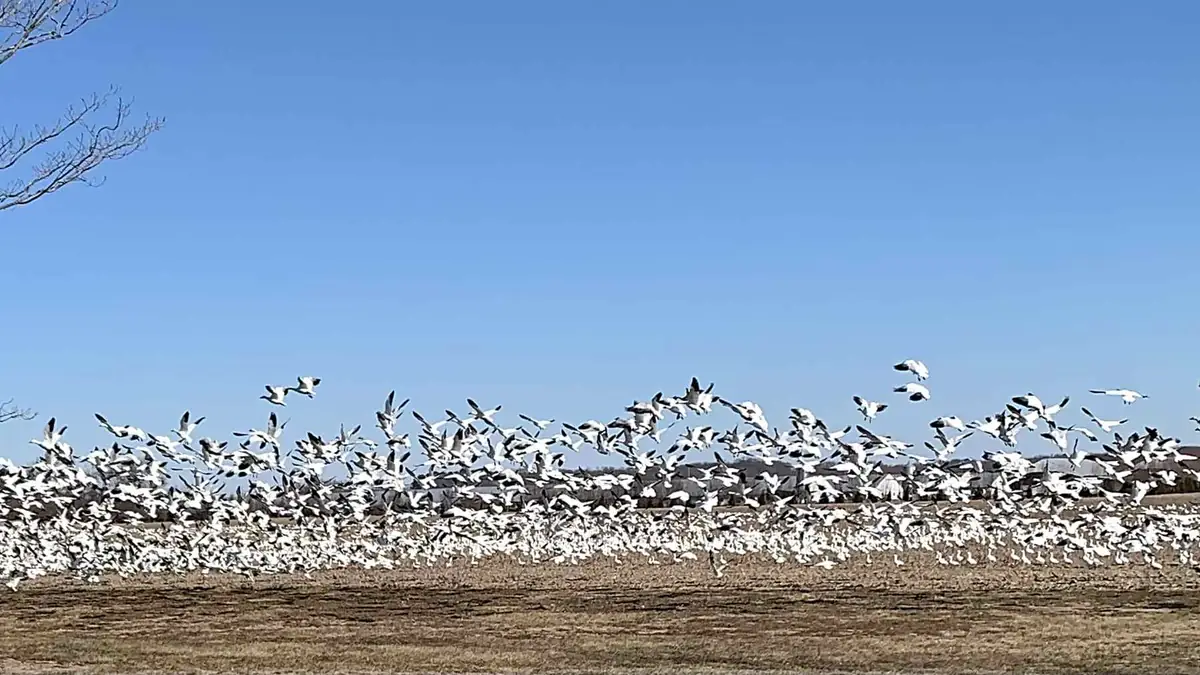
The disease has become common in the Mid-Atlantic region. It mainly hits the large flocks of snow geese that migrate from the Arctic and gather in Delaware each winter, according to DNREC's announcement.
This year's first detection was different from that pattern, though. It came from ducks, not geese.
The next segment of Delaware's waterfowl season opens on November 25. Hunters and the public are asked to stay vigilant and report groups of sick or dead wild birds. The agency's online wildlife reporting form covers ducks, geese, shorebirds, raptors and other wild birds.
Reporting does not guarantee that DNREC or USDA Wildlife Services will respond to every report. A representative will assess each one and may get in touch if more information is needed. The reports help biologists track how hard the virus is hitting wild birds across the state.
How to handle a dead bird
Residents who find a dead wild bird on their property and want to remove it should wear gloves, a mask and safety glasses. DNREC says to double-bag each bird and close the bag with a zip tie. The bag can then go in the trash for disposal at a Delaware Solid Waste Authority landfill.
Afterward, the protective gear should go into the dedicated trash bags as well. Residents should always wash their hands when they are done.
DNREC tells waterfowl hunters who also raise poultry to take extra precautions and follow strict biosecurity. All hunters should avoid birds that are obviously sick or found dead and wear rubber gloves while cleaning game. Game meat should be cooked thoroughly, and poultry should reach an internal temperature of 165°F.
A farm under quarantine
The Sussex County detection is the first in a contained, private flock in Delaware during the 2026-27 migratory season. Birds from the affected flock will not enter the food system, state officials said.
Delaware tests birds every day, with help from the University of Delaware laboratory system. Surveillance covers commercial and backyard poultry operations, birds headed to exhibitions, and livestock and poultry auctions.
The state also requires every location that keeps live poultry to register. That lets officials send timely disease alerts to all producers.
Owners are urged to keep their flocks away from places wild waterfowl can reach. They should disinfect equipment, vehicles and footwear, isolate sick animals and call a veterinarian. Only essential workers and vehicles should be allowed onto farms.
What it means for people
Avian influenza is a highly contagious respiratory virus. It spreads quickly among birds through nasal and eye secretions and manure. It can travel from flock to flock on equipment, clothing and shoes.
The federal Centers for Disease Control and Prevention (CDC) considers the risk to the general public to be low, DNREC notes. However, human infections with H5 viruses have increased in the United States in recent years. Most have been among agricultural and dairy workers who handle farm animals.
H5 bird flu also worries researchers in Australia. There, GPS-tracked egrets are helping researchers get ready for H5 bird flu in the country's largest river system.
Fears of the virus even led Australia to temporarily shut its Macquarie Island research station. In Delaware, officials are counting on hunters and residents to spot the next cases early.
Photo: Delaware DNREC
ECOnews Newsroom
Writer at ECOnewsA team of journalists specializing in socio-environmental news, sustainability, climate change, the environment, responsible consumption, and innovation. At EcoNews, we provide clear, reliable, and relevant coverage of the environmental and social challenges shaping our era.
More from ECOnews NewsroomComments · 0
Rules ›No comments yet. Be the first to share your view.