Kodiak harbor work could disturb up to 324 threatened sea otters over a year, and federal wildlife officials estimate 48 of them could lose some hearing for good
Kodiak harbor work could disturb up to 324 threatened sea otters in a year; federal officials say 48 could suffer permanent hearing loss from pile driving.

· 4 min read
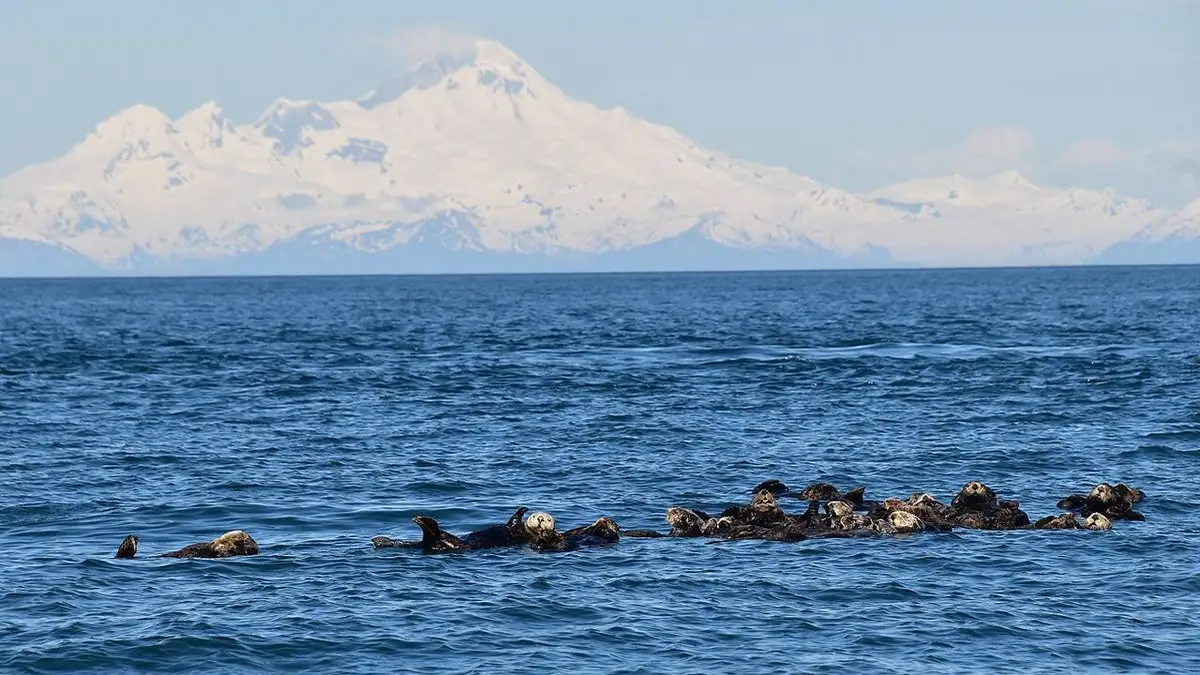
Federal wildlife officials have proposed letting the City of Kodiak, Alaska, carry out a year of harbor construction that could disturb up to 324 threatened sea otters. The U.S. Fish and Wildlife Service estimates that 48 of those animals could suffer permanent hearing loss from underwater noise, while 276 would likely be disturbed in their behavior. Neither the city nor the agency expects any otter to be killed. The work in St. Herman Harbor would run from November 1, 2026, to October 31, 2027, and includes driving temporary and permanent steel piles over 42 days. The 324 animals amount to 0.6 percent of the Southwest Alaska stock. Crews would have to stop work whenever an otter comes within 33 feet, and trained observers would watch the water. Work would happen only in daylight. The public can comment until December 23, 2026.
Key points
- sea otters
- Kodiak
- threatened
Up to 324 threatened sea otters could be disturbed by a year of construction in a harbor in Kodiak, Alaska. The U.S. Fish and Wildlife Service has proposed allowing the work, and it estimates that 48 of those animals could suffer permanent hearing loss from underwater noise.
The proposal appears in a Federal Register notice published November 23. It responds to a request from the City of Kodiak, which plans pile driving and other marine work in St. Herman Harbor between November 1, 2026, and October 31, 2027.
Neither the city nor the agency expects any otter to be killed. The public can comment until December 23, 2026.
What the city wants to build
The project adds a new float and a drive down dock to the harbor. To guide the structure into place, crews would drive 20 temporary steel piles, each 24 inches wide, and later pull them out with a vibratory hammer.
Up to 12 of those temporary piles may go in with an impact hammer or by drilling down the hole. The city then plans to install 58 permanent steel piles no more than 30 inches across, using vibratory hammers, impact hammers and drilling.
All of that noise would be spread over 42 days that are not consecutive. The agency puts the total at about 249 hours of pile driving.
How the agency reached 324
Sea otters near Kodiak belong to the Southwest Alaska stock, which is listed as threatened under the Endangered Species Act. The notice estimates 48 cases of injury, defined as a permanent loss of hearing sensitivity, and 276 cases of behavioral disturbance.
To count the otters that might be in range, the agency used a density of 2.54 sea otters per square kilometer, or about 6.6 per square mile. That figure comes from the most recent survey of the Kodiak Archipelago, carried out in 2014.
The same survey found groups of up to 159 sea otters in nearby Womens Bay. The harbor itself is busy and full of floats, so the agency does not expect large rafts there. For Near Island Channel, it used observations from a 2015 and 2016 dock project at the Kodiak Ferry Terminal.
The total of 324 is 0.6 percent of the stock, which the agency's 2023 stock assessment put at 51,935 animals. Under the law, that counts as a "small number" of otters.
What the noise can do
Disturbed otters may stop feeding or nursing their pups, change direction, dive suddenly or leave a resting spot. A raft breaking up or a whole group diving at once counts as harassment. An otter simply raising its head does not.
Sea otters do not depend much on underwater sound to find prey or talk to each other. For that reason, the agency sees noise masking their signals as less of a worry than for other marine mammals. Mothers and pups do call to each other in the air, though, and otters may listen underwater to avoid predators.
The notice says disturbance has an energy cost. Otters in noisy areas spend more time traveling, which means they need to eat more and may rest less.
Some may leave the area and come back once the work stops. The agency does not expect lasting effects on the health, reproduction or survival of the animals.
Rules for the crews
The city would have to stop work whenever a sea otter comes within 33 feet of the activity, whatever the predicted sound levels. Trained protected species observers would watch the water while crews work.
In-water work would be allowed only in daylight. It would also pause whenever darkness, bad weather or rough seas make it hard to spot otters.
If an impact hammer has been idle for more than 30 minutes, crews would restart it gently. They would make three lighter strikes where possible, wait 30 seconds and repeat that three times before hitting at full power, if practicable. Boats would have to keep as far from rafts of otters as practical.
Because the stock is threatened, the agency will also complete an internal Endangered Species Act consultation, if warranted, before it issues a final authorization.
A species that nearly vanished
Sea otters are the smallest marine mammals and belong to the weasel family. According to the agency's species profile, the fur trade cut the worldwide population to just a few hundred animals between 1742 and 1911.
Historically, they lived in near-shore waters around the North Pacific rim, from Hokkaido in Japan to Baja California in Mexico. The notice, a draft environmental assessment and the city's application are all open for review in the public docket, FWS-R7-ES-2026-1486, at regulations.gov.
Photo: U.S. Fish and Wildlife Service
Glossary for this story
- Endangered species
- A species at serious risk of disappearing. In the U.S., the Endangered Species Act protects those listed.
Adrián Villellas
Writer at ECOnewsAdrián Villellas is a computer engineer and entrepreneur in the fields of digital marketing and advertising technology. He has led projects in data analysis, sustainable advertising, and solutions for new audiences. He also contributes to scientific initiatives related to astronomy and space observation. He writes for science, technology, and environmental media outlets, where he makes complex topics and innovative advances accessible to a broad audience.
More from Adrián VillellasComments · 0
Rules ›No comments yet. Be the first to share your view.