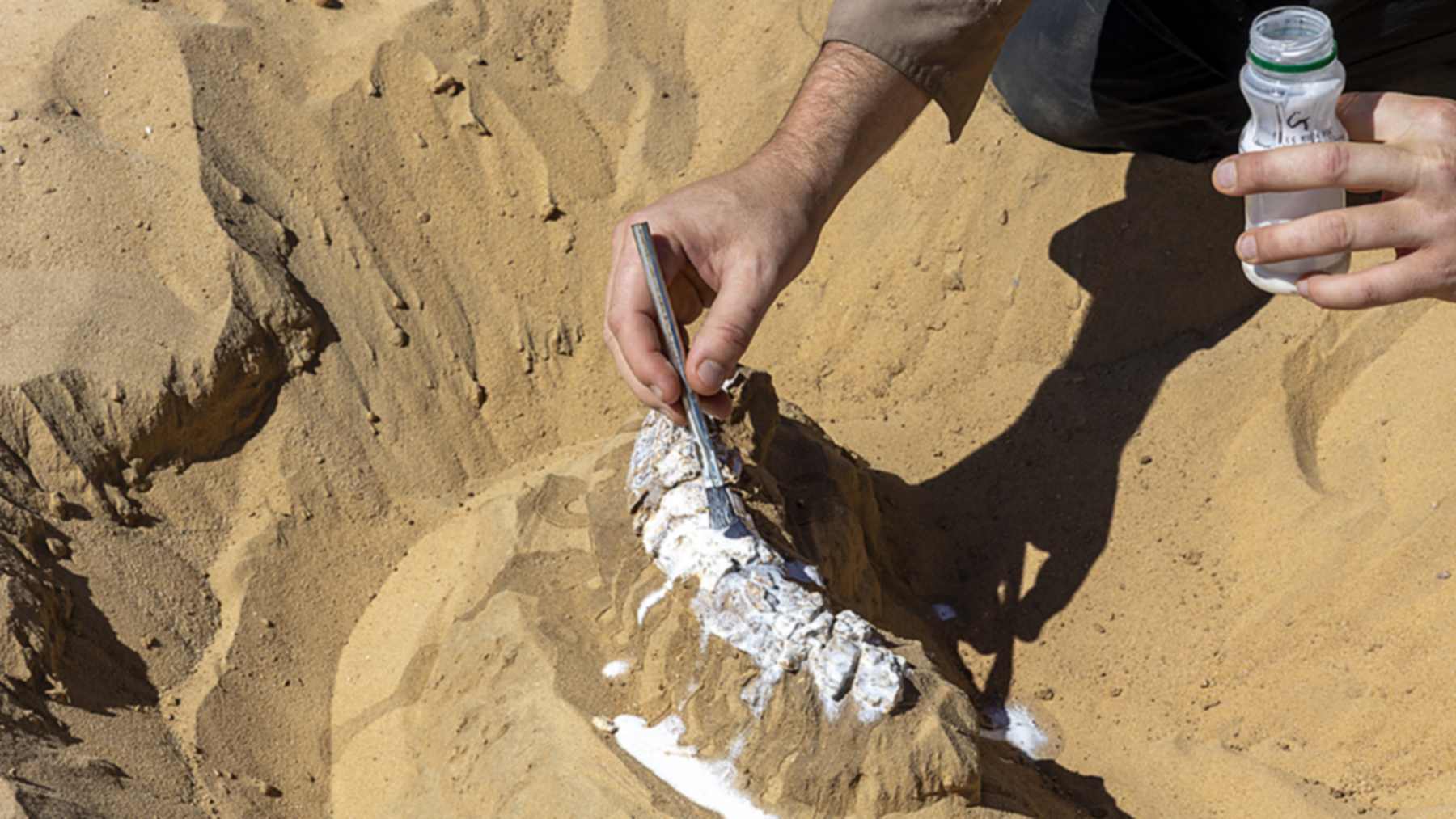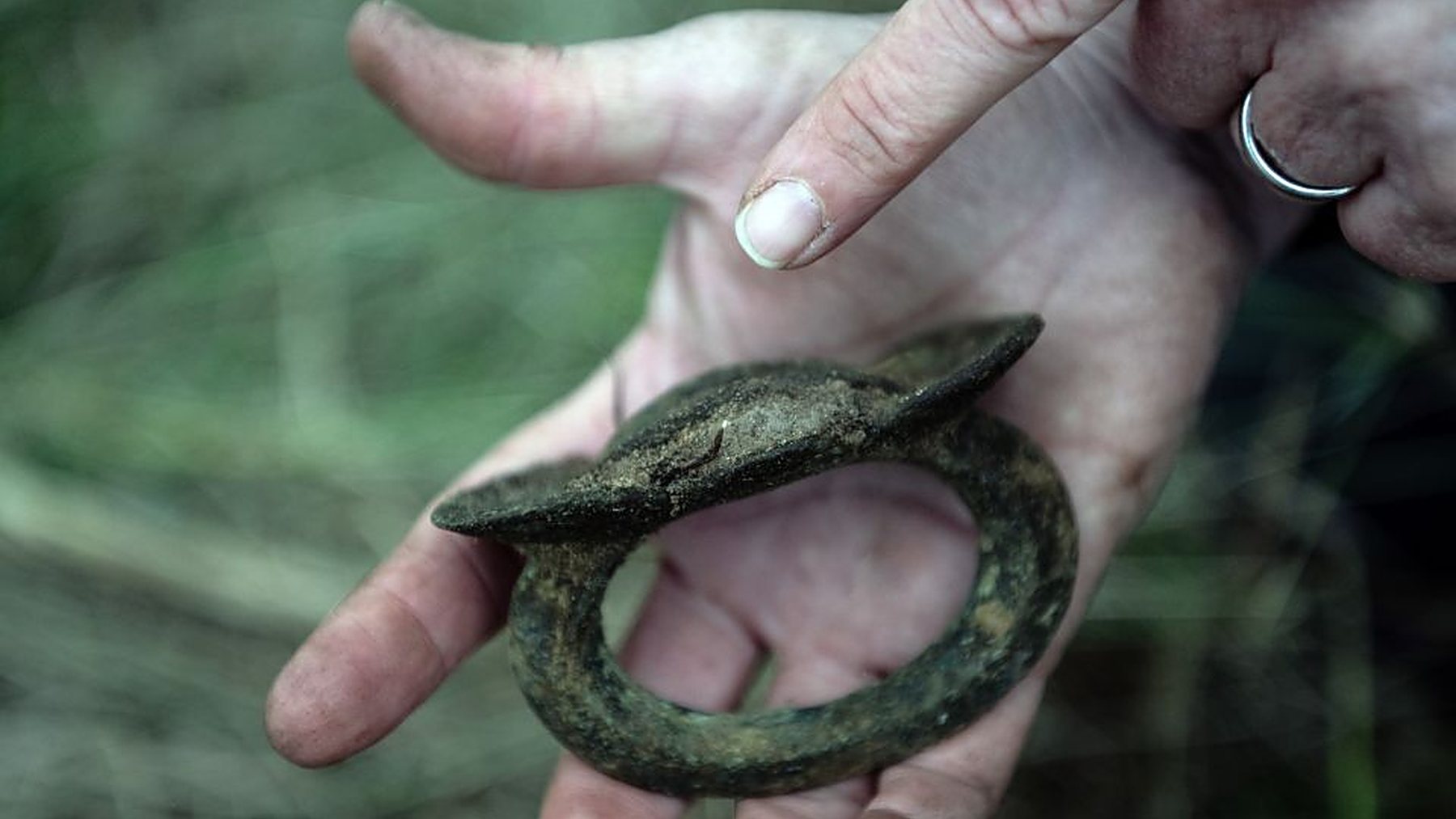
Military personnel and veterans digging at RAF Valley, an air base on Anglesey in Wales, have uncovered more of the Llyn Cerrig Bach Celtic hoard. Their latest round of excavations turned up parts of Iron Age chariots, along with a sword and a scabbard.
The project has now won the Silver Otter trophy for the best conservation effort on Ministry of Defence land, the UK Ministry of Defence said on November 17. The award was presented at the 35th MOD Sanctuary Awards in Tidworth, Wiltshire.
A hoard found during the war
The Llyn Cerrig Bach hoard was first discovered in the 1940s, during work to extend the airfield at RAF Valley for American bombers in the Allied war effort.
It is one of the most important collections of Iron Age artifacts found in the UK, according to the ministry. It comprises more than 150 bronze and iron objects deposited between 300 BC and AD 100.
Earlier archaeologists suspected there was more to find. The latest digs, part of a groundworks project to facilitate runway improvements, searched for further remnants of the hoard.
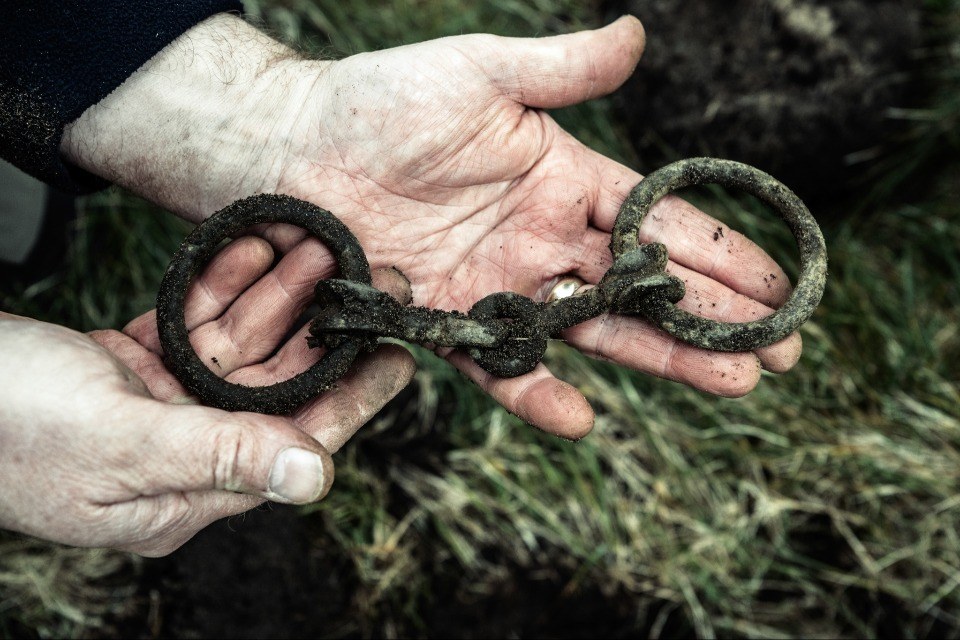
Chariot fittings and a bridle-bit
An earlier excavation in April 2024 had already produced important pieces, the ministry announced in January 2025. Among them was a terret ring, which guided the reins of a Celtic chariot, decorated with a red inlay.
David Ulke, a retired RAF squadron leader, found the ring. It is one of just three found with that particular decoration in Wales, the ministry said.
RAF Flight Sergeant Graham Moore, serving at the time, found a horse bridle-bit thought to date to around AD 60. It would have been worn by horses pulling Iron Age chariots. Moore found it on the final day of the dig, with just 10 minutes to go.
The bridle-bit is similar to those from the Polden Hill hoard found in Somerset, according to the ministry. The Senior Coroner for North Wales (West) later declared the discoveries treasure.
“At first the team thought I was joking, but quickly realised I’d found something special,” Moore said of the moment. The search had been hard work across a huge area.
Gifts to a lake
The 2024 finds survived in a shallow peat deposit, according to Gwilt. That deposit had been moved and dragged onto the airfield more than 80 years ago from a nearby ancient lake.
Adam Gwilt, senior curator of prehistory at Amgueddfa Cymru – Museum Wales, said the bridle-bit and terret are of styles not represented in the original collection. They add new information on the religious gifting of prized objects into the lake at the end of the Iron Age.
That gifting took place a little before, or around the time when, the Roman army invaded Anglesey, Gwilt said.
Archaeology that helps veterans heal
The digs are part of Operation Nightingale, a Defence Infrastructure Organisation program that uses archaeology to support the recovery of service personnel and veterans. Senior archaeologist Richard Osgood worked with the teams.
Osgood said the finds confirmed earlier archaeologists’ suspicions that there was more to be found from the hoard. Osgood added that the initiative plays a part in supporting personnel and veterans in their recovery.
Ulke called the terret ring by far the most significant recovery of a long involvement in archaeology. Operation Nightingale is no silver bullet, Ulke said, but many have benefited from it.
A base with a long history
The Operation Nightingale team received special permission from RAF Valley to dig ahead of the airfield refurbishment. Construction on those improvements began in September 2024.
Group Captain Gez Currie, then the station commander, said in January 2025 it was the base’s preparation in the 1940s to help prevent invasion that revealed the site’s links to an earlier invasion, by the Romans. The base is part of a continuum spanning more than 2,000 years, Currie said, and must be a responsible steward of the land.
Headed for a museum on Anglesey
The team’s work has greatly increased the known size of the Llyn Cerrig Bach hoard, according to the ministry. The finds have been gifted by the MOD to the National Museum in Cardiff.
They will later go on permanent display at the Oriel Môn museum on Anglesey. The island has produced other notable finds, as when a metal detectorist found gold coins in a field on Anglesey.
Elsewhere in Europe, building projects have also exposed Celtic sites, as when a highway survey in the Czech Republic turned up one of Bohemia’s biggest Celtic finds. Archaeologists have also uncovered a Gallic mint on the Corent plateau in central France.
Photo: Harvey Mills Photography / MOD