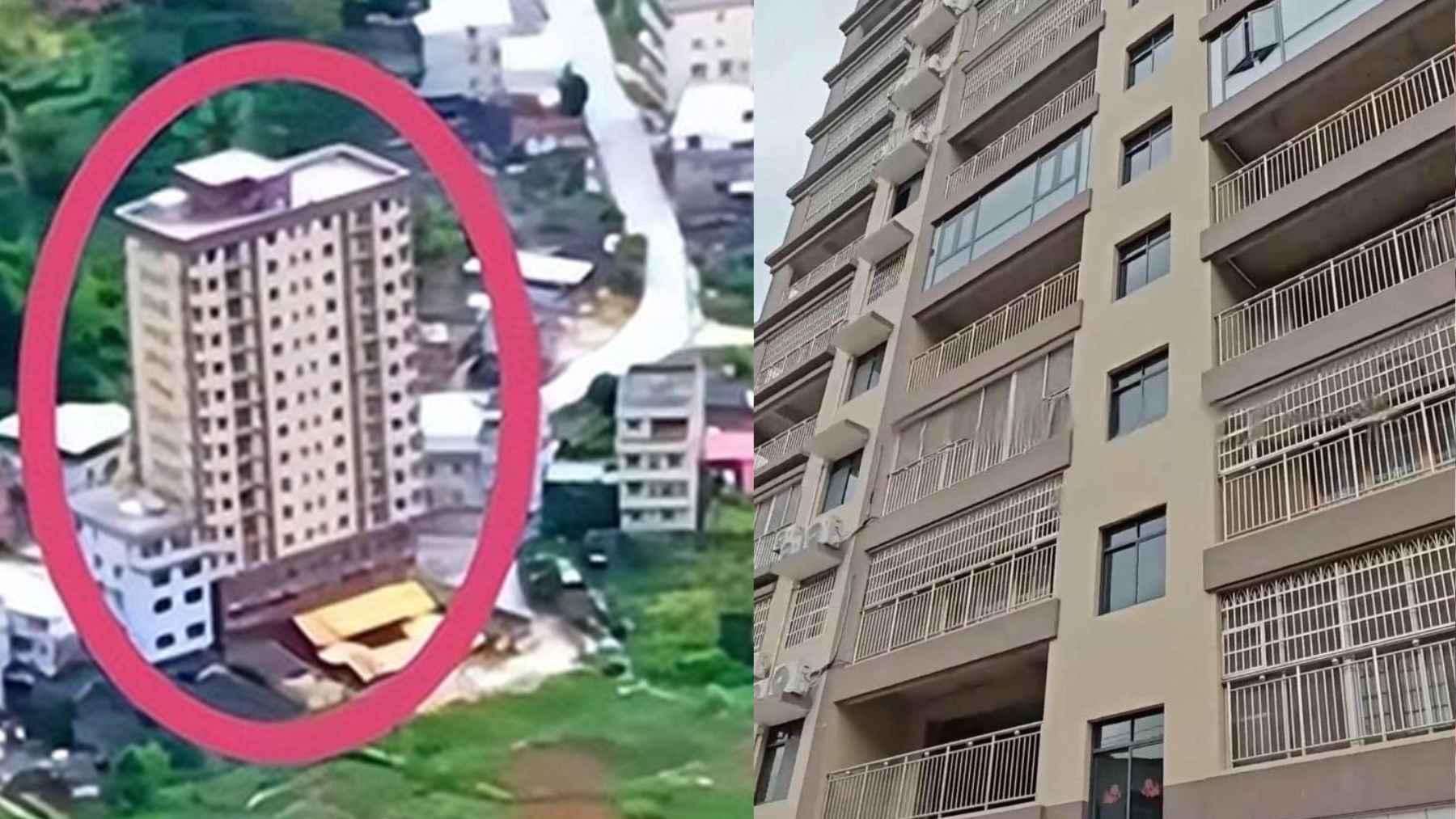
Rising above the low rooftops of Zhuyuan village in China, one concrete tower now belongs almost entirely to a single clan. Four generations of the Zhou family share a 15-story building designed so that more than 100 relatives can live under the same roof while still enjoying their own apartments.
The project finished about a decade ago but only recently went viral after journalists such as Marta Tejedor and Greg Heilman reported on it and Singapore outlet Mothership picked up the story.
For many people juggling work in distant cities and trips back to their hometown, this high-rise family home feels like a very practical dream. What does it look like when that dream becomes real
A village skyline dominated by one family
Most homes in the area are no taller than six stories, so the Zhou tower immediately stands out on the skyline. Media reports say it was built on a compact plot of land in the middle of the traditional village and that it can accommodate about 100 family members.
Floors two through twelve are divided into 22 apartments, with two units on each level that follow almost identical layouts. The building also has an elevator and underground parking, features that would be more expected in a city block than in a rural village lane.
Why the Zhou relatives chose a shared tower
According to a 70-year-old family elder, the project started after relatives demolished their aging homes. “After each member of our family demolished their old houses, they initially wanted to build new, independent homes,” he explained.
Instead, they decided to pool their efforts. “We asked the local government for several hundred square meters of land to construct a shared building,” the elder said, describing how the clan chose one tall structure over many separate houses.
Local reporting from outlets including Jimu News suggests around twenty households contributed money so the extended family could move in together.
Many of the younger relatives work outside the village in other parts of the country. The tower gives them a fixed home base where they can return for holidays, family events, or simply a break from city life without worrying about hotel rooms or short-term rentals.
Daily life in a vertical family compound
On ordinary days only a few dozen people live in the building full time and there is no formal building manager.
Media in Vietnam and Thailand report that maintenance, elevator servicing, and other shared costs are settled privately within the clan rather than through commercial fees. For most readers used to homeowner association bills, that is a very different way to run a high rise.
Festivals are when the tower really feels full. The elder told reporters that during Lunar New Year, also known as the Spring Festival in China, the sound of rolling suitcases echoes through the stairwells and halls.
The corridors fill with the smell of home-cooked dishes drifting out of each apartment, turning the building into one long family dining room.
A rare experiment in changing rural housing
Regional outlets such as VnExpress International and Khaosod Online note that local rules on self-built housing have tightened in recent years, with many new projects now capped at just a few stories. That means the Zhou tower is likely to remain a one-off case rather than the start of a village skyline filled with family skyscrapers.
At the end of the day this building is a modern version of an old idea in Quanzhou City and many other places, where large family compounds once kept several generations close. The Zhou relatives sleep in separate apartments, yet they are only an elevator ride away from grandparents, cousins, and childhood friends.
Some might find that crowded, others comforting, but it clearly reflects a deliberate choice to keep family ties close even as work and life scatter people across the map.
The main report has been published by AS USA.