What was deemed a myth since 1878 has become a reality, all thanks to researchers from China. Although the idea of converting falling water into energy has been thought about for years, Chinese scientists have found a way to turn it into energy. In offering a vivid glance into what the future of sustainable energy could look like, Chinese researchers have found a way to transform raindrops into power. Although the 1878 idea was only proven to be real now, the future already looks cleaner, and generating sustainable energy from the rain seems far simpler.
Introducing a time when water could be converted into electricity
Around the 19th century, the discovery that falling water could turn mills and generate electricity was made. In 1878, a British engineer put the idea to the test by using water from an artificial lake to power a lamp. While the test did not result in an immediate shift to hydropower systems, it did showcase how using collected water could make a significant difference. Nevertheless, today people have started tapping into the hidden powers in lakes, rivers, dams, and seas.
To date, however, the raindrop has barely been explored as a source of power. With raindrops falling easily from the sky and sometimes in abundance, it would be the ideal water source to tap into. It was often believed that for falling raindrops to generate electricity, rather bulky materials had to be used. Thankfully, China has derived a solution whereby rain can be easily converted into electricity.
China’s W-DEG is a floating generator that transforms rain into electricity
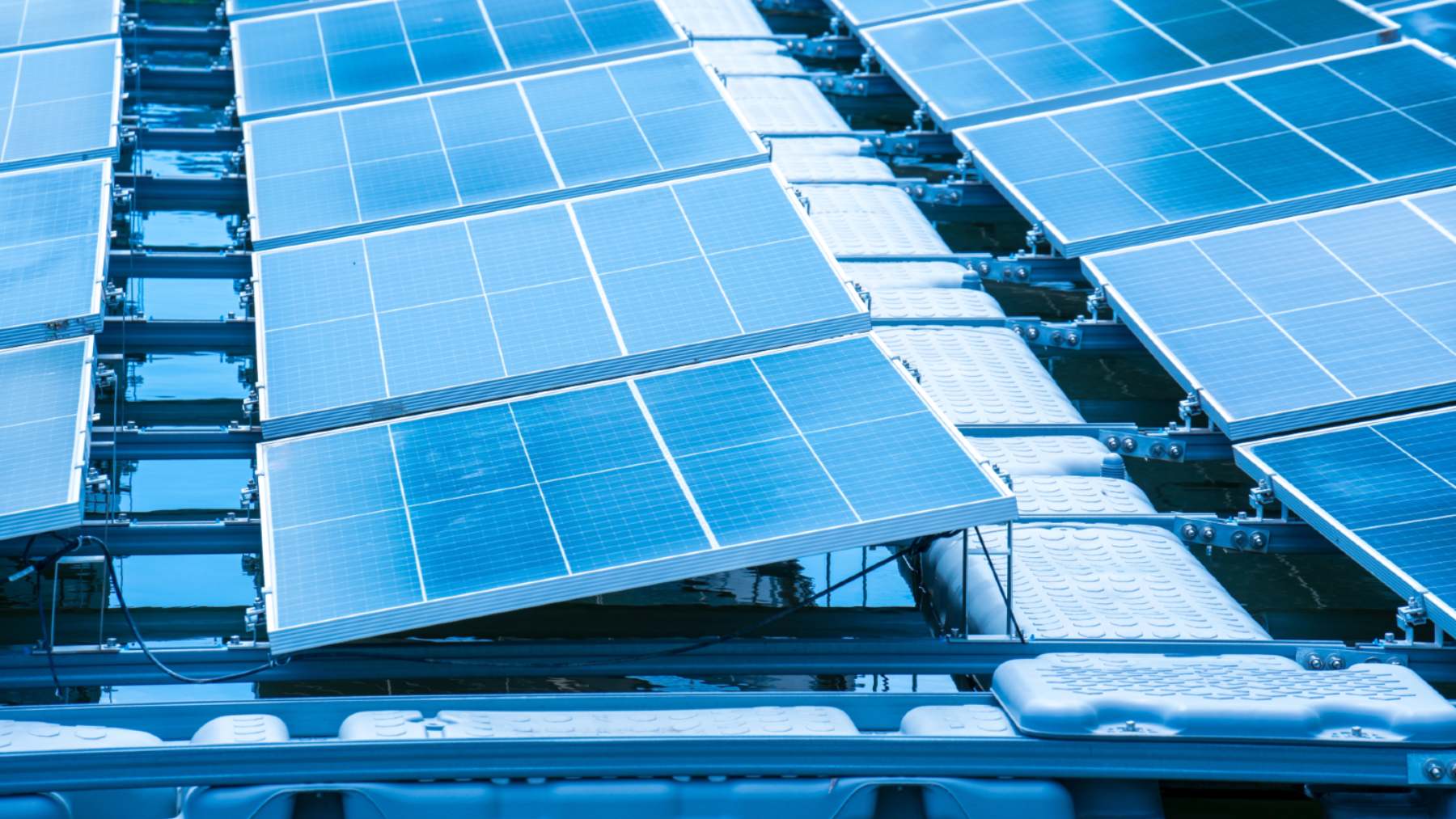
The water-integrated droplet electricity generator (W-DEG) was created by researchers at the Nanjing University of Aeronautics and Astronautics (NUAA). The way the W-DEG works is by floating on a water surface whilst collecting raindrops and converting these droplets into electricity.
The floating generator has been designed to rely on the water beneath it as a form of support for the electrode. The device is rather lightweight as it tends to depend on nature to assist with the bulk of the work. After modification and adjustment, a new device was created that was even more lightweight and priced at a rather reasonable cost.
The floating device that catches raindrops relies on a surface of water
The floating device eagerly awaits raindrops. Once a raindrop hits the dielectric film on the top, the water spreads smoothly across and starts to generate electricity. Ions present in the water enable the water to work as a charge carrier, with the water that the device is floating on reacting like a built-in conductive electrode.
The generator can perform despite salt variation and temperature swings. Having a micro-drainage system, temperature build-up is prevented at all costs, and a constant output is ensured, even during times of heavy rainfall. Raindrops surely are a source of power, so much so that different hybrid technology created in China does not need sunlight either, but can also produce energy with raindrops.
LEDs can be powered by raindrops falling from the sky
With the 0.3 square-meter prototype, more or less 50 LEDs will be powered all at once. With more of these devices floating on water surfaces, many LEDs can be powered. The potential could be great if we include these floating generators to assist with electricity generation alongside wind and solar power alternatives.
Since the 1878 tests on water to generate electricity, this is the first time that the world is warming up to the idea of a floating W-DEG that is meant to produce power from raindrops while floating on water. This is not, however, the first time that China has relied on raindrops. In fact, China is already creating energy from rain, which means that if you do it at home, you can make a lot of money.