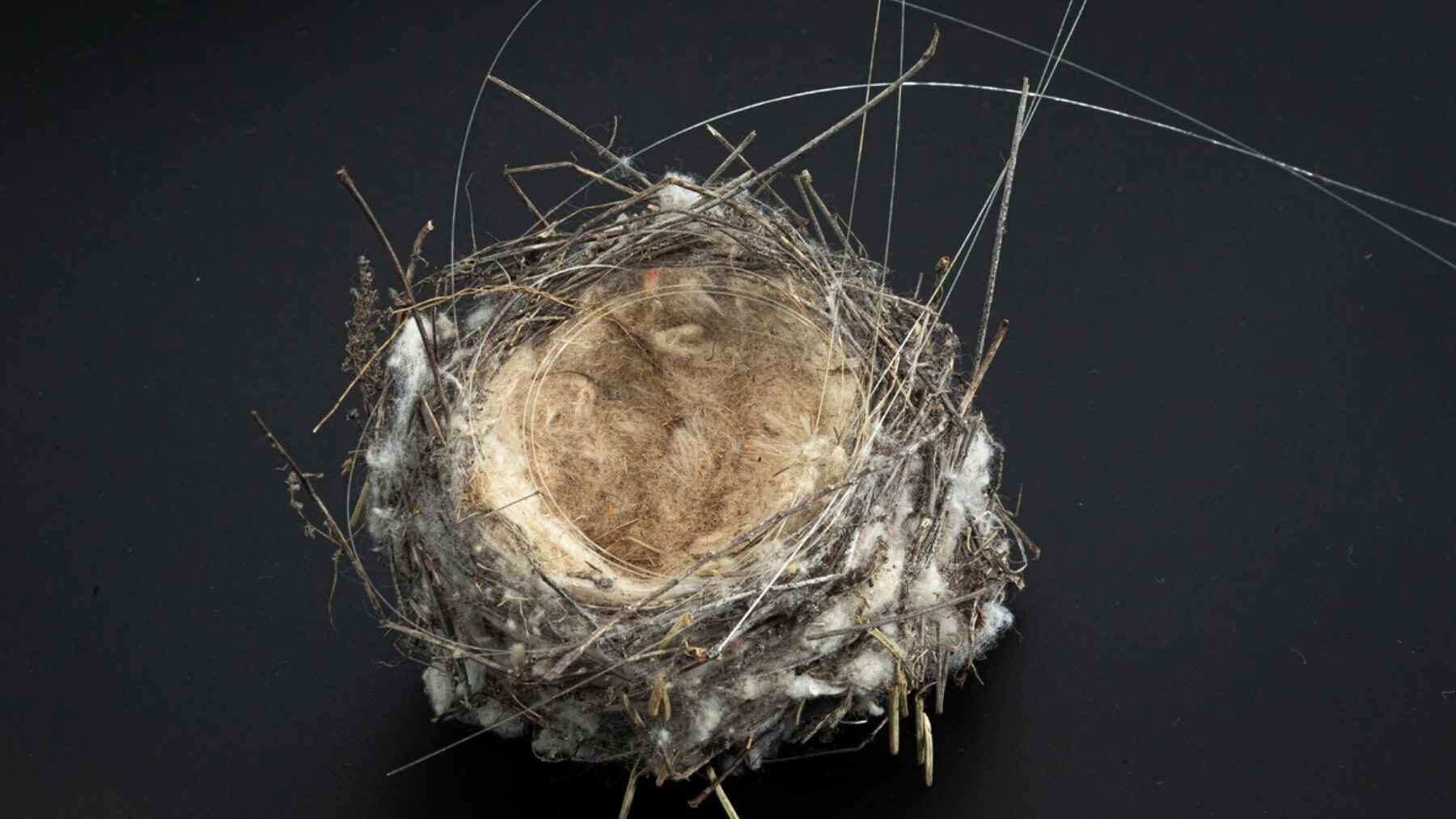
Birds living near Ukraine’s front lines have begun weaving nests with fiber-optic cable left behind by battlefield drones. The discovery is small enough to fit in two hands, but it points to something much bigger. War is not only changing cities, roads, and human lives. It is also changing the materials wildlife finds when it tries to survive.
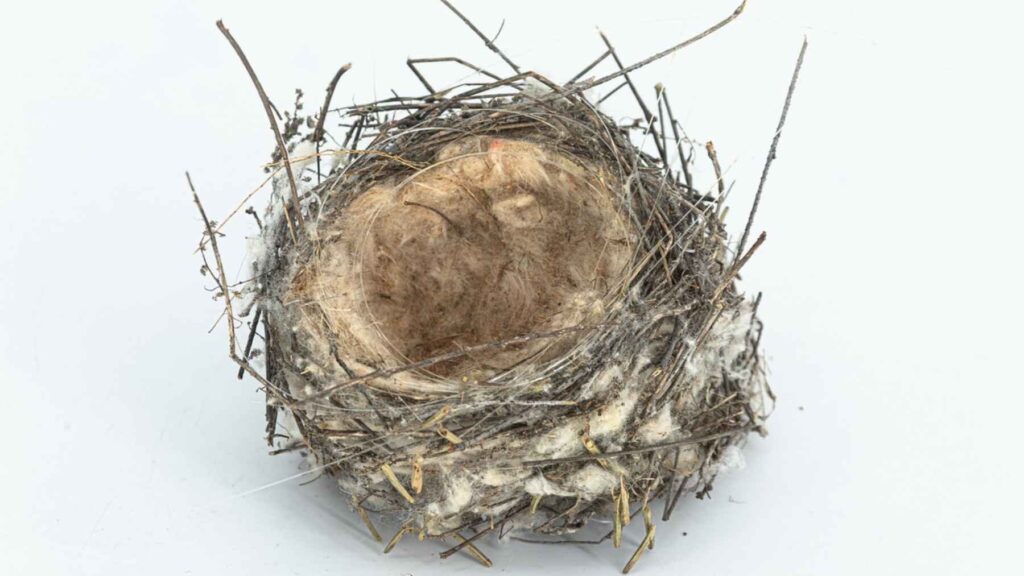
The nests are made from dry grass mixed with thin cable used to control drones in areas where radio signals can be jammed. One such nest has entered the collection of the National Museum of the History of Ukraine in the Second World War, while other examples from the front line are being studied to learn which birds built them and what risks the material may bring.
A nest from the front line
The War Museum said the nest in its collection was found near the village of Chorne in the Kharkiv region by Mykhailo Mlechko, an operator-gunner with the Border Guard Detachment “Hart.” He donated it after realizing it was more than battlefield debris.
“I realized that such an object had value, so I decided to preserve it,” Mlechko recalled, according to the museum. That instinct matters. A nest like this is not just a curiosity. It is evidence of how quickly animals can adjust when their surroundings are suddenly filled with strange new materials.
Another widely shared example came from the Donbas region, after a Russian glide bomb reportedly knocked down a tree. Ukrainian civil society leader Olena Tregub posted images of what she called an “apocalyptic bird nest,” crediting the photograph to Oleg Malchenko. Strange? Absolutely. However, in a ruined landscape, even a strand of drone cable can become part of a home.
Why drones leave cable behind
Fiber-optic drones work differently from the small radio-controlled drones many people imagine. Instead of sending commands through the air, they trail a hair-thin cable back toward the operator, keeping a physical connection as the drone flies.
That makes them hard to stop with electronic jamming, which is why both Russian and Ukrainian forces have used them more heavily. Reuters reported that some of these cables can stretch about 12 miles, and that strands now lie tangled in trees, fields, rooftops, and other parts of the roughly 746-mile front line.
The Atlantic Council has described fiber-optic drones as a major new battlefield tool, noting that they can operate where ordinary drones struggle or fail. This means more drones can keep flying even when electronic warfare fills the air with interference. It also means more cable gets left behind after flights, crashes, and attacks.
Birds are expert recyclers
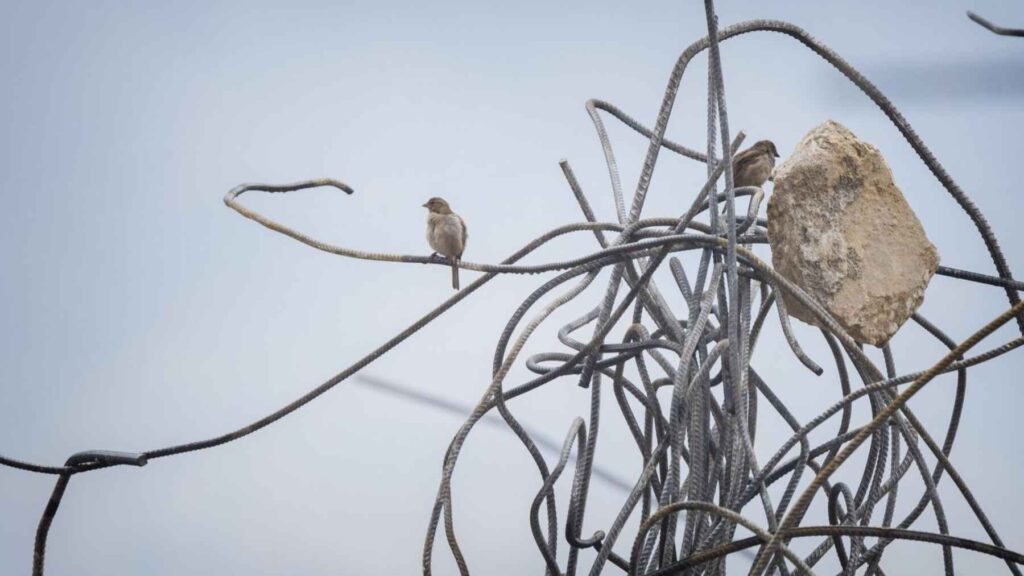
Birds have always been skilled builders. Twigs, grass, feathers, mud, moss, hair, and leaves all become construction material when nesting season arrives. When humans change the landscape, birds often add our leftovers to the mix.
A 2023 University of Birmingham report on nest research found that 176 bird species around the world had been documented using human-made materials in their nests. Those materials included plastics, cigarette butts, fishing line, bags, and baler twine.
There are even more surprising examples. Researchers connected to Leiden University and Naturalis Biodiversity Center documented crows and magpies using anti-bird spikes, the metal strips installed to keep birds away from buildings. In one case, the birds appeared to turn the spikes into protection for their own nest. Nature can be stubborn like that.
The danger in the weave
At first glance, fiber-optic cable might seem useful. It is thin, flexible, and strong. Mixed with grass, it could help hold a nest together, especially in a damaged area where natural materials are harder to find.
There is a catch, however. Human-made nesting material can injure birds, especially chicks, if it wraps around legs, wings, or necks. Researchers have warned for years that string-like debris can lead to entanglement, infection, or death in some nests.
That is why scientists are cautious. Auke-Florian Hiemstra, a Dutch biologist who studies artificial materials in nests, told Reuters the cable could help birds build a stronger structure, yet it could also harm them if they become trapped in it. In other words, the same material may be both a tool and a threat.
What scientists still do not know
Researchers still do not know which bird species made the fiber-optic nests. That question is harder than it sounds. Along the front line, people are not exactly standing around with binoculars and notebooks. There are shells, drones, mines, and destroyed buildings.
One nest is expected to remain in Kyiv as part of the War Museum’s collection. Another is being sent to the Netherlands for analysis, where scientists plan to look for DNA traces that might identify the birds that built it.
That detail matters because different species use different nesting habits. Some build low and hidden. Others build high in trees. Some are more likely to reuse odd materials, while others stick closer to natural fibers. Knowing the builder would help researchers understand whether this is a rare accident or a behavior that may be spreading.
A small warning from nature
The fiber-optic nests are not proof that birds are thriving in wartime. They are proof that birds are adapting because they have to. There is a big difference.
For people, the cables are part of a high-tech arms race. For birds, they are simply what is available in a broken habitat. A strand left by a drone becomes the same kind of choice as dry grass or a bit of string beside a sidewalk.
It is tempting to see the nests as hopeful. There is some truth in that. Life keeps building, even in places where almost everything else has been torn apart. But the image is also unsettling. A bird’s home should not need to be woven from the leftovers of modern war.
The official museum note on the artifact was published by the National Museum of the History of Ukraine in the Second World War.