Two studies that were published in 2023 argued that our planet went through a massive stagnation during the Proterozoic, when Earth’s rotation got stuck between 19 and 19.5 hours for about a billion years.
But also there was a review in 2024 that questioned both the geological evidence and the physical theories behind those studies. Additionaly, another study in 2026 estimated days of about 17.7 to 17.9 hours about 1.787 billion years ago.
The Moon keeps applying the brakes
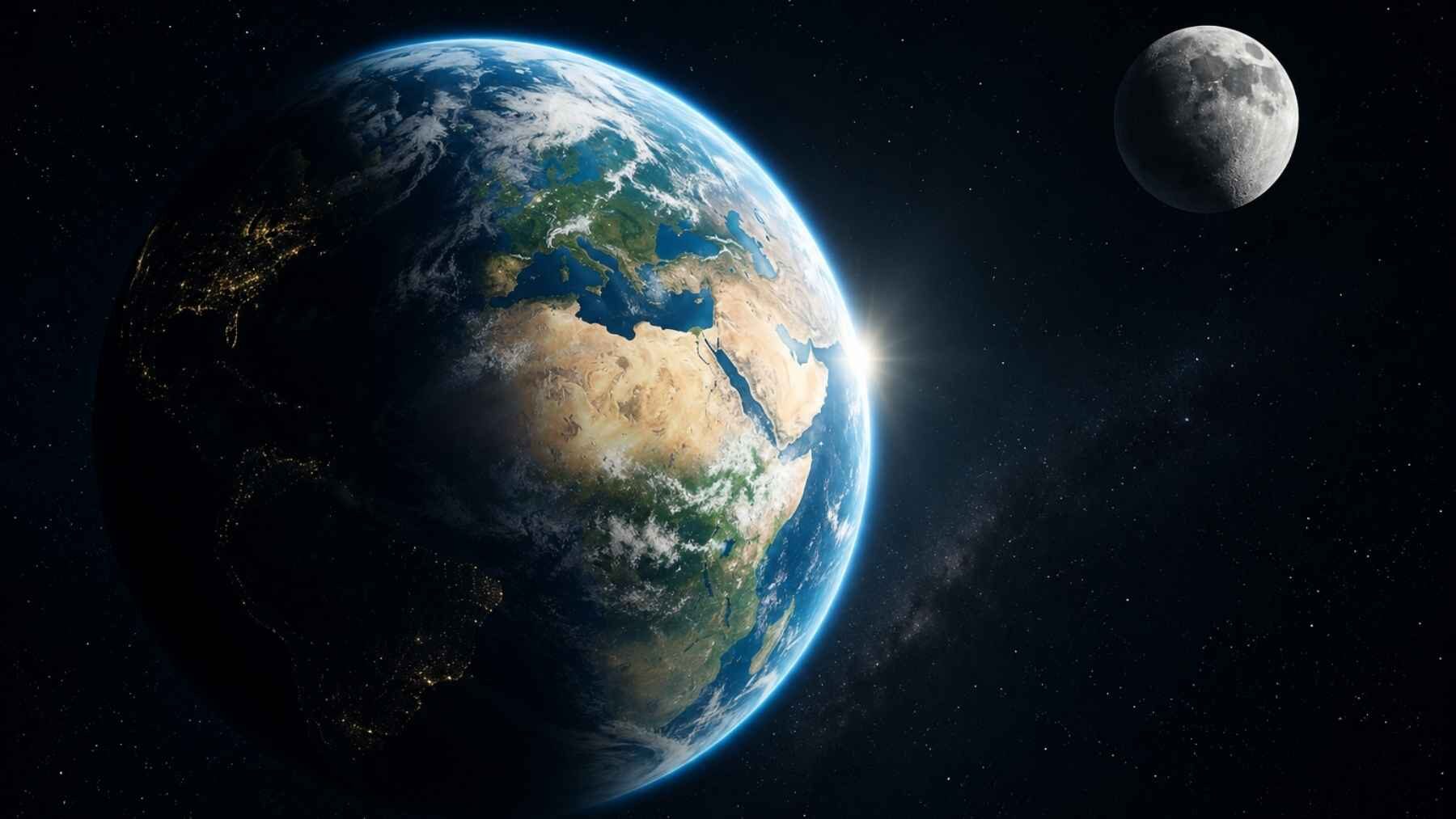
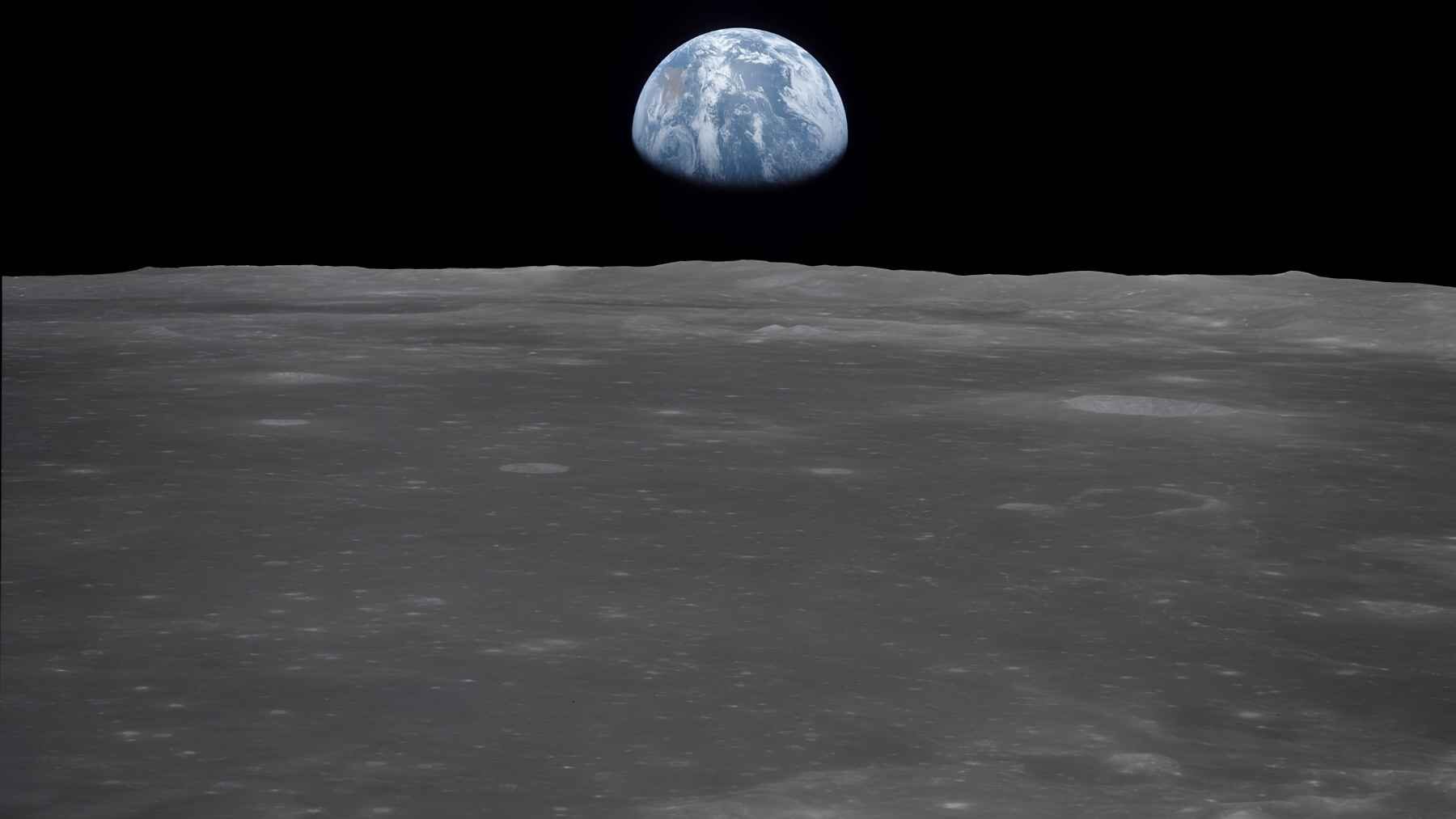
The Moon does much more than only moving and “controlling” the sea tides. It also gradually slows the Earth’s rotation. Because of this energy transfer, the Moon is pushed away from us by about 3.78 centimeters per year today.
Even so, scientists say we cannot just apply today’s speed to the past. Continents, ocean depths, and coastlines have constantly shifted over time, changing how that energy is lost.
The Sun may have pushed back
Sunlight warms the atmosphere unevenly and that actually generates enormous pressure waves. If the duration of half of the day approached the natural resonance of the atmosphere, those waves would strengthen enough for solar gravity to pull Earth forward and speed it up. That is the main explanation for the “19 hours theory”.
How rocks remember a day
Scientists can know how long a day lasted in the past with the use of geological documents and archives since they included information about tidal rhythmites, stromatolites, and cyclostratigraphy that preserve daily, seasonal, and orbital patterns.
However, there are other theories that say that maybe that was not possible. In fact a 2024 review concluded that this 19-hour theory depended a lot on uncertain stromatolite evidence.
New evidence challenges the plateau
The new investigations are taking credibility away from this 19-hour theory. A 2024 Science Advances study examined Chinese formations of between 1.2 to 1.6 billion years old and found no clear evidence for atmospheric day-length locking.
To top it off, a 2024 Astronomy & Astrophysics study found that the physics was not that accurate either; the loss of energy in the ground would weaken the thermal tide, preventing that equilibrium.
What scientists can say now
We know for sure that “Earth’s days were shorter in the distant past, and the Moon is still slowing us down today. But whether Earth’s day actually got stuck at 19 hours for hundreds of million of years is still an open question.
The latest study was published in the journal Symmetry.