EPA proposes to exclude used leather gloves, boots and aprons worn as protective gear from hazardous waste rules if they meet existing conditions, with comments open until January 26, 2027
Federal rules already exempt chromium-tanned scrap leather; the proposal would extend that to leather PPE that meets the same standards.

· 4 min read
Key points
- Under the EPA's example, a glove damaged at the factory can go out as non-hazardous waste, but the same glove used by a customer may not.
- Gear contaminated with other hazardous substances, or failing other toxicity tests, could still be hazardous waste.
- If finalized, the rule would apply directly only in Iowa, U.S. territories and Indian Country; 49 authorized states may choose to adopt it.
Used leather gloves, boots and aprons worn for protection on the job could be thrown away as non-hazardous waste under an EPA proposal, if they meet the conditions that already apply to leather scrap. The U.S. Environmental Protection Agency (EPA) published the proposed rule in the Federal Register on November 27, 2026.
It is a proposal, not a final rule. The agency is taking public comments until January 26, 2027, under docket EPA-HQ-OLEM-2026-2773.
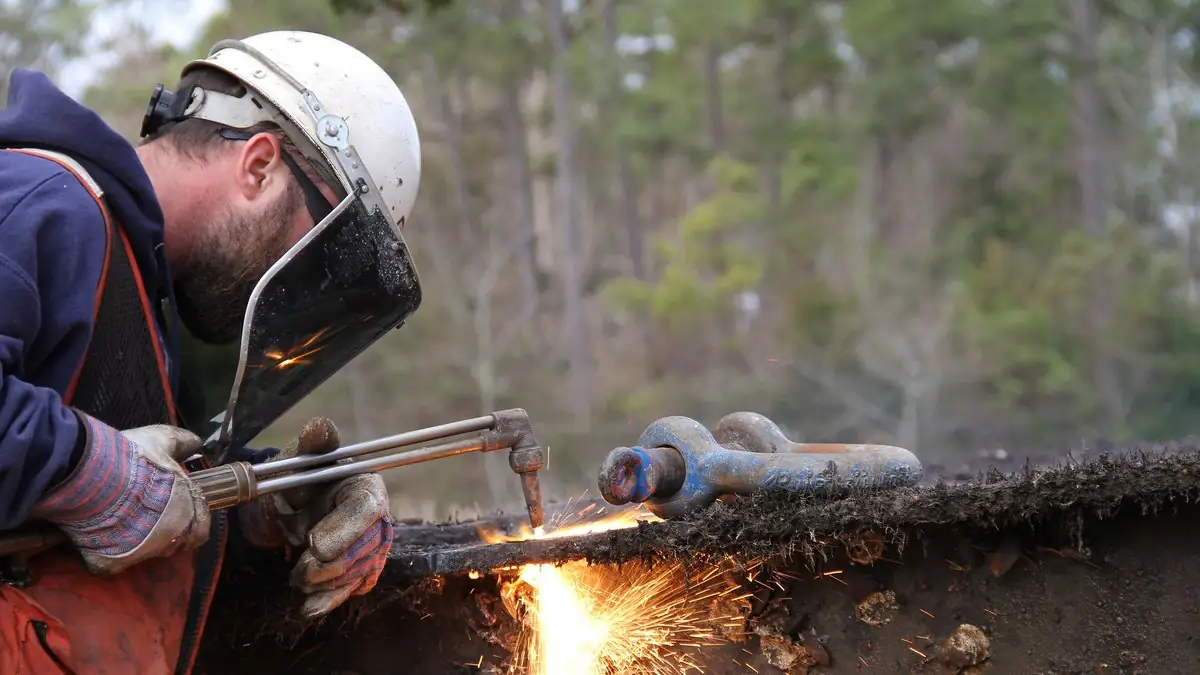
The change would cover leather articles used as personal protective equipment. The EPA lists gloves, boots, aprons, jackets, pants and coveralls, headwear and related items.
Why chromium matters here
Leather is usually tanned with trivalent chromium, a form of the metal that the EPA's existing leather-waste exclusion distinguishes from hexavalent chromium. Under that exclusion, first adopted in 1980 (45 FR 72030), scrap leather from tanneries and from shoe and other leather goods factories is excluded from the federal definition of hazardous waste.
The EPA based that exclusion on the relatively low toxicity of trivalent chromium and its low migratory potential. The agency also saw no indication that it would oxidize under usual land disposal conditions.
Hides cannot be tanned successfully with hexavalent chromium, the proposal explains. That gives tanneries a strong commercial reason to keep it out of the process.

That existing exclusion comes with three conditions in the federal rules. The chromium in the waste must be exclusively or nearly exclusively trivalent. The waste must come from a process that uses trivalent chromium and does not generate hexavalent chromium, and it must typically be managed in non-oxidizing environments.
The same leather, two rules
Protective gear is made from the same leather as that factory scrap. Yet when it is discarded by a customer, it may count as hazardous waste. That happens if it fails the federal toxicity test for chromium, set at 5.0 milligrams per liter.
The EPA offered an example of the inconsistency in the proposal. Under the current rules, "an off-specification leather glove not suitable for use, such as one accidentally damaged by a box opener, could be discarded as non-hazardous waste by a leather product manufacturer, but a glove delivered to a customer and used as personal protection equipment would be considered hazardous when discarded by that customer."
The proposed rule would apply the same standard to both. The exclusion would cover protective gear that meets the same standards as the leather scrap already excluded. The agency describes it as a way of reducing unnecessary complexity and ensuring regulatory certainty.
What would still be regulated
The new exclusion would not be a blanket pass for every piece of old gear. Leather gear could still be hazardous waste if it fails the toxicity test for any other hazardous constituent or shows another hazardous characteristic.
Gear that has been contaminated by other hazardous substances could also still be hazardous waste, according to the proposal. The EPA says the change does not alter testing obligations for hazardous constituents other than chromium.
The agency is not taking comments on the original exclusion. It says any comments on that existing rule will be treated as out of scope.
Who would feel the change
The EPA says it has already been giving guidance that such discarded leather articles likely meet the conditions of the existing exclusion. Several states that run their own hazardous waste programs read the rule the same way. The proposal would line up with them.
Small businesses such as metal working shops, auto repair operators and firefighting operations may benefit. The agency expects modest efficiency gains in testing and limited potential savings on disposal. It does not expect significant economic effects.
The EPA expects the proposal to be a deregulatory action that reduces burden. An economic analysis is posted in the docket. The proposal was also submitted to the Office of Management and Budget for review as a significant regulatory action.
A state-by-state picture
The EPA notes that the change, if finalized, would be less stringent than current federal hazardous waste rules. That matters for how it would take effect.
Forty-nine states are authorized to run their own hazardous waste programs. They may, but would not be required to, adopt the change, according to the proposal.
On its effective date, the rule would apply only where the EPA runs the program directly. At present, that means Iowa, all U.S. territories and Indian Country. The agency says the rule has considerable merit and would encourage states to adopt it.
Comments can be filed online through the federal eRulemaking portal, by mail or by hand delivery, using the docket number. A plain language summary of the proposal is also available in the docket, the EPA says.
Pamela Spaugy / U.S. Army Corps of Engineers, Norfolk District
Glossary for this story
- EPA
- The Environmental Protection Agency: the U.S. federal agency in charge of protecting air, water and land and enforcing environmental laws.
Adrián Villellas
Writer at ECOnewsAdrián Villellas is a computer engineer and entrepreneur in the fields of digital marketing and advertising technology. He has led projects in data analysis, sustainable advertising, and solutions for new audiences. He also contributes to scientific initiatives related to astronomy and space observation. He writes for science, technology, and environmental media outlets, where he makes complex topics and innovative advances accessible to a broad audience.
More from Adrián VillellasComments · 0
Rules ›No comments yet. Be the first to share your view.