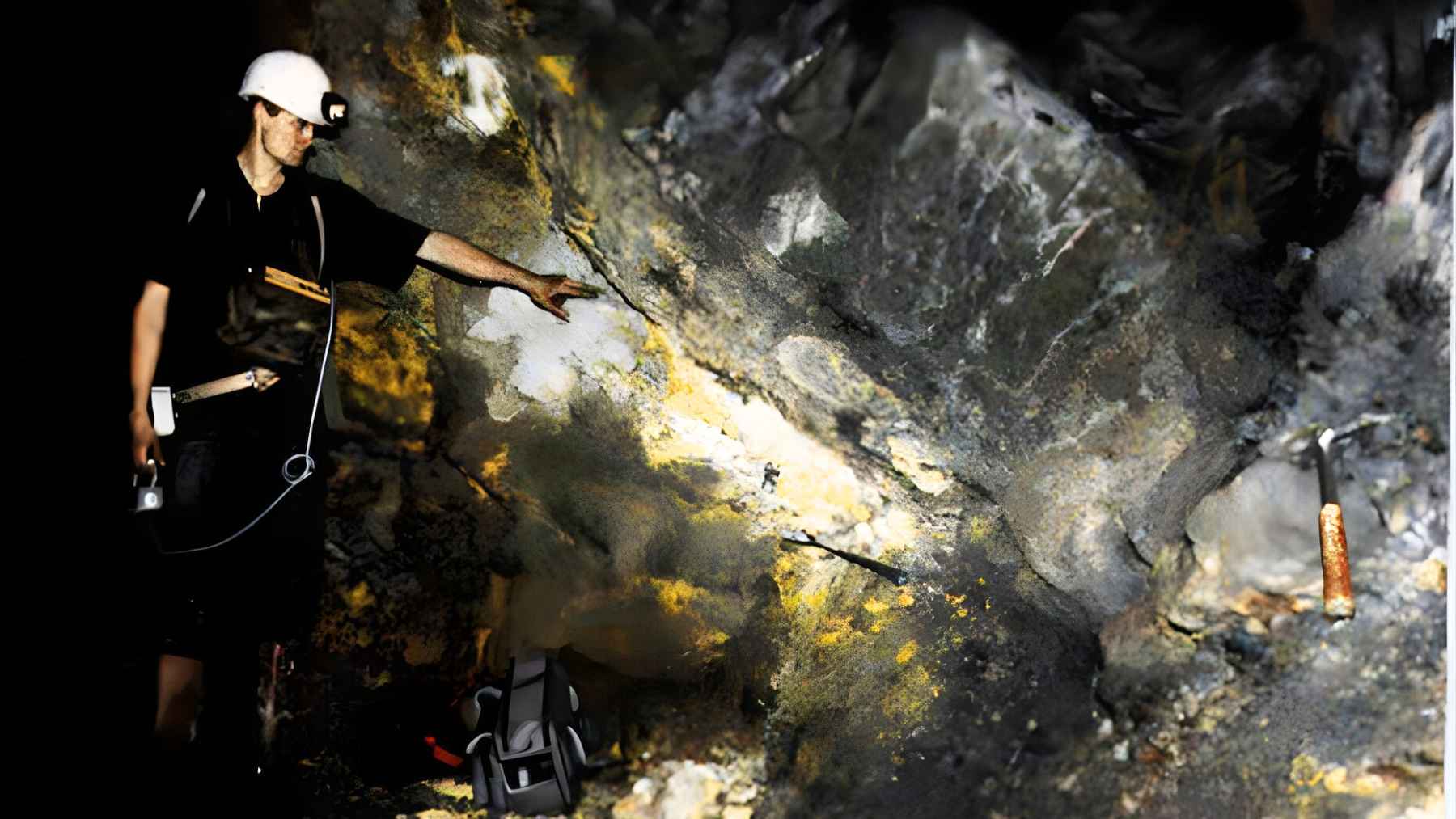
In 1972, technicians checking uranium fuel noticed something that should not happen in nature. A batch of material from a mine in the Oklo region of Gabon contained less of a key uranium type than expected, as if part of it had already been burned inside a nuclear reactor.
That tiny discrepancy set off a scientific detective story. Follow-up work showed that the ore carried the chemical fingerprint of a self-sustaining nuclear reaction that ran underground about two billion years ago, when Earth was still in a very early geological stage.
A strange uranium sample that broke the rules
The uranium from Oklo was first tested as part of routine quality control for the French nuclear industry. Physicists at the French Atomic Energy Commission (CEA) compare the mix of uranium types in ore from different mines to make sure nothing has gone missing and everything matches what nature normally provides.
Natural uranium is made mostly of uranium 238 with a small share of uranium 235, the version that can keep a chain reaction going in a reactor. Almost everywhere on Earth and even in meteorites this share of uranium 235 sits very close to 0.72 percent and stays remarkably stable over time.
In the Oklo samples, that share was clearly lower. The difference was small in absolute terms, but large compared to the usual consistency of uranium, so large that it could not be brushed off as a lab error. Scientists first wondered if someone had secretly removed fissile material, but careful checks ruled out any human tampering.
To understand why this was so shocking, it helps to know what an isotope is. Isotopes are versions of the same element that have the same chemical behavior but slightly different mass, and their natural ratios are a kind of global signature that does not normally change on its own.
What a natural nuclear reactor really is
When people hear the word reactor, they usually picture concrete domes, control rooms, and strict safety checks. In basic terms, a reactor is simply a place where enough uranium 235 is packed together so that one fission event triggers another, creating a controlled chain reaction that releases heat.
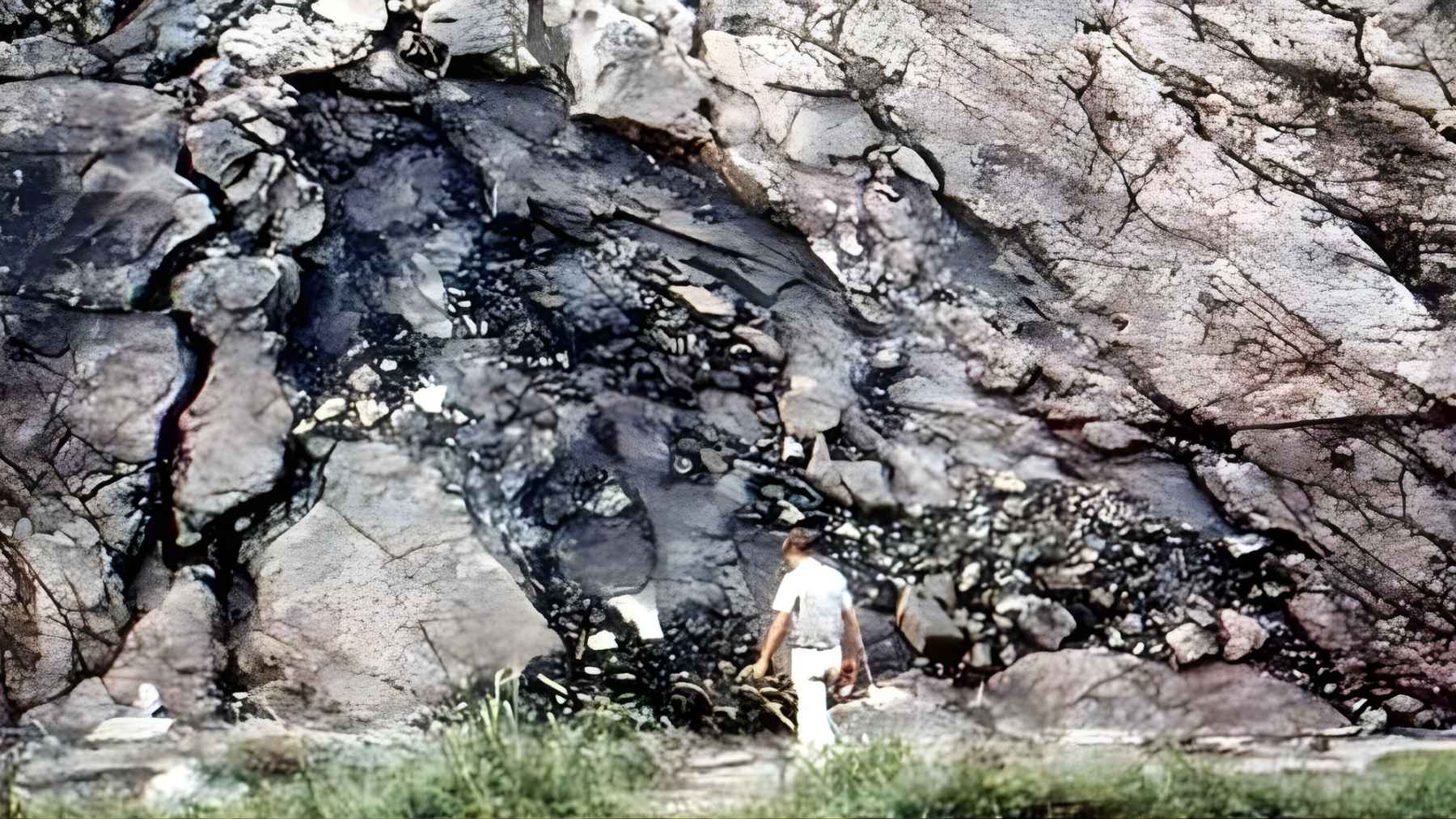
A natural nuclear reactor is the same idea without human design or metal fuel rods. It is a patch of rock where uranium ore is concentrated, and where the surroundings act like the hardware of a power plant, allowing a chain reaction to start and then settle into a steady rhythm instead of blowing itself apart.
How rock and groundwater turned into a reactor
Billions of years ago, the balance between uranium types on Earth was different. Uranium 235 decays faster than uranium 238, so when the planet was younger, uranium 235 made up a noticeably larger fraction of natural uranium than it does today, which made it easier for a mineral deposit to reach the critical concentration needed for fission.
In the Oklo deposit, uranium-rich layers came together in the right shape and quantity to hit that critical point. Groundwater flowed through the rock and acted as a moderator, slowing down the neutrons released in fission so they could trigger more reactions instead of flying away. In practical terms, the ore body, the water, and the geometry of the rock played the roles of fuel, coolant, and control system all at once.
Researchers studying the site found that the reaction did not run like a bomb. It behaved more like a very low power industrial reactor that turned on and off over long cycles, as heat boiled the water away and then allowed it to return. That stop-start behavior left a lasting mark in the distribution of fission byproducts locked inside the rock, which is how scientists could reconstruct what happened so long after the reactor shut down.
Why Oklo still fascinates scientists today
Oklo remains the only place on Earth where a natural reactor has been confirmed with direct, detailed evidence. Other uranium deposits may once have come close, but if similar events took place, their signals have either faded or been scrambled by later geological changes. For now, Oklo is the standout example of nature reaching conditions that resemble a human-built reactor.
The site still attracts attention because it links nuclear physics with the history of our planet. By analyzing how radioactive elements and their decay products stayed put in the rock for hundreds of millions of years, scientists can test how nuclear materials move through the ground, which is important when people think about long-term storage of nuclear waste.
It also helps researchers understand how early Earth chemistry and groundwater systems worked when life was just beginning to take hold.
International bodies such as the International Atomic Energy Agency (IAEA) have highlighted Oklo as a kind of natural laboratory that shows both the power and the limits of nuclear energy in the real world. At the end of the day, the story of this African mine reminds us that processes we usually associate with cutting-edge technology can sometimes unfold quietly underground, given enough time and the right mix of ingredients.
The main scientific review of the Oklo reactors was published in the journal Geochimica et Cosmochimica Acta.