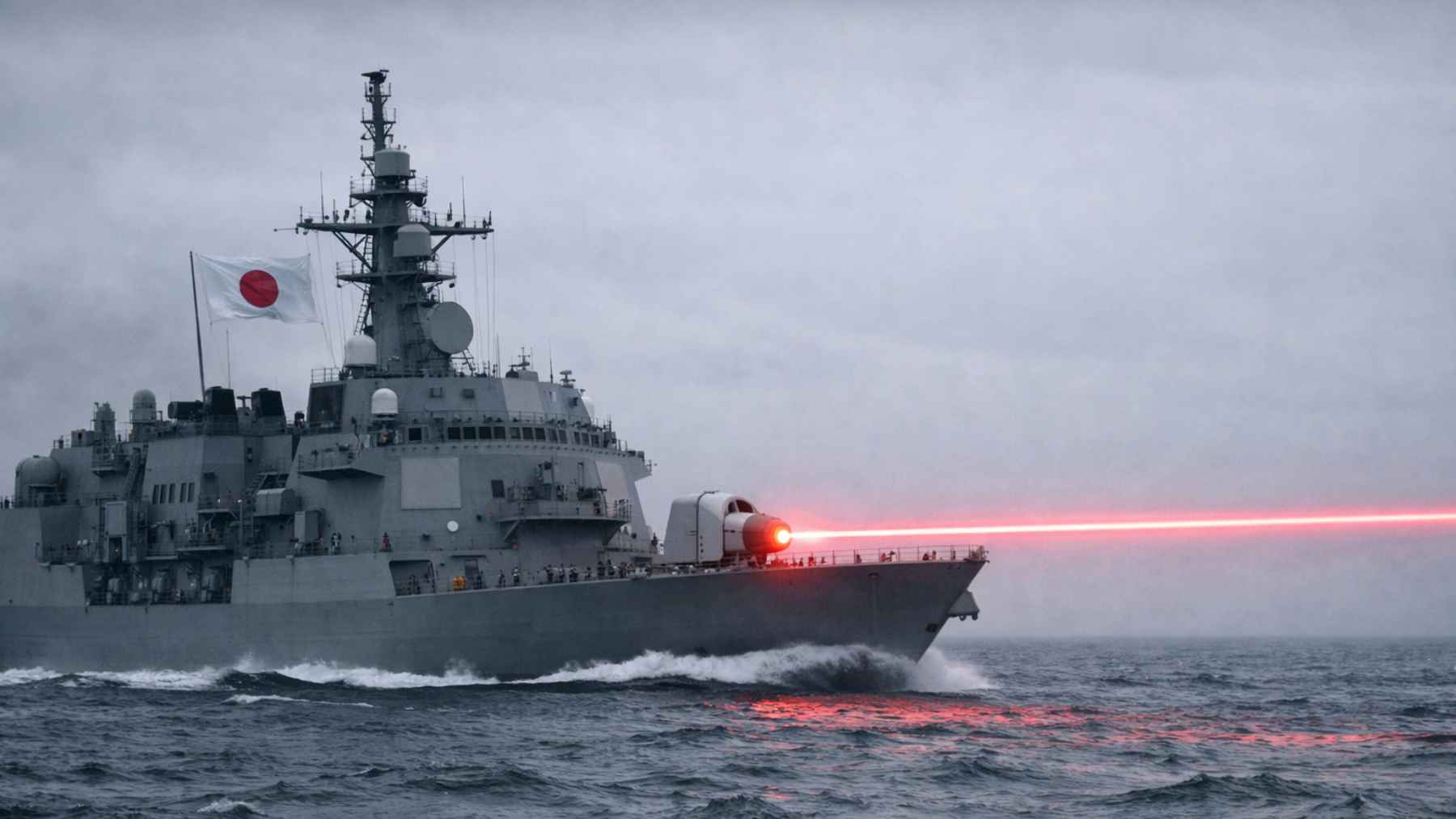
Japan has moved a step closer to making science fiction real by sending a 100 kilowatt laser weapon to sea on the test ship JS Asuka. The experimental system combines ten 10 kW fiber lasers into a single 100 kW beam intended to burn through metal skin, blind sensors, and swat slow, fragile drones out of the sky before they reach a ship.
Unlike a missile or a gun round, every shot starts with electricity. That means no explosive warheads piled in magazines and, in theory, a kind of “infinite ammo” as long as the generators keep turning.
For a navy that has watched cheap drones and loitering munitions reshape battlefields from Ukraine to the Red Sea, this is more than a cool gadget. It is an early test of whether directed energy can realistically defend ships, ports, and even coastal cities.
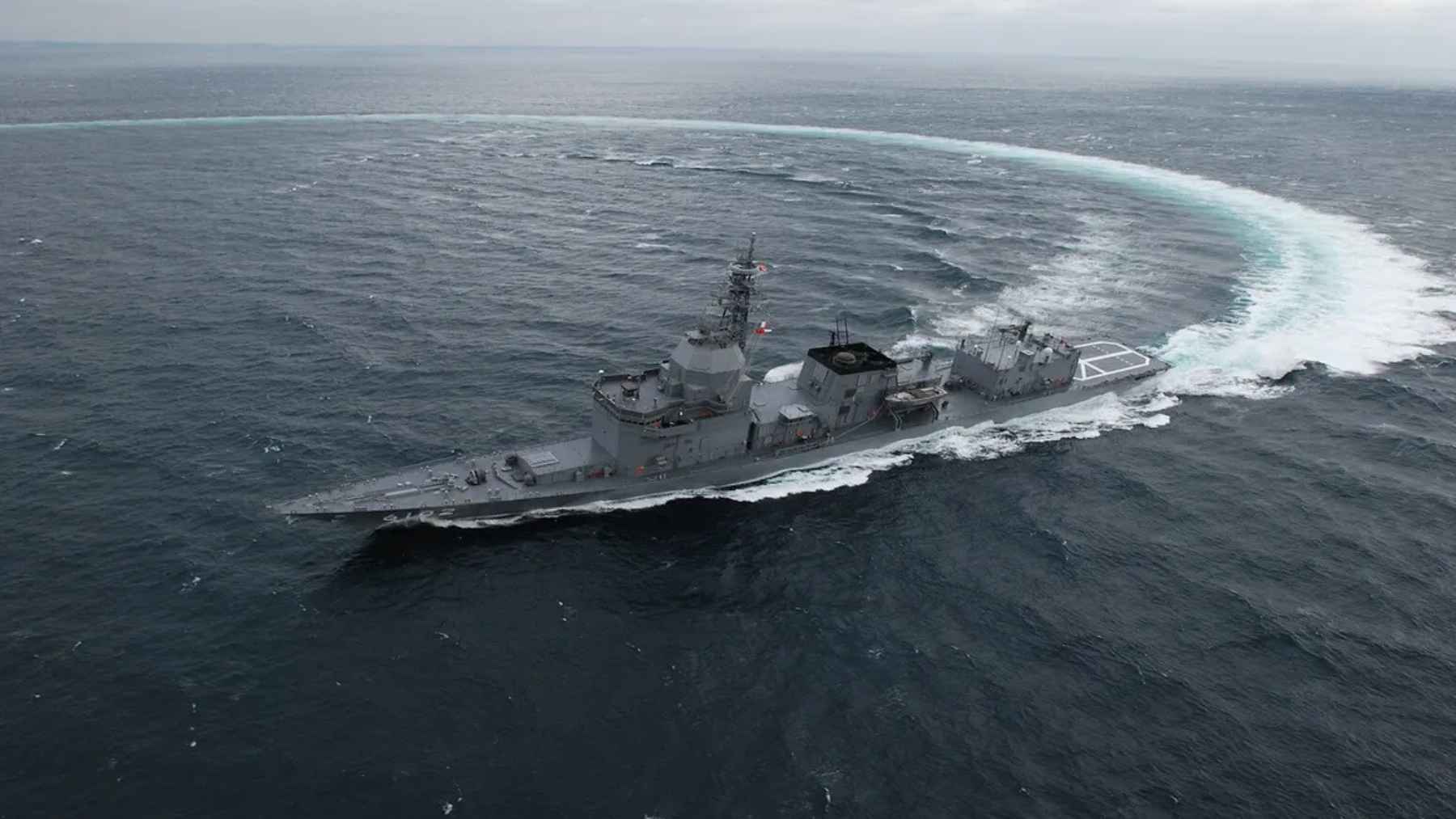
From lab benches to a 6,200-ton test ship
The prototype now sailing with JS Asuka did not appear overnight. For more than a decade, Japan’s Ministry of Defense has been funding research into high‑energy laser systems that can track and burn small, fast‑moving targets, including mortar rounds and drones.
Documents and briefings from Japan’s Acquisition, Technology and Logistics Agency (ATLA) describe the current effort as an electrically-driven, high‑power laser system meant to counter swarms of small, unmanned aircraft that would quickly overwhelm classic air‑defense systems.
ATLA’s own R&D brochures on high‑energy laser systems emphasize short‑range ship and base protection against drones, rockets, and cruise missiles.
The new installation takes that lab work to sea. Photos from naval observers show two 40‑foot containers on the test ship’s deck, each under a dome‑like housing, very similar to the arrangement described by Naval News when it spotted a high‑energy laser system aboard a JMSDF test ship.
One module likely holds the laser and cooling equipment, the other the power system and control gear. In practical terms, Japan is using JS Asuka as a floating lab to find out how this system behaves outside the clean, predictable world of indoor test ranges.
How a 100 kW laser actually works
Rather than a single giant beam generator, Japan’s system uses ten fiber lasers, each around 10 kW, combined into one coherent beam. Each laser pushes light through doped glass fiber, where rare earth atoms amplify the light as it passes. Combining these beams while keeping them tightly focused on a moving target is one of the major engineering challenges.
At 100 kW, a solid‑state fiber laser can heat thin metal and composite skins in seconds, melting or burning through structural elements, sensors, or control surfaces. For unarmored drones, that is often enough to send them into an uncontrolled spin or make them break apart.
Because the beam travels at light speed, reaction time is limited mostly by how fast the ship’s sensors can detect and track the target and how quickly the beam director can pivot and stay locked on. From far away, no one sees a glowing sci‑fi ray. Most of the time, there is only an invisible path and a brief flash or puff of smoke where the energy hits.
Researchers working with advanced states of light in the lab, such as supersolid phases or ultra‑dense pulses, are exploring similar questions about stability and control. Naval lasers sit at the more rugged, applied end of that same spectrum.
Why navies care about “infinite” magazines
Modern missile defense is expensive. Firing a standard surface‑to‑air missile can cost hundreds of thousands to over a million dollars, while many attacking drones and rockets cost only a few thousand. That math breaks fast if an attacker can launch large swarms.
Japan’s policy evaluations on high‑power laser systems frame them as one answer to that imbalance. Once installed, the marginal cost per shot is basically the fuel and wear on generators and cooling systems.
There is no need to haul explosive missiles or shells to a forward port, which also reduces logistics traffic and the risk of accidents.
At the same time, officials know that lasers do not replace every weapon on a ship. They work best against soft targets such as drones, small boats, or incoming munitions with limited protection.
Against hardened missiles or complex raid scenarios, navies still need layered defenses with radar, missiles, and guns. Lasers simply add another tool to that mix.
For everyday taxpayers reading about defense budgets and wondering what this means for their own bills, the promise is that replacing some missile shots with electrical pulses could, over time, keep certain costs under better control.
The messy reality of firing a laser at sea
On paper, the advantages sound compelling. On a moving ship in real weather, things get harder.
A warship’s deck is never truly still. Pitch, roll, vibration, and wind all make it harder to keep a tiny laser spot steady on a target that might itself be jinking or spinning. Moist, salty air over the ocean also scatters and absorbs energy, shrinking the effective range compared with what designers can achieve in dry test chambers.
Even with modern stabilization, keeping a tight beam on a fast‑moving drone long enough to do damage is challenging in rain, fog, or heavy sea spray. That is before you add cluttered airspace, civilian aircraft, and commercial drones that navies now have to worry about misidentifying.
Laser systems also waste a lot of input energy as heat. Fiber lasers are relatively efficient but still only turn a fraction of electrical power into directed light. The rest becomes heat that must be pulled away with chillers and heat exchangers.
On a 100 kW weapon, that means handling several times that amount in waste heat during sustained firing, all on a hull where space and power are already at a premium.
Test ships like JS Asuka exist partly to work through these headaches. Early sea trials focus less on immediate combat deployment and more on checking whether larger future versions could realistically help intercept faster, tougher threats.
A global race in directed energy
Japan is not alone in betting on directed‑energy weapons. In the United Kingdom, the DragonFire program recently demonstrated a laser weapon shooting down drones at a range in the Hebrides, and London has now funded an initial “minimum deployable capability” for frontline warships.
Germany’s navy, working with Rheinmetall and MBDA, completed a year‑long series of laser weapon trials at sea, where a demonstrator aboard the frigate Sachsen fired more than a hundred shots and successfully destroyed drones under realistic conditions.
The United States has already deployed smaller ship‑based lasers and continues to test new designs, while China is reported to be fielding its own systems. For the most part, these projects share the same aim: protect ships and bases from low‑cost aerial threats using electricity instead of expensive missiles.
Public debates around directed energy weapons have also spilled into everyday life, from conspiracy theories about wildfires to concerns over eye safety near airports. Naval lasers sit at the center of that discussion, turning abstract ideas about “DEWs” into metal, glass, and code.
The environmental angle: cleaner defense, or just different damage?
Because lasers rely on electricity rather than explosives, some defense officials portray them as cleaner than traditional weapons. To a large extent, that is true on a narrow level. A laser shot does not spray shrapnel or unburned propellant across the ocean surface, and it reduces the need to manufacture, transport, and store large numbers of missile bodies and warheads.
If navies start pairing high‑power lasers with cleaner ship power plants and low‑carbon fuels, the climate footprint of some defensive engagements could drop compared with firing conventional missiles. At the end of the day, though, most of a fleet’s environmental impact still comes from the fuel burned to move steel hulls through the water, not from the ammunition alone.
There are also quieter forms of harm to keep in mind. Underwater noise from large warships and carrier groups can disrupt whales and other marine life, and live‑fire exercises—whether with guns, missiles, or lasers—often take place in ecologically sensitive seas.
Directed energy may reduce some types of pollution, but it does not erase the environmental footprint of an arms race at sea.
For coastal communities living next to naval bases, the idea of fewer explosive shipments and storage bunkers feels concrete. For everyone else, the bigger question is whether making defense systems more precise and “clean” lowers the risk of conflict, or simply makes it easier for governments to accept long, low‑level confrontations.
What happens next?
For now, Japan’s laser‑armed test ship is a floating laboratory. Engineers will spend months measuring how the beam behaves over choppy water, how thermal systems cope with repeated shots, and how operators handle target identification in crowded skies.
If the system proves reliable, future large destroyers planned for the 2030s could receive more compact, rugged versions, first as backup against small drones and, later on, perhaps as part of multi‑layer defenses against cruise missiles. Either way, the move signals that the quiet, almost invisible side of naval warfare is getting louder in defense budgets.
The official policy evaluation for the ship‑based, high‑power laser system was published by Japan’s Ministry of Defense.