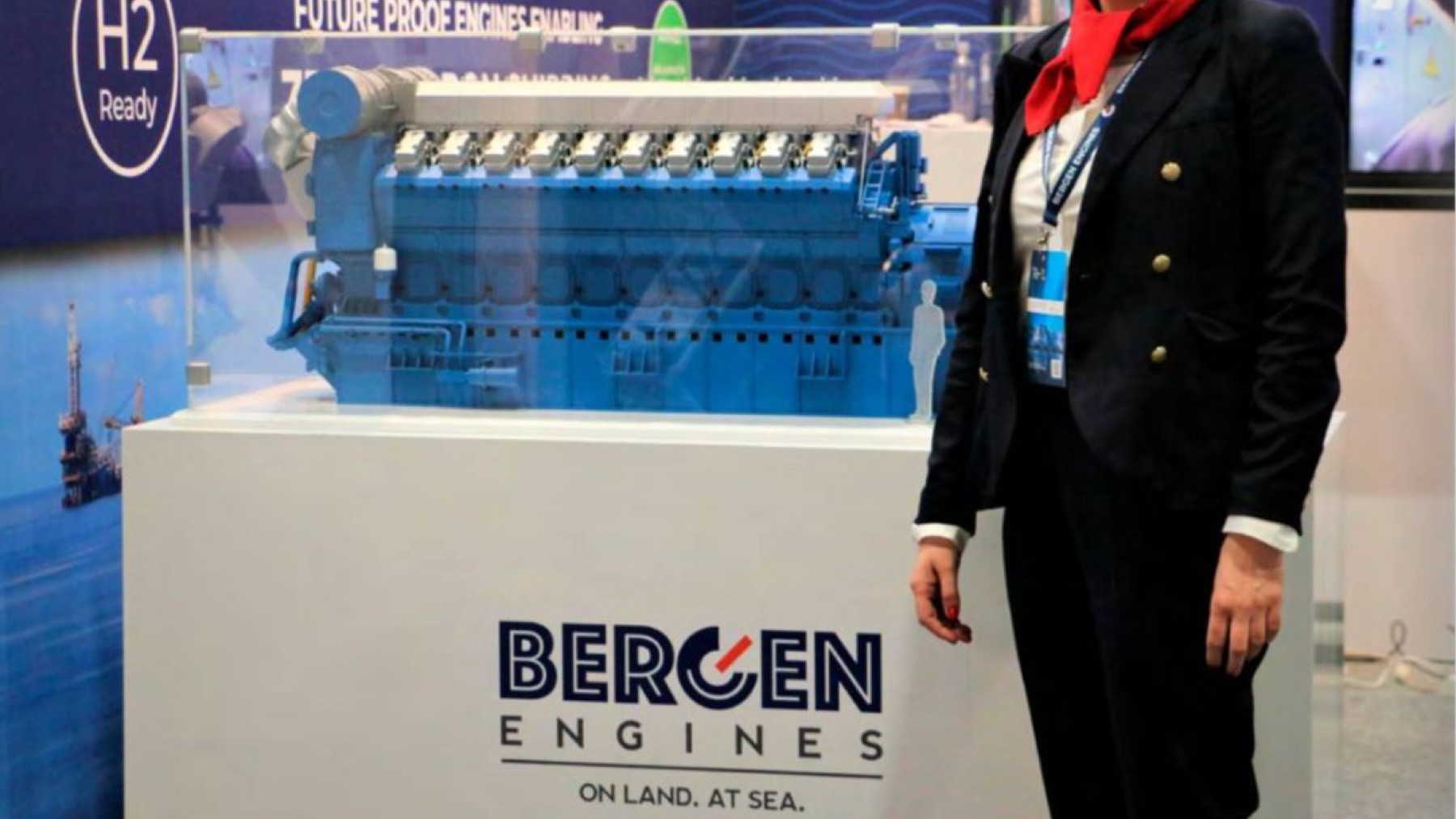
The latest advancement in hydrogen engines, Norway-based Bergen Engines, has made significant progress in hydrogen engine technology, which, if adopted in the future, will redefine the future of clean energy usage in the transport sector and electricity generation. The company has successfully introduced a hydrogen blend of up to 25 percent in its natural gas engines, which is perfect for developing more eco-friendly energy products.
Not only does this advancement demonstrate Norwegian renewable technology strategy, but it also reduces the monopoly of FCEVs in the hydrogen mobility industry. Bergen Engines’ innovative work may contribute a natural and more efficient and practical method for incorporating hydrogen as a fuel source, which paves the way for the new generation of engines and environmental concerns.
The unexpected leap: How 25% hydrogen blend could change the game
Bergen Engines’ 25% hydrogen solution in all of its natural gas engines represents a significant advancement from the 15% blend it marketed in 2022. Such advancement shows that the hydrogen engine is a rapidly developing technology with the potential to revolutionize numerous sectors.
The extent to which this percentage of hydrogen can be employed in conventional engines without further modifications has inconceivable impacts on both the land and the maritime field. It provides a quicker and cheaper means of reducing carbon emissions than the overhauling that is needed for FCEV.
From greenhouse gas reduction to cost savings: A win-win innovation
The rise of hydrogen blends that have been made available by Bergen Engines offers a great impact on the environment, with better performance, contrary to the expected performance decrements displayed by other manufacturers. These engines integrate 25% hydrogen, resulting in low CO2 emissions while addressing power levels. Interestingly, vehicles with more hydrogen content in their engines burn the fuel better, resulting in better fuel economy and performance.
This dual advantage of reduced emissions and improved efficiency addresses two critical concerns in the fight against climate change: management and minimization of carbon impact or carbon sink of built structures and effective utilization of resources. The fact that all these benefits can be realized without penalty to power and reliability makes this technology suitable for industries where high-output engines are essential. Still, the effects on the environment cannot be afforded.
Pioneering the future: Bergen engines’ 100% hydrogen goal by 2024
What Bergen Engines is not going to do is rest on the success of the 25% hydrogen blend feat. They are currently in the process of achieving the leading status of a 100% hydrogen-fueled engine by the end of 2024, and such an ability could revolutionize the limits of clean energy propulsion. It has been a significant objective that is promoting constant mind probing on the efficiency and robustness of engine designs to produce even higher percentages of hydrogen.
Additionally, the company is focused on innovations to develop new fuel sources, including ammonia, to support its green offering for both the onshore and maritime industries. This ongoing research work puts Bergen Engines in the vanguard of various research in this area, which makes a driveshaft for SEE a potential and efficient replacement for FCEVs in many applications.
The global Impact: Norway’s bold step towards a hydrogen-powered future
Finally, hydrogen blended engines by Bergen Engines represent one of the remarkable advancements towards environmentally friendly transportation and power production systems. Having achieved the blend of hydrogen up to 25% and aiming for a 100% hydrogen-fueled engine, the company is actually disrupting the traditional thinking about FCEVs and providing the world with a viable solution. What is more, it brings enormous environmental potential and offers a more practical and prompt option that differs from the Kyoto Protocol for numerous industries to decrease their carbon emissions.
The case of Bergen Engines in the development of what can be the world’s first hydrogen fuel-powered engine calls for a new dawn in the engine technology of society. As such, it is essential to realize that Norwaystra has far-reaching consequences that reach well beyond the country’s borders; it may define the future of transport and power generation all around the globe. Thus, as research advances and probably technologies evolve, the idea of a hydrogen society seems ever possible to realize and bring about the changes that will, in the long run, assist in making the world a cleaner place.