In 1940, citizens' groups protested the planned demolition of Depression-era barracks at Missouri's Roaring River State Park, and the buildings still stand in the Ozarks
In 1940, citizens' groups saved the CCC barracks at Roaring River State Park in Missouri, where Depression-era crews built the lodge and trails.

· 4 min read
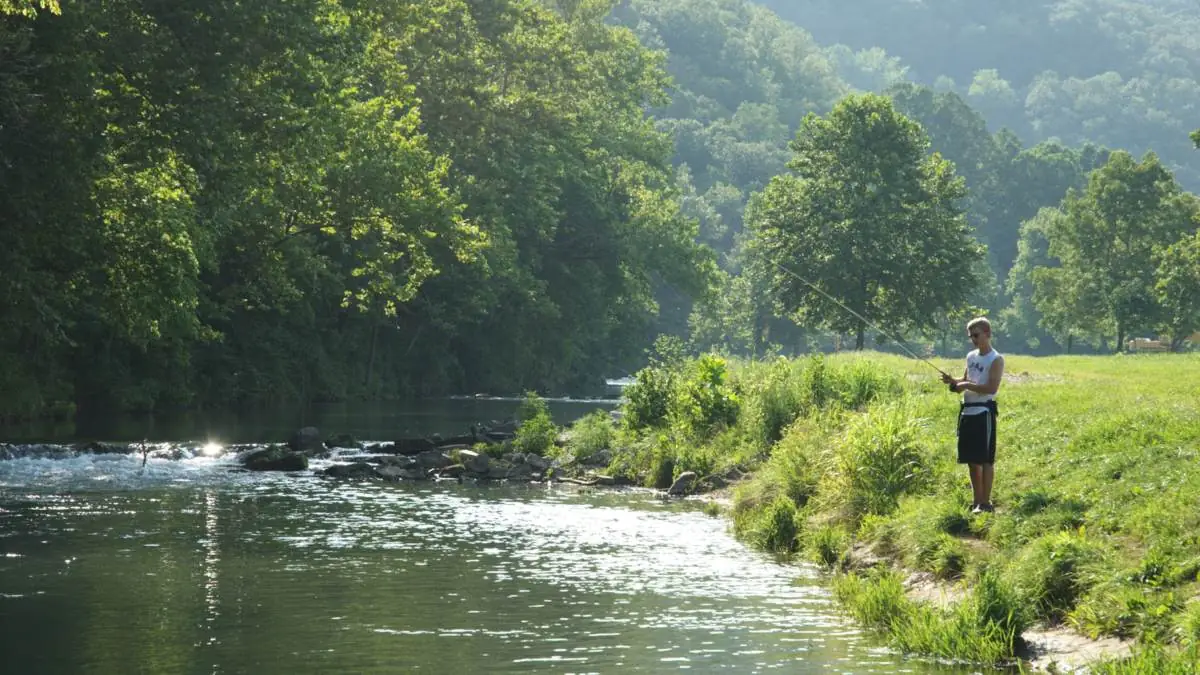
On December 19, hundreds of luminaries will line the banks of Roaring River in Missouri's Ozarks for the third annual Christmas Candlelight and Cookie Stroll. The free event runs from four thirty to eight p.m., with Santa greeting visitors inside the CCC Lodge. That lodge was built by Depression-era relief workers in the 1930s, like much of Roaring River State Park. A Civilian Conservation Corps camp operated there from 1933 to 1939. Across the country, such camps were usually torn down when the corps moved out, and the park's four remaining barracks were scheduled for demolition in 1940. But citizens' groups protested and saved them for a youth camp, now called Camp Smokey. The nomination calls it the only remaining CCC officers' compound in Missouri's state park system.
Key points
- The CCC camp at Roaring River ran from 1933 to 1939.
- Despite its name, the CCC Lodge was built by the WPA and first served as a hotel.
- Santa will be at the lodge during the free candlelight stroll on December 19.
On December 19, hundreds of luminaries will line the banks of Roaring River in Missouri's Ozarks, and Santa will greet visitors inside the CCC Lodge. Like much of Roaring River State Park, the building was put up by Depression-era relief workers in the 1930s.
Missouri State Parks announced the third annual Christmas Candlelight and Cookie Stroll in a November 24 release. The free event also includes a tree lighting and an open house in the park's historic one-room schoolhouse.
Many of the structures those workers built still stand today, according to Missouri State Parks. Their barracks are among them, after citizens' groups protested a planned demolition in 1940.
A camp in the Ozarks
Roaring River State Park lies seven miles south of Cassville in Barry County. A Civilian Conservation Corps camp was active there from 1933 to 1939. That is according to a National Register nomination in National Park Service files.
The CCC reached Missouri in June 1933, when camps were set up in three state parks, Roaring River among them. Within a year, 4,000 men were employed on 40,000 acres, the nomination says.
The program, created in 1933, aimed to ease unemployment among young men and to conserve forests and soil. In just 37 days, 250,000 young men between 18 and 25 were in CCC camps nationwide. Part of their monthly wages was sent home to their families.
Across Missouri, 93,445 enrollees and 8,646 camp officers and supervisors served during the life of the CCC. They built 126 lookout towers and planted nearly 12 million trees to control erosion, plus more than 36 million for reforestation, the nomination says.
Each camp held about 200 enrollees and was run by the Army, while the National Park Service supervised park work. Photos in work reports invariably showed large crews of young men at work, the nomination notes.
What they built
Settlers had been drawn to the valley in the early 1800s by clear streams that powered their mills, the park's history page explains. The hills also sheltered Civil War guerrillas and outlaws. After the war the valley became a resort community, and a wealthy businessman, Thomas Sayman, later bought 2,400 acres around Roaring River Spring and gave them to the state.
The relief workers gave the park much of its present character. According to Missouri State Parks, CCC and Works Progress Administration crews built picnic shelters, the fish hatchery and trails.
Despite its name, the CCC Lodge was built by the WPA, not the CCC, Missouri State Parks notes. The WPA was a separate New Deal relief program that supplemented CCC projects at Roaring River, the nomination explains.
There, the WPA built a three-story stone and timber dining lodge, according to the nomination. Among Missouri's Depression-era park lodges, it was unique in that it originally served as a hotel.
Builders across Missouri's state parks favored native stone and timber, so structures would blend into the landscape. Even poured concrete was often hidden behind stone facings.
The relief workers also built Deer Leap Trail. The nomination calls it dramatic, with more obvious man-made elements than some trails of the era. A dam and spillway near the hatchery, a log shelter, a clubhouse and a honeymoon cottage were nominated too.
The barracks that stayed
Across the country, CCC camps were considered temporary shelters. Barracks, mess halls and recreation buildings were routinely razed when the corps moved out, the nomination explains.
Roaring River was supposed to follow that pattern. Its four remaining barracks were scheduled for demolition in 1940. Citizens' groups protested and managed to save the buildings for use as a youth camp.
That camp is now called Camp Smokey. The nomination calls it the only remaining CCC officers' compound in Missouri's state park system. It was nominated as the Camp Smokey/Company 1713 Historic District.
The nomination says it has great historical value and complements the more ornamental New Deal buildings. A bronze statue of a CCC worker also stands in the park as a tribute to the young men, according to Missouri State Parks.
Visiting this winter
The December 19 stroll runs from 4:30 to 8 p.m. A tree lighting opens the evening inside the Emory Melton Inn, followed by a tree auction, stories with Mrs. Claus at the amphitheater and a craft in the schoolhouse.
Admission is free, and visitors are asked to dress for the weather and bring a flashlight or lantern. Activities may be canceled or changed because of bad weather.
Overnight guests can stay at the CCC Lodge, the Emory Melton Inn or rustic cabins, according to the park's page. The story of the camp and its buildings is documented in the National Park Service's National Register files.
Photo: Missouri State Parks (public domain)
Jordi Company
Writer at ECOnewsJordi Company is a well-known figure in Catalan publishing and a pioneer of the free press model, with 40 years of experience in television, radio and print. He has founded and led several media groups and today heads ECOticias.com, an environmental news outlet read in Spanish and English around the world and an audience leader since 2004. He is a member of the International Network of Writers for the Earth (RIET), among other organisations.
More from Jordi CompanyComments · 0
Rules ›No comments yet. Be the first to share your view.