Confirmed by the EPA: updated formaldehyde test standards for plywood, particleboard and fiberboard take effect November 27, and the agency expects no extra costs
The EPA formaldehyde update for composite wood swaps in 2022-2024 editions of lab tests, adds an optional method and sets no extra transition period.

· 3 min read
New rules for testing formaldehyde in composite wood take effect on Friday, November twenty-seventh. The Environmental Protection Agency calls the final rule routine and expects no additional costs for businesses. It updates technical standards, mostly test methods and product standards, that the existing formaldehyde rule already references. The changes affect companies that make, import, sell or supply hardwood plywood, medium-density fiberboard and particleboard, as well as products containing them. The agency also adds an optional small-scale chamber method for quality control testing, and drops a British version of a gas analysis standard because an identical international version is already included. The EPA set no extra transition period, saying the updates should not change compliance decisions. For shoppers, the labeling requirement comes from the earlier rule: composite wood products must carry a label saying they comply with TSCA Title VI.
Key points
- The final rule was published in the Federal Register on October 28, 2026.
- Products must carry a TSCA Title VI compliant label under the 2016 rule.
- The EPA received nine public comments on the proposal.
- Formaldehyde can irritate the skin, eyes, nose and throat.
New rules for testing formaldehyde in composite wood take effect on Friday, November 27. The Environmental Protection Agency published the final rule in the Federal Register on October 28, 2026.
The rule falls under section 601 of the Toxic Substances Control Act, known as TSCA Title VI. It amends 40 CFR part 770. The EPA calls it a routine action and anticipates no additional costs to stakeholders.
The rule updates technical standards that the existing formaldehyde rule for composite wood products incorporates by reference. According to the EPA, they primarily update test methods and product standards.
Who it applies to
The rule matters to companies that make, import, sell or supply hardwood plywood, medium-density fiberboard or particleboard in the United States. It also covers products containing those materials, as well as firms that test them or work with certification firms.
The EPA's non-exhaustive list of potentially affected businesses includes furniture makers and stores, building material dealers and manufactured home producers. Makers and dealers of travel trailers and recreational vehicles are on it too.
From November 27, regulated entities must use the updated editions when complying with part 770. The EPA set no additional transition period, saying the updated editions are not expected to affect compliance determinations.
What the update changes
Most of these standards are laboratory tests that measure how much formaldehyde a wood panel gives off. Several move to newer editions, including three ASTM test methods updated in August 2022.
In the desiccator test, ASTM D5582-22, wood samples sit in a closed container with a small water reservoir for 2 hours. The small-chamber test, ASTM D6007-22, measures formaldehyde in air under set temperature and humidity. Its results are meant to be comparable to the large-chamber test.
That large-chamber method, ASTM E1333-22, measures formaldehyde concentration and emission rate under conditions designed to simulate how a product is used. Two product standards are also updated, ANSI A190.1-2022 for structural glued laminated timber and PS 1-22 for structural plywood. A gas analysis method, ISO 12460-3:2023, is included as well.
The EPA is adding ISO 12460-2:2024 as an extra, optional small-scale chamber method for quality control testing. The EPA says the new method can be used like the other quality control methods, at the same testing frequency and with the same reporting and correlation requirements.
The EPA also drops the British version of the gas analysis standard, BS EN ISO 12460-3. An identical international version, ISO 12460-3:2023, is already in the rule, so the method itself remains available.
Why the EPA acted
Several of the referenced standards were outdated, superseded or withdrawn, the agency says. The organizations that issue them updated them between 2022 and 2024. Keeping two identical standards, it adds, offers no technical value and could confuse regulated companies.
The EPA proposed the changes on February 11, 2026. It made a similar update on February 7, 2018, refreshing several emission testing methods and product construction standards.
It received nine public comments in total, and the eight relevant ones all supported the updated standards and the new test method. Three comments supported removing the British standard.
What buyers should know
The labeling requirement comes from the earlier rule. After March 22, 2019, composite wood products had to be labeled TSCA Title VI compliant, according to the EPA. That applies to the panels and to household and other finished goods that contain them.
The national rule, first published on December 12, 2016, was designed to be consistent with California's requirements for similar products. It also set up third-party certification for testing and oversight of formaldehyde emissions.
Between June 1, 2018, and March 22, 2019, products could carry either a CARB ATCM Phase II label or a TSCA Title VI label. After that, only the TSCA Title VI label was allowed, according to the EPA's rule page.
Formaldehyde is a colorless, flammable gas with a strong odor, the EPA explains. It can irritate the skin, eyes, nose and throat, and high levels of exposure may cause some types of cancer.
Composite wood resins are not the only source. The agency lists building materials, glues, permanent press fabrics, paints and coatings, unvented gas stoves, kerosene heaters and cigarette smoke among others.
People are exposed mainly by breathing air that contains formaldehyde given off by products, including composite wood. The EPA's fact page says the chemical is also undergoing a separate risk evaluation under TSCA. A March 2024 draft preliminarily found that it poses an unreasonable risk to human health, though the EPA notes those risks may not apply to everyone, everywhere.
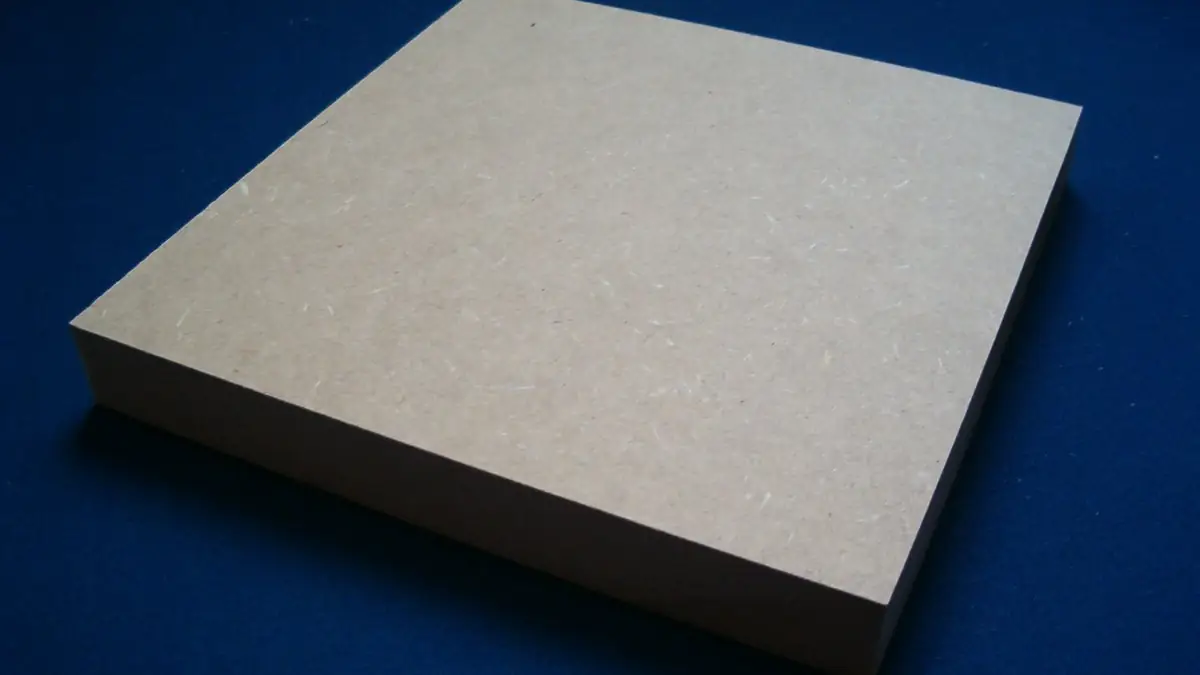
Photo: Joern Allmers / Wikimedia Commons, public domain
Glossary for this story
- EPA
- The Environmental Protection Agency: the U.S. federal agency in charge of protecting air, water and land and enforcing environmental laws.
Jordi Company
Writer at ECOnewsJordi Company is a well-known figure in Catalan publishing and a pioneer of the free press model, with 40 years of experience in television, radio and print. He has founded and led several media groups and today heads ECOticias.com, an environmental news outlet read in Spanish and English around the world and an audience leader since 2004. He is a member of the International Network of Writers for the Earth (RIET), among other organisations.
More from Jordi CompanyComments · 0
Rules ›No comments yet. Be the first to share your view.