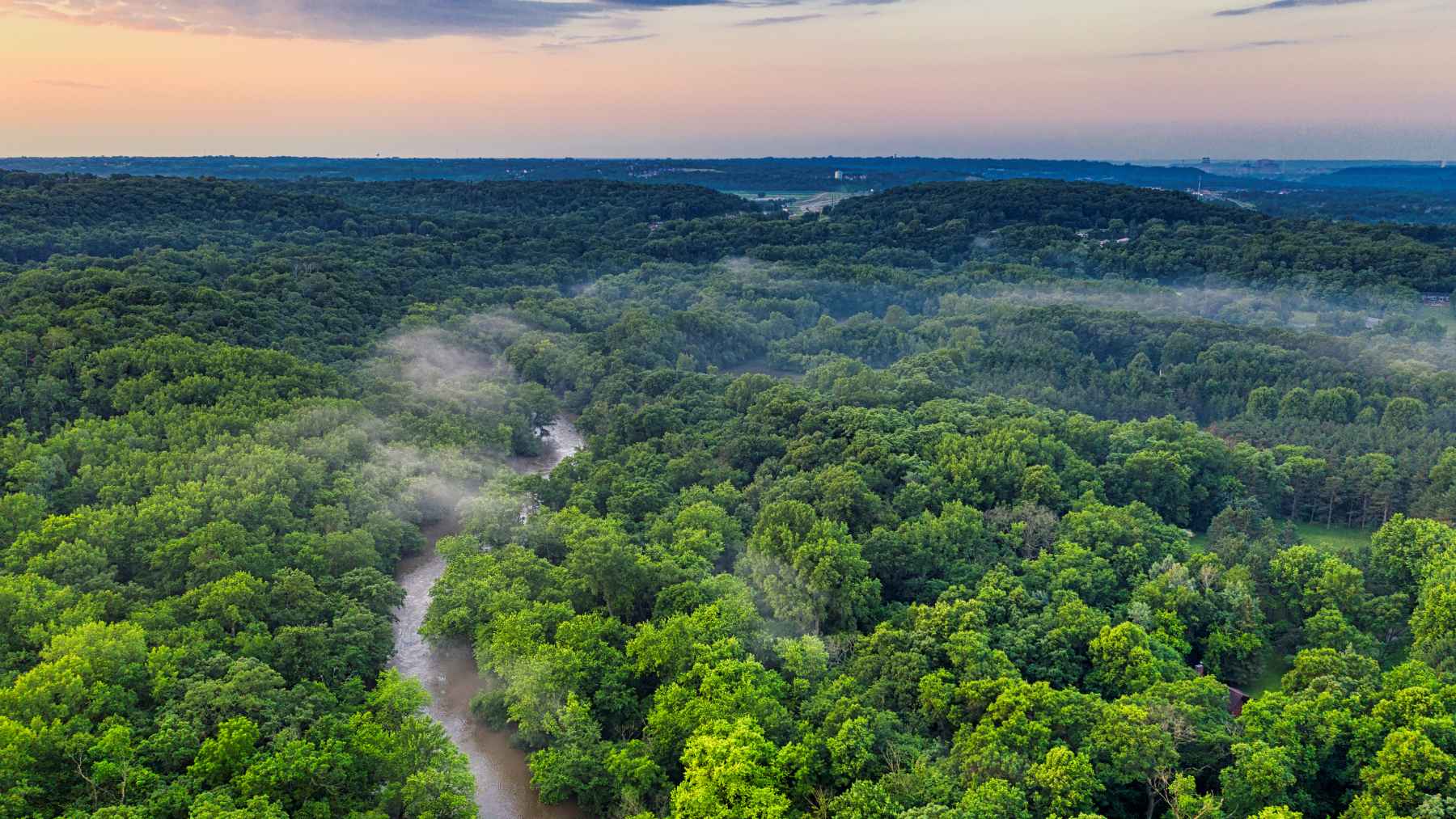
For years, a comforting idea has floated around climate conversations. As carbon dioxide builds up in the atmosphere, forests will soak it up, grow faster, and quietly help balance the planetary books. More CO2, more wood, less climate worry.
A new international study says reality is not that generous. Trees are indeed becoming more efficient at using water, but their growth is not keeping pace. The missing piece of the puzzle sits in microscopic pores on every leaf.
Tiny valves, big trade off
Leaves are covered with stomata, tiny openings that act like adjustable valves. Through them, trees take in CO2 for photosynthesis and release water vapor into the air. When stomata open wide, the tree can grow more, but it also loses more water. When they close, water is saved, but growth slows.
As CO2 rises, trees do not need to open those valves as much to get the carbon they need. That change boosts what scientists call intrinsic water-use efficiency, essentially the amount of carbon gained per unit of water lost. In simple terms, the tree gets more “growth potential” out of every drop.
So far, so good. The surprise is what happens in a warmer, drier atmosphere. When air becomes thirstier, water evaporates from leaves faster. To avoid drying out their internal plumbing, trees react by tightening those stomatal valves. That protective response saves water but also limits how much extra CO2 actually makes it into the tree.
The forest “CO2 bonus” that never fully shows up
The new work, led by researchers from Wuhan University, Duke University and partners across Europe, Australia and the Americas, tackles a long-standing mismatch. Many experiments and tree ring studies have shown that water-use efficiency has increased in forests over the past century, yet tree growth has often risen only slightly, stayed flat, or even declined in some regions.
To investigate, the team combined an engineering style model of water movement in trees with data from free air CO2 enrichment experiments and decades of tree ring isotope records. At Duke Forest in the United States, trees were exposed to elevated CO2 for 16 years.
At an ETH Zurich site in Switzerland, researchers instead boosted humidity around trees. Both long experiments found that forests did not store as much extra carbon as early theories had predicted.
By treating stomata as tiny devices trying to “optimize” the balance between carbon gain and water loss, the new model draws a theoretical envelope around how much additional growth is even possible for a given gain in water-use efficiency. In many realistic climate situations, especially where air dryness is rising, the math shows that growth simply cannot keep up.
Tree height adds another limit. As trees grow taller, it becomes harder to pull water from the soil up to the canopy. That hydraulic strain means tall trees in particular are less able to turn efficient water use into extra wood, even if CO2 is abundant.
Why this matters for climate hopes and forest plans
On paper, it has been tempting to treat forests like ever-expanding carbon sponges. Plant more trees, let CO2 fertilization do the rest, and offset a good share of human emissions. The new study suggests that approach needs a reality check.
Forests are still vital allies in climate action. They store enormous amounts of carbon, cool the air, shelter biodiversity, and protect watersheds. But expecting rising CO2 to turbocharge tree growth across the board ignores the way real trees juggle water stress, height limits, soil nutrients, pests, and shifting seasons.
In practical terms, this means carbon offset projects and national climate plans should be cautious when they assume strong, long-lasting growth boosts from CO2 alone. Protecting forest water supplies, limiting additional warming, and avoiding deforestation may do more for long-term carbon storage than betting on a global “CO2 fertilizer” effect.
For everyday life, the story feels familiar. Many of us try to stretch a limited budget, trimming the electric bill or watering the garden less on hot days. Trees are doing something similar. They are learning to sip rather than gulp, but that thriftiness does not magically increase their income.
At the end of the day, the lesson from the leaf is simple. Smarter water use helps trees survive in a hotter world, yet it does not let us off the hook for cutting emissions or managing forests carefully.
The study was published in Nature Climate Change.