Galaxies
47 stories · since 2025 · latest, November 16, 2026
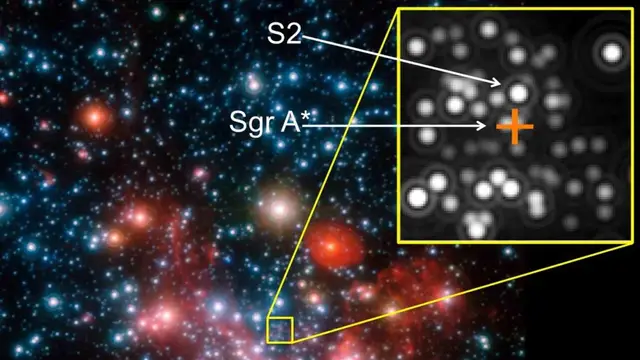
According to this new study, what lies at the center of the Milky Way may not be what it seemed
What sits at the center of the Milky Way? For decades, the standard answer has been clear. A supermassive black hole called Sagittarius A*. But a new…
ECOnews Newsroom · March 22, 2026
Why objects such as 3I/ATLAS could be the cheapest ticket to cross the galaxy
What if the most energy efficient way to travel between stars was not a giant metal starship, but a chunk of ice already racing through the galaxy?
ECOnews Newsroom · March 21, 2026
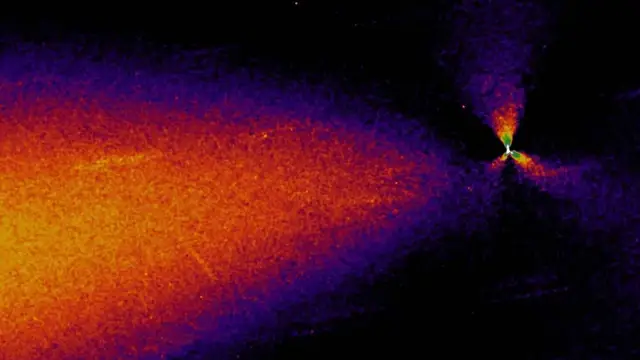
Scientists propose that the center of the Milky Way does not contain a black hole, but rather ultra-dense dark matter
Astronomers have shown that the powerful gravity at the center of the Milky Way can be reproduced without assuming a black hole sits there. Their new…
ECOnews Newsroom · March 12, 2026
Samsung ends security updates for the Galaxy A03s, A52s, F42 5G and M32 5G
Several popular Galaxy phones that launched in 2021 have quietly reached the end of their official life online. Samsung has stopped all software and…
Adrian Villellas · March 7, 2026

James Webb discovers (once again) the most distant galaxy in the universe and breaks its own record
The universe has a new distance champion, and once again the telescope holding the trophy is the James Webb. Astronomers have confirmed a tiny, yet…
Adrian Villellas · March 2, 2026
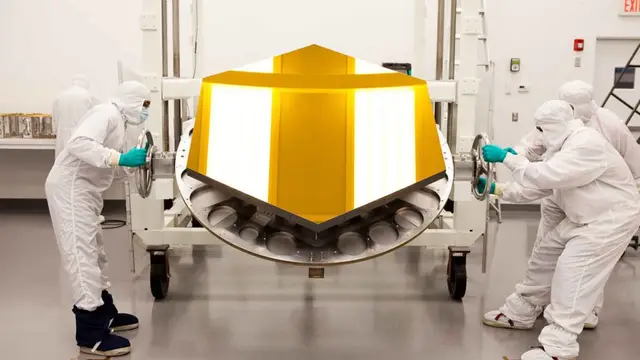
It wasn’t just a simple stroll through the galaxy: 14 million years ago, the solar system passed through a colossal wave of gas and stars that may have triggered the great Miocene glaciation
About 14 million years ago, our solar system sailed through a vast ribbon of gas and baby stars in the Milky Way known as the Radcliffe Wave. A new study…
ECOnews Newsroom · February 28, 2026
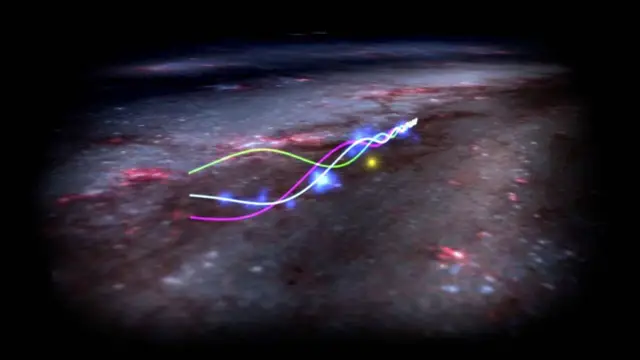
Astronomers look back 11.1 billion years and see something that doesn’t fit: a twin of the Milky Way ten times more massive and out of control
A “monster” Milky Way twin is whipping up a cosmic storm 11 billion years ago
ECOnews Newsroom · February 17, 2026

Astronomers discover a baby galaxy in turbo mode: it converts more than 180 “suns” of gas per year into new stars… while ours barely reaches 1
Imagine a single galaxy giving birth to new suns at a pace 180 times faster than the Milky Way. That is what astronomers have seen in a tiny, reddish…
Adrian Villellas · February 11, 2026
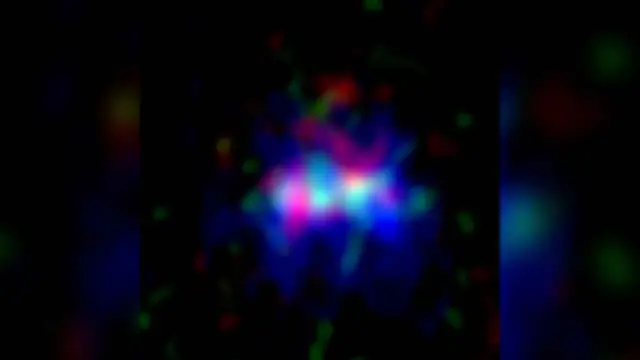
A galaxy looked calm in the first images, but when it was brought into focus it turned out to be a cluster of at least 15 stellar bursts, like cosmic grapes
A galaxy that lived only about 930 million years after the Big Bang looked, at first glance, like a smooth rotating disk. Then astronomers zoomed in with…
ECOnews Newsroom · February 8, 2026
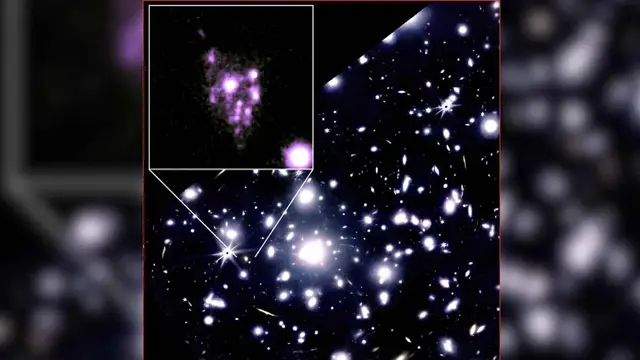
Just 600 million years after the Big Bang, a compact galaxy appears that produces stars as if there were no tomorrow
Using one of the most sensitive radio telescopes on Earth, astronomers have found an extreme kind of “star factory” in the very young universe.
ECOnews Newsroom · February 7, 2026
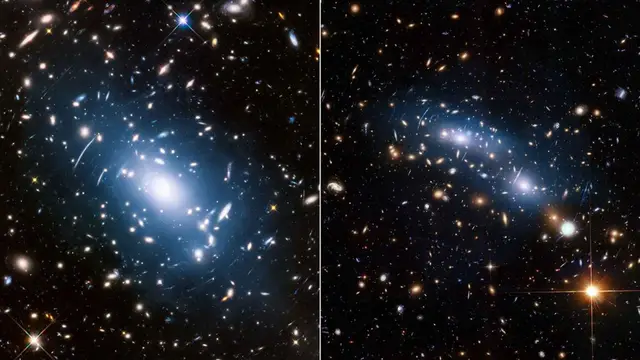
A new telescope points to the Local Void and discovers something puzzling: the loneliest galaxy continues to ignite stars with a blue core that should not exist
In one of the emptiest regions of the nearby universe, a small galaxy is quietly breaking the rules. NGC 6789 sits about 12 million light years from Earth…
Adrian Villellas · January 16, 2026
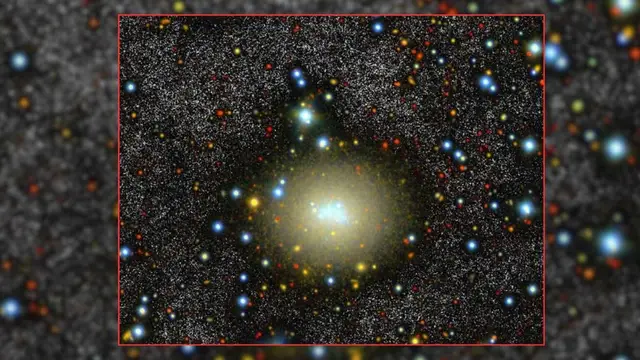
It looked like a quiet galaxy from afar, but upon closer inspection, a “cluster” of stars appeared that should not have existed so soon after the Big Bang
If you could rewind the universe to its first billion years and freeze the frame, what would the very first galaxies look like? A new discovery suggests…
Adrian Villellas · January 14, 2026
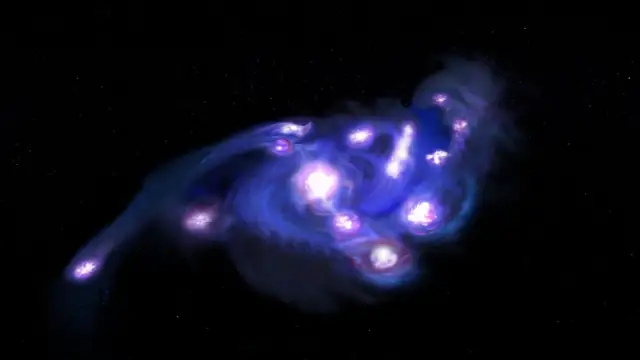
They pointed a radio telescope for less than three hours and, without even looking for them, ended up finding 49 new galaxies hidden in the data
In less than the time it takes to get through a long work afternoon, astronomers have stumbled on 49 previously unknown galaxies rich in star forming gas.…
ECOnews Newsroom · January 13, 2026
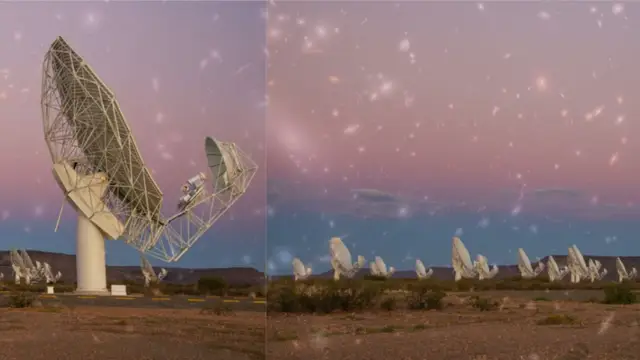
They looked at a galaxy almost at the edge of time and discovered a star factory so hot that it challenges what we believed about the early universe
Imagine a single galaxy churning out newborn suns 180 times faster than the Milky Way. Now place it in the young universe, only about 600 million years…
Adrian Villellas · January 12, 2026
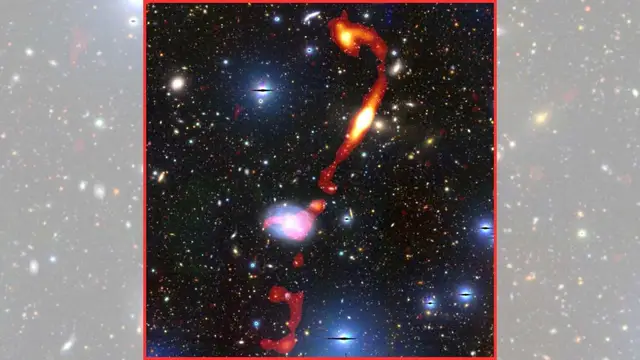
A galaxy so large that it makes the Milky Way seem tiny has been detected, and scientists are calling it a “problem” for a disturbing reason
Astronomers using South Africa’s MeerKAT radio telescope have spotted a colossal galaxy whose radio jets span about 3.3 million light years, roughly 32…
ECOnews Newsroom · January 3, 2026