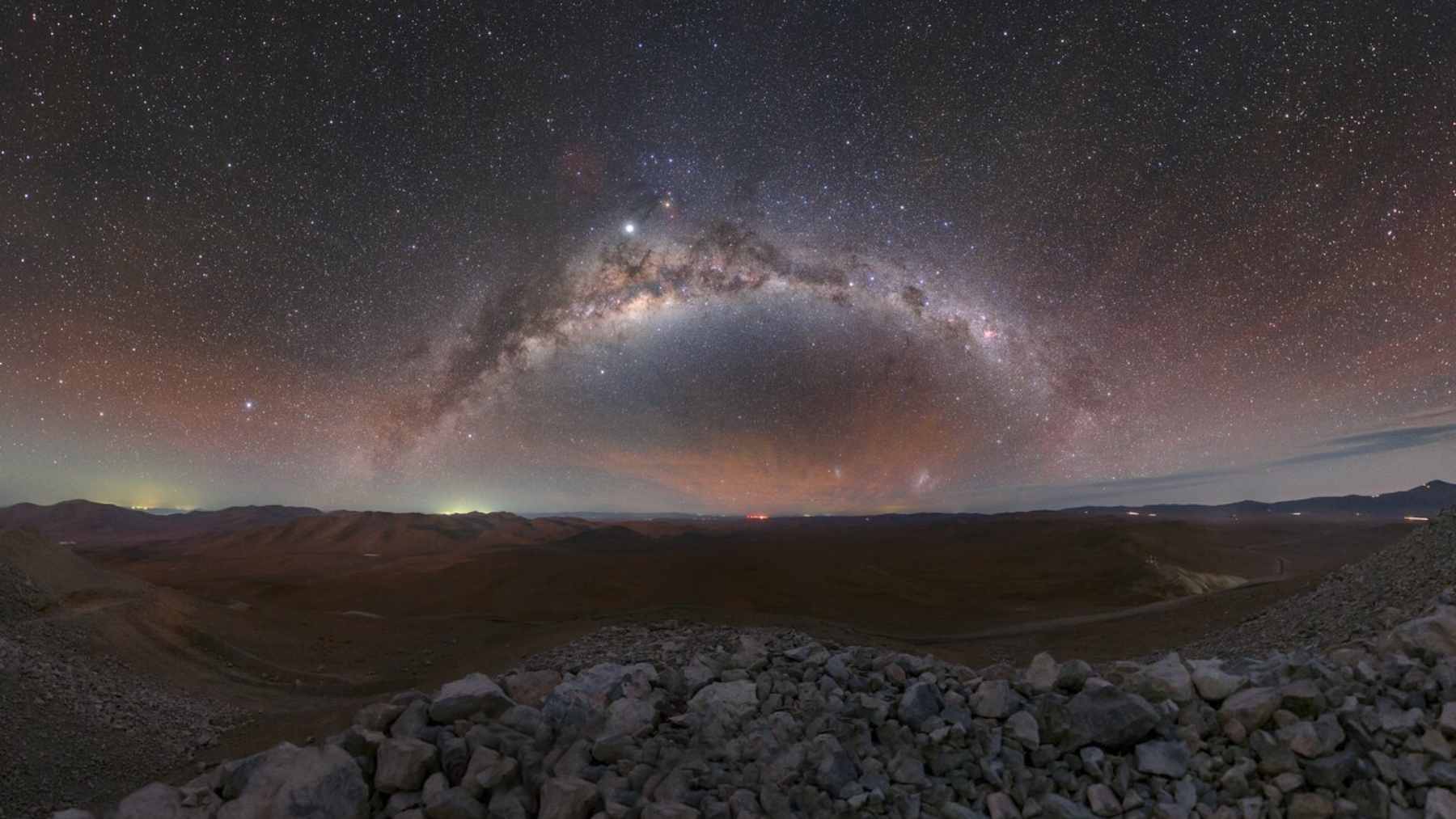
How much is darkness worth? At Chile’s Paranal Observatory, it can mean the difference between spotting a faint galaxy and losing it in a wash of artificial glow. That is why astronomers in Chile and around the world are celebrating the end of INNA, the industrial megaproject once planned near one of the clearest skies anywhere on Earth.
AES Andes said on January 23, 2026, that it would discontinue the green hydrogen and green ammonia project and shift its attention to renewable energy and battery storage.
ESO later updated its February 2 press release, saying a February 6 letter to Chile’s Environmental Assessment Service formally confirmed the project’s withdrawal from review. In plain English, the complex will not be built next to Paranal.
Why this project caused alarm
INNA was never a small proposal. ESO said it would spread across more than 3,000 hectares and sit roughly 5 to 11 kilometers from major astronomical facilities at Paranal and nearby Cerro Armazones, an area it describes as the darkest and clearest sky of any astronomical observatory in the world.
Put something that large that close, and the observatory’s natural advantage starts to slip away.
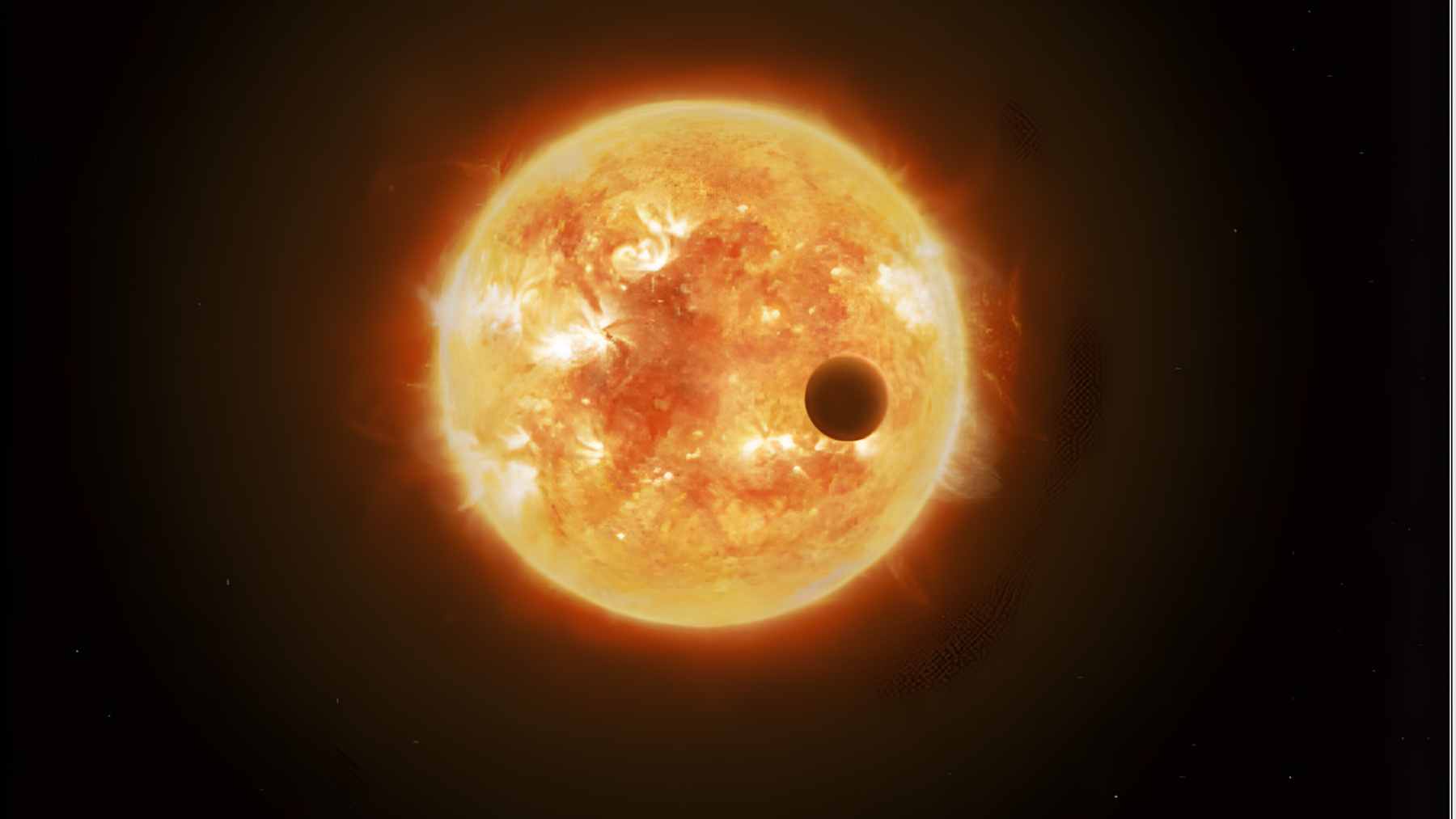
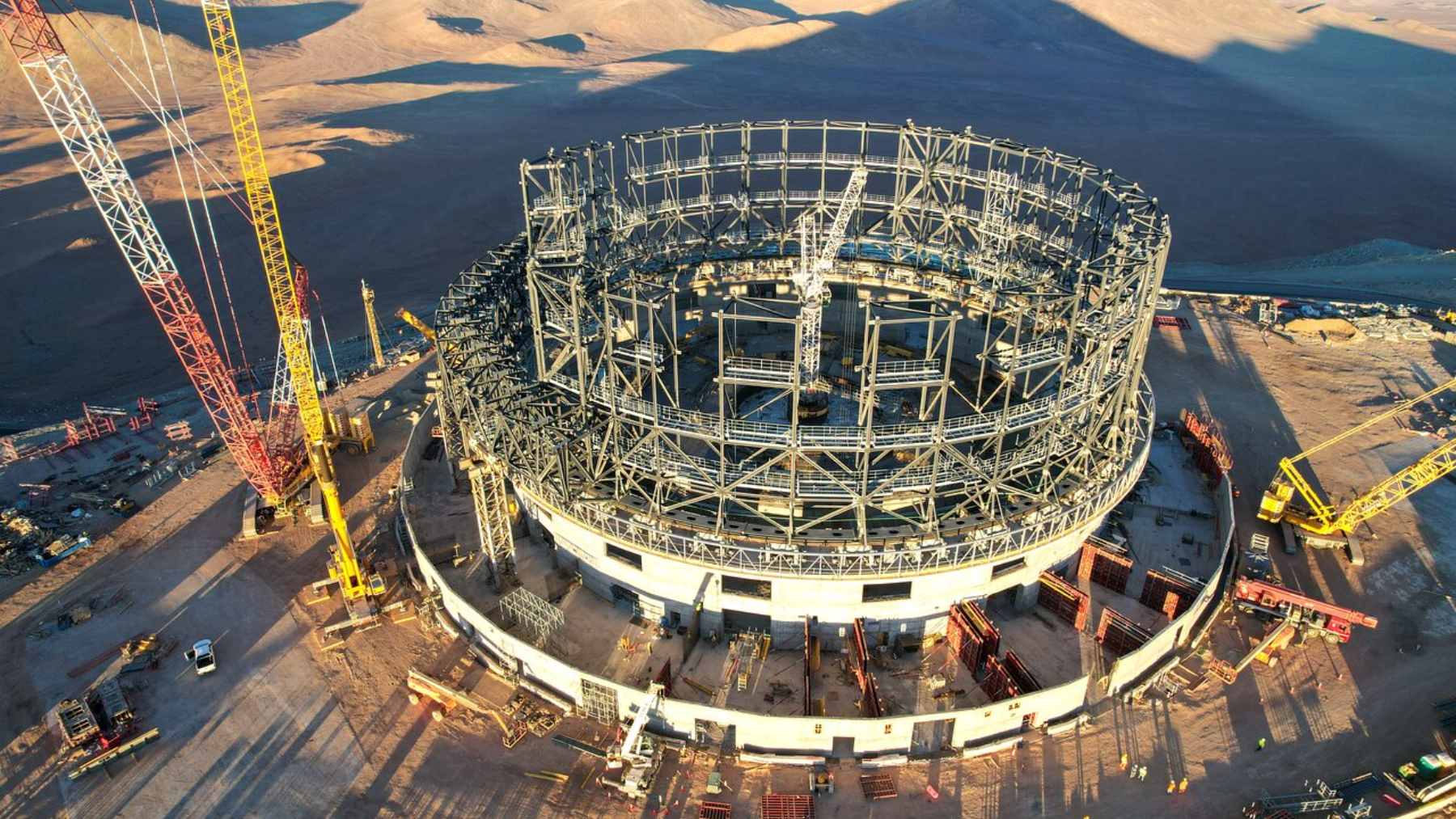
That mattered because Paranal is not just another telescope site. Since opening in 1999, it has helped deliver landmark results, including the first image of an exoplanet, and the neighboring Armazones site is where ESO is building the Extremely Large Telescope, a machine meant to push astronomy much deeper into the cosmos.
Lose the sky quality there, and you are not just dimming a view, you are weakening decades of scientific investment.
What the numbers showed
The most striking warnings came from ESO’s March 2025 technical analysis.
Using models that included more than 1,000 planned light sources, the observatory found that INNA would raise light pollution above the Very Large Telescope by at least 35%, and above the southern site of the Cherenkov Telescope Array Observatory by more than 50%, while even the ELT site would see a minimum 5% increase in sky brightness.
For instruments built to catch the faintest possible light, those are not small changes.
And the problem did not stop with glare. ESO also warned about dust during construction, more atmospheric turbulence, and micro-vibrations from infrastructure such as wind turbines, all of which could interfere with exquisitely sensitive equipment like the VLT Interferometer and the ELT.
A brighter industrial skyline might sound abstract when you read it on a page, but for a telescope trying to isolate a weak signal from deep space, it changes everything.
This is not a rejection of clean energy
There is an important nuance here, and it is easy to miss in the headlines. ESO has repeatedly said it supports the clean energy transition and that green energy projects can coexist with observatories when they are placed at sufficient distances from them.
So the fight over INNA was largely about siting, not about whether Chile should keep moving toward cleaner power.
AES Andes framed its decision in a similar way. The company said it would focus on renewables and battery storage, and reported that it has already added 2,181 MW of renewable generation and storage in Chile, bringing its energy mix there to 70% renewable.
That makes this cancellation look less like a retreat and more like a reminder that even climate-friendly infrastructure needs careful maps, not just good intentions.
Why dark skies are also an environmental issue
There is another layer to this story. Light pollution is not only an astronomy problem. Guidance from Australia’s Department of Climate Change, Energy, the Environment and Water says artificial light at night can disrupt breeding, foraging, migration, pollination, and food webs, which is why darkness is increasingly treated as an ecological resource too.
That broader point matters because dark sky debates are often framed as if they concern only scientists and telescopes. In reality, the loss of natural darkness changes how nocturnal life moves, feeds, and reproduces, sometimes across entire landscapes.
So yes, this was good news for astronomy, but it also fits a bigger environmental conversation about what modern development should leave untouched.
What happens next
ESO says the INNA case shows an urgent need for clearer protection rules around major observatories in northern Chile.
That seems hard to argue with when the same region supports the VLT, the VLT Interferometer, the southern array of the Cherenkov Telescope Array Observatory, and the incoming ELT, all of which depend on unusually stable, dark, and dust-free conditions. The surrounding desert is not just scenery. It is part of the instrument.
At the end of the day, this decision protected much more than a postcard view of the Milky Way.
It preserved what ESO has called an “irreplaceable natural heritage” and gave Chile a chance to show that clean development and dark sky conservation can work side by side, as long as planners do not force both into the same patch of desert.
The official press release was published by ESO.