Inside what looks like an ordinary drop of seawater, researchers have found something that almost slips out of biology’s rulebook. A Japanese led team, working with international partners at Dalhousie University and University of Tsukuba, has described a microscopic archaeon called Candidatus Sukunaarchaeum mirabile.
It carries the smallest genome ever reported for this group and lives in such a stripped down way that it sits at the blurry edge between living cells and viruses. The finding pushes scientists to revisit basic questions about what it means to be alive and how hidden microbes help run ocean ecosystems.
A genome that lives on the edge
The story began when scientists sequenced DNA from marine plankton and noticed genetic fragments that did not match any known organism. Reconstructing those fragments revealed a circular genome of about 238,000 base pairs.
For comparison, the previous record holder among Archaea, Nanoarchaeum equitans, carries roughly 490,000 base pairs, so this newcomer has kept barely half the DNA of an already-minimalist relative.
Almost everything in this tiny genome is devoted to handling genetic information. The microbe keeps the core instructions for copying DNA and building the ribosomes that read it, yet the usual metabolic pathways for harvesting energy or making amino acids and vitamins are missing. It seems unable to produce most of what it needs and instead leans on its host for supplies.
The authors of the study describe it as a “cellular entity retaining only its replicative core”, a phrase that shows how close it comes to the line between a cell and something simpler.
Not a virus, not a textbook cell
Even so, Sukunaarchaeum is not a virus. It still builds its own ribosomes and messenger RNA instead of borrowing all of that machinery from its host. At the same time, its tiny genome and single-minded focus on making more copies of itself make its lifestyle look strikingly virus-like.
A report in Science notes that its DNA is “focused almost entirely on replication” and suggests it may sit on an evolutionary path between more conventional cells and fully-viral strategies.
So where do you file something like this on the tree of life? For now, genetic comparisons place Sukunaarchaeum deep within the archaeal domain, on a newly-recognised branch that sits apart from previously-known groups. In other words, even within Archaea, which already hosts many extreme specialists, evolution can strip a genome down far more than most textbooks ever imagined.
A tiny passenger in plankton that powers the planet
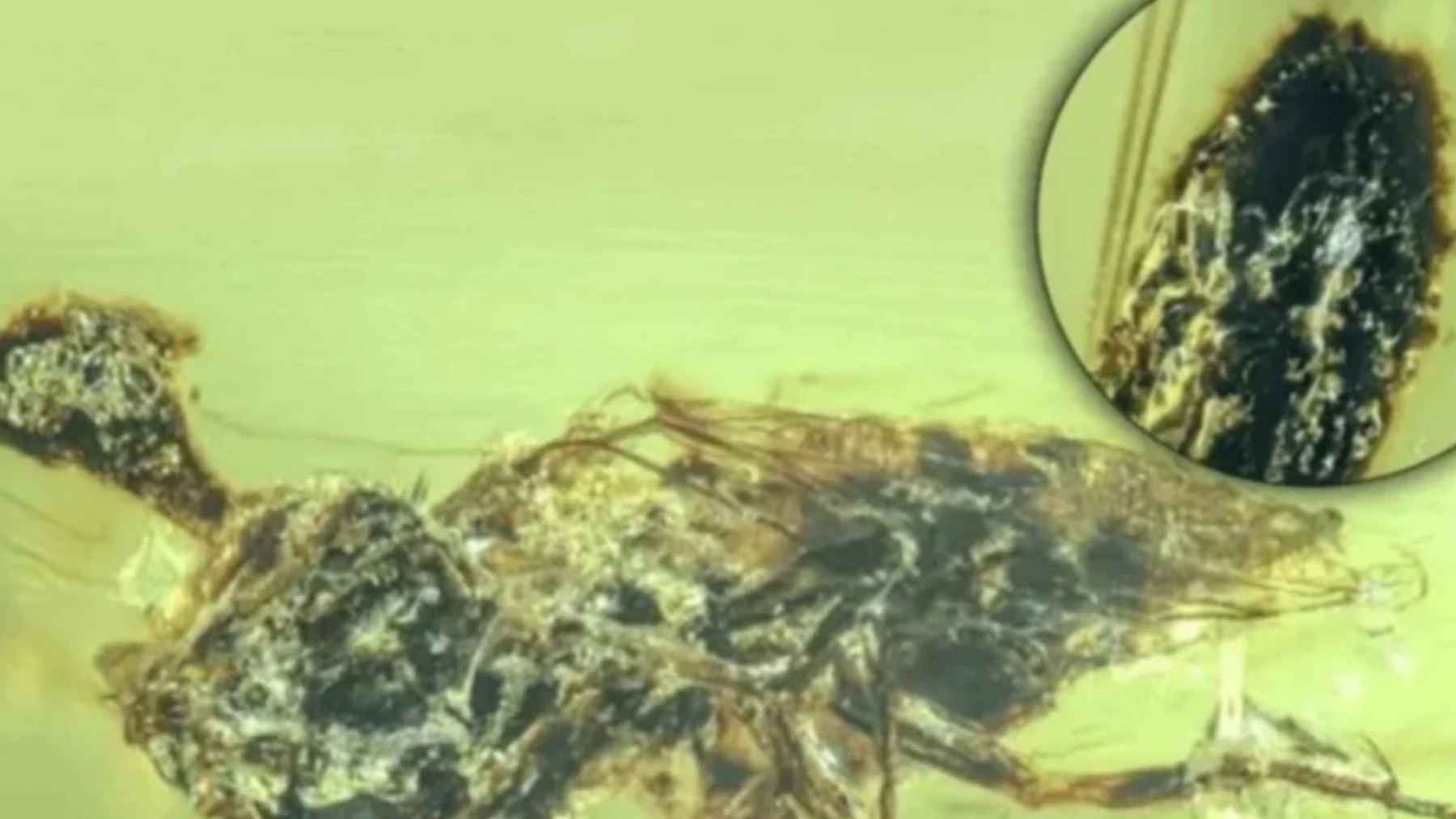
So far, Sukunaarchaeum has been detected only inside a planktonic dinoflagellate called Citharistes regius, which drifts in warm ocean waters. The archaeon behaves as a holoparasite, apparently taking everything it needs from its host without giving anything back, and is considered the first known parasitic archaeon.
When researchers searched global ocean DNA surveys, they found related sequences in seawater from many regions. That pattern suggests this strange lineage is part of a broader hidden community that lives together with small marine organisms rather than a one-off curiosity.
That quiet relationship matters because plankton communities help drive the ocean’s carbon pump and support food webs that feed fish, seabirds and people. Parasites and symbionts can change how their hosts grow, divide and recycle nutrients.
If Sukunaarchaeum and its relatives alter the metabolism of the plankton that carry them, they could become another lever linking the microscopic world to climate and biodiversity. For now, scientists simply know the partnership exists and that its ecological impact is still unknown.
Why this matters for evolution and astrobiology
Extreme genome reduction is already known in some bacterial and archaeal symbionts, yet Sukunaarchaeum pushes that pattern very close to its limit. It blurs familiar labels such as “cell,” “virus” and “independent organism,” and supports the idea that life may be better seen as a spectrum of survival strategies rather than a neat set of categories.
Some researchers even describe it as a possible “living fossil” that hints at ancient transitions between different kinds of biological entities.
There is also an astrobiology angle. When we imagine life on Mars or on the icy moons of the outer solar system, we often picture self-sufficient microbes much like the ones in our school diagrams.
Sukunaarchaeum is a reminder that real life can be more dependent, more reduced and stranger than those diagrams suggest. In practical terms, that means future missions may need to search not only for free-living cells but also for genetic hitchhikers hiding inside other organisms.
At the end of the day, this tiny archaeon shows that most of Earth’s biodiversity is still invisible to the naked eye and only now emerging from genetic surveys of our oceans.
The study was published in bioRxiv.