A cave sealed in Gibraltar for 40,000 years is home to what could be the last place of residence of the Neanderthals

Published On: March 28, 2026 at 8:45 AM
Follow Us
Interior of the newly discovered 13-meter chamber at the back of Vanguard Cave in Gibraltar, showing ancient sediment layers and rock formations.

Imagine prying open a doorway that has not moved since Neanderthals walked along the Mediterranean shore. That is roughly what archaeologists have done inside a hidden chamber in Gibraltar. What would you expect to find on the other side?

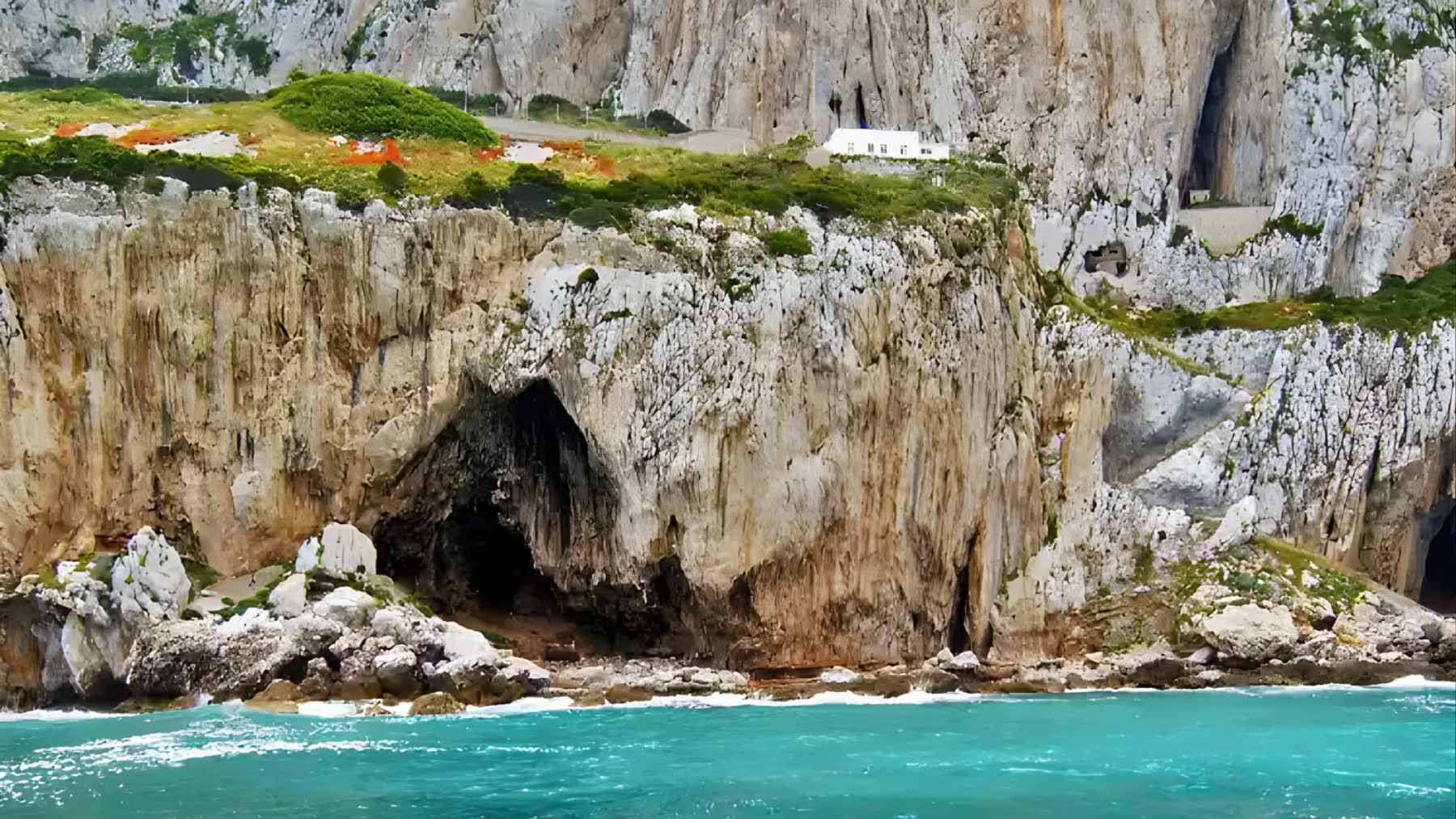
The newly opened space, sealed by sand for around 40,000 years, lies at the back of Vanguard Cave in the Gorham’s Cave Complex, a UNESCO World Heritage Site on the eastern face of the Rock of Gibraltar.

Early results point to a rare time capsule from some of the last Neanderthals in Europe, long after the species had vanished from most of the continent.

A cave room untouched since the Ice Age

Archaeologists from the Gibraltar National Museum spent years digging through sand at the rear of Vanguard Cave, looking for passages blocked by ancient sediments. Their work finally revealed a chamber about 13 meters long, tucked high into the cave roof and sealed off from the outside world.

On its undisturbed floor, the team found bones of lynx, hyena, and griffon vulture, along with claw marks left by a large carnivore and a single dog whelk shell from the sea.

“Given that the sand sealing the chamber was 40,000 years old and the chamber was therefore older, it must have been Neanderthals,” explained Clive Finlayson, director of the Gibraltar National Museum.

Gibraltar’s coast as a Neanderthal stronghold

The chamber forms part of the wider Gorham’s Cave Complex on Gibraltar’s eastern cliffs, where four adjoining caves preserve Neanderthal and early modern human life over more than 100,000 years.

Gorham’s Cave, Vanguard Cave, Hyaena Cave, and Bennett’s Cave now open almost straight onto the sea, but in the Ice Age their entrances looked out over dry land.

UNESCO describes the complex as rare proof that Neanderthals hunted birds and marine animals, plucked feathers for ornaments, and carved abstract engravings into cave walls, all signs of flexible thinking.

Radiocarbon dates from Gorham’s Cave suggest they were still using the site between roughly 33,000 and 24,000 years ago, making this coast one of their last European refuges.
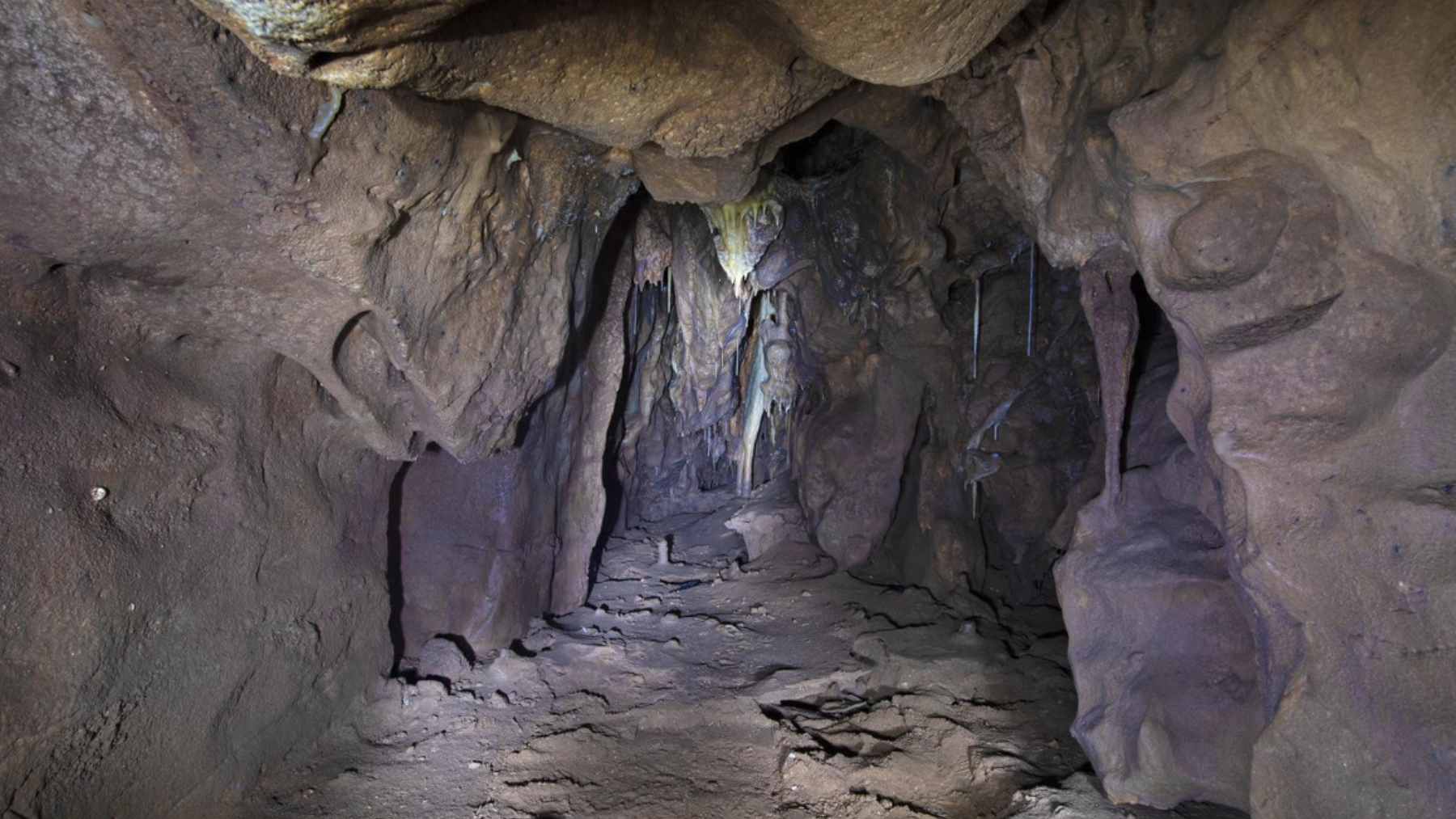
Interior of the newly discovered 13-meter chamber at the back of Vanguard Cave in Gibraltar, showing ancient sediment layers and rock formations.
Archaeologists from the Gibraltar National Museum have revealed a hidden chamber sealed by sand for 40 millennia, offering a rare “time capsule” of Neanderthal life.

Seafood dinners and glue making fires

Excavations in the caves show that Neanderthals here were not just chasing big land animals but also harvesting the shoreline.

Their rubbish layers are full of mussel shells and bones of fish, monk seals, and dolphins, many with cut marks from stone tools that show these animals ended up on the menu rather than as scavenged scraps.

In 2024, researchers working with the Gibraltar National Museum, the University of Murcia, and the Instituto Andaluz de Ciencias de la Tierra described a hearth in Vanguard Cave built to heat plant material into a sticky tar used as glue for stone tipped spears.

At the end of the day, the sealed chamber and this tar workshop together sketch Neanderthals as coastal foragers and careful technicians rather than clumsy cave dwellers, and future digs may yet reveal burials or new tools inside the hidden room.

The main press release has been published by the Gibraltar National Museum.
ECONEWS

A team of journalists specializing in socio-environmental news, sustainability, climate change, the environment, responsible consumption, and innovation. At EcoNews, we provide clear, reliable, and relevant coverage of the environmental and social challenges shaping our era.

Related Post

Researcher holding a large stick insect

An Australian stick insect people had photographed for years only now received its own scientific name, and researchers also found a rainforest species whose eggs carry rings never seen before

September 27, 2026 at 5:22 PM
Black and white photo of Marie Curie working in her Paris laboratory in 1912

More than 120 years after Marie Curie’s experiments, some of her laboratory notebooks remain radioactively contaminated, but France’s national library says visitors behind glass receive essentially no additional radiation while the originals require strict handling controls because radium-226 has a half-life of about 1,600 years

September 27, 2026 at 2:57 PM
Swirling cloud bands of Jupiter photographed by NASA’s Juno spacecraft

Carl Sagan imagined an ecosystem floating in Jupiter’s clouds with microscopic “sinkers,” kilometer-scale balloon-like “floaters” and roaming “hunters,” but nearly 50 years later scientists have found only that some atmospheric layers could meet limited conditions for life, not evidence that anything actually lives there

September 26, 2026 at 12:29 PM
Entrance to the Escoural cave archaeological site in Portugal

Scientists sampled 120 surfaces inside caves in Portugal and Spain and recovered ancient human DNA from just five, including a red-pigment crust at Escoural, revealing that even apparently blank cave walls can preserve genetic traces of people who passed through thousands of years ago

September 25, 2026 at 2:58 PM
Dog wearing EEG electrodes during a test

Researchers in Hungary recorded the brain waves of 14 dogs told to wait beside a treat and found a frontal rhythm that resembles the signal linked to self-control in humans

September 25, 2026 at 8:00 AM
Reddish two-lobed Kuiper Belt object Arrokoth photographed by New Horizons

NASA flew New Horizons within 2,200 miles of Arrokoth, a strange two-lobed world about 4 billion miles from the Sun, and its remarkably intact shape suggests two ancient planetary building blocks may have joined at barely 11 mph more than 4.5 billion years ago

September 24, 2026 at 6:36 PM

Leave a Comment