For a long time, “cleaning the ocean” sounded like a slogan, not a plan. Today, large machines are running in real waterways, scooping up trash with measurable results.
The picture is more complicated than a simple win, though. These systems can reduce damage in specific places, but they also underline a hard truth that shows up after a storm. If new waste keeps pouring in, when does the cleanup line get a break?
The Pacific cleanup gets industrial
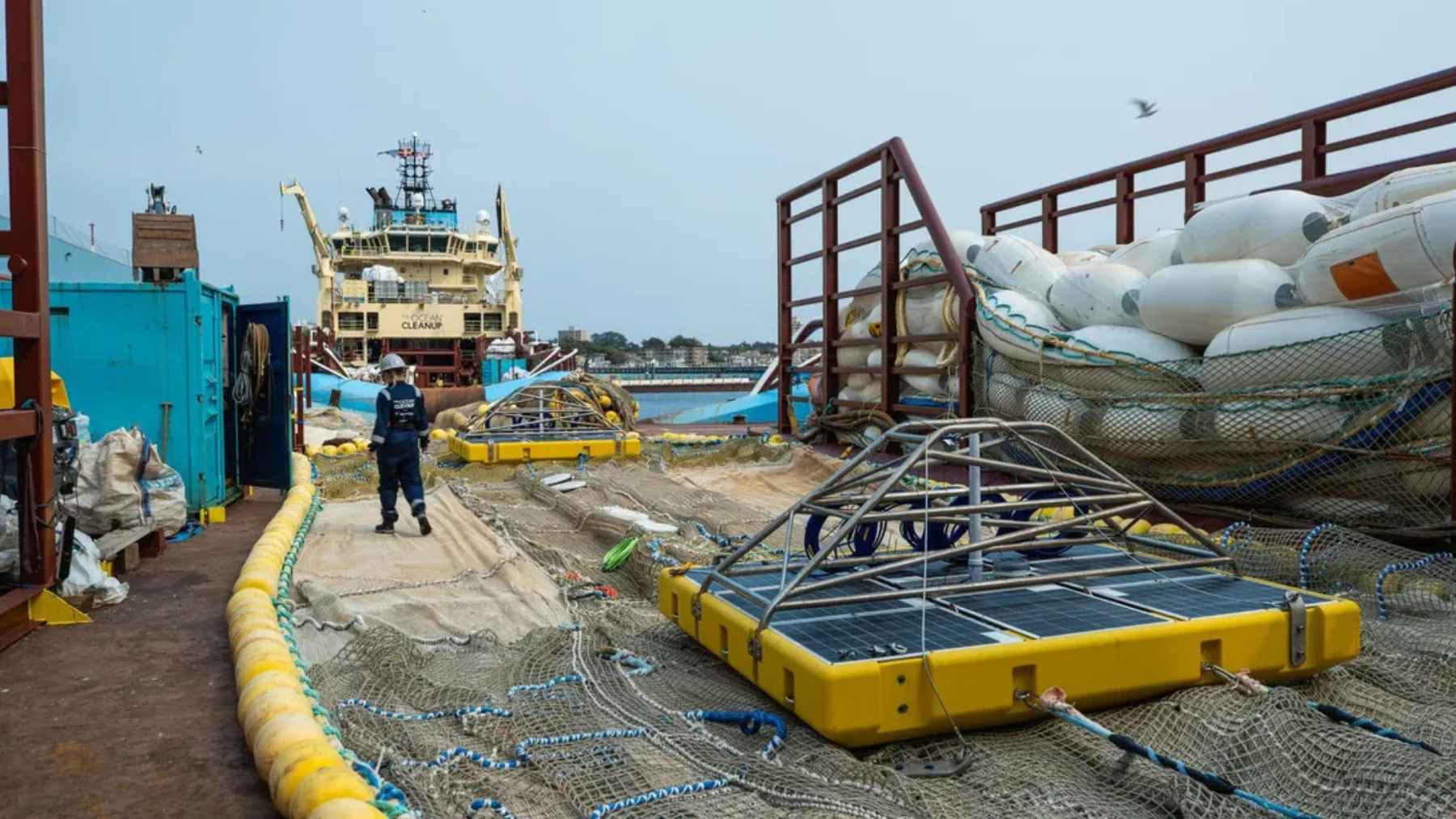
In an official update, The Ocean Cleanup described its System 03 as a floating barrier about 1.4 miles long, towed by two ships at roughly walking speed, with a screen hanging about 13 feet below the surface.
The group says the system can sweep an area about the size of a football field every five seconds, and that its earlier System 002 removed more than 620,000 pounds of plastic from 2021 to 2023. It also built in cameras and a “Marine Animal Safety Hatch” meant to give animals a way out if they enter the holding zone.
The open ocean is not a tidy landfill you can fence off. Winds, waves, and shifting currents move debris around, which is why crews rely on monitoring and repeated trips instead of one big sweep.
Another approach is the Manta, a ship concept from The SeaCleaners that aims to collect debris closer to coasts and river mouths.
European Boating Industry reports the design at about 185 feet long and up to about 151 feet wide with outriggers, with an intake rate of roughly 1.1 to 3.3 tons per hour. It also proposes turning some collected plastic into electricity using pyrolysis, which heats plastic in low-oxygen conditions to produce fuel-like gases.
Rivers catch the trash first
Most ocean plastic does not start in the ocean, and that is why river systems have become a major target. In Los Angeles, a solar-powered device called Interceptor 007 uses floating booms to funnel litter toward a conveyor belt that lifts debris into containers, adjusting its boom setup depending on river flow.
County updates show why this kind of “last line of defense” can matter for a coastline. The Ballona Creek project reported more than 124 tons of trash and debris stopped since 2022, with offloads sometimes measuring several tons after storms. It is the same pattern many people see at home when runoff carries litter downhill.
Not every river needs the same design, especially in flood conditions. In Guatemala, an Interceptor system in the Rio Las Vacas sits about 10 miles north of Guatemala City and uses two anchored booms to trap huge pulses of trash while letting floodwater push underneath, according to another official update.
In Italy, the company River Cleaning says tests run by the University of Palermo measured a 97.4% interception rate for its rotating floating barriers that guide litter toward a collection point.
Sorting robots turn waste into usable streams
Pulling trash out of water is only step one. If the material is not separated into “clean” batches of metal, plastic, and other streams, it often ends up as landfill anyway.
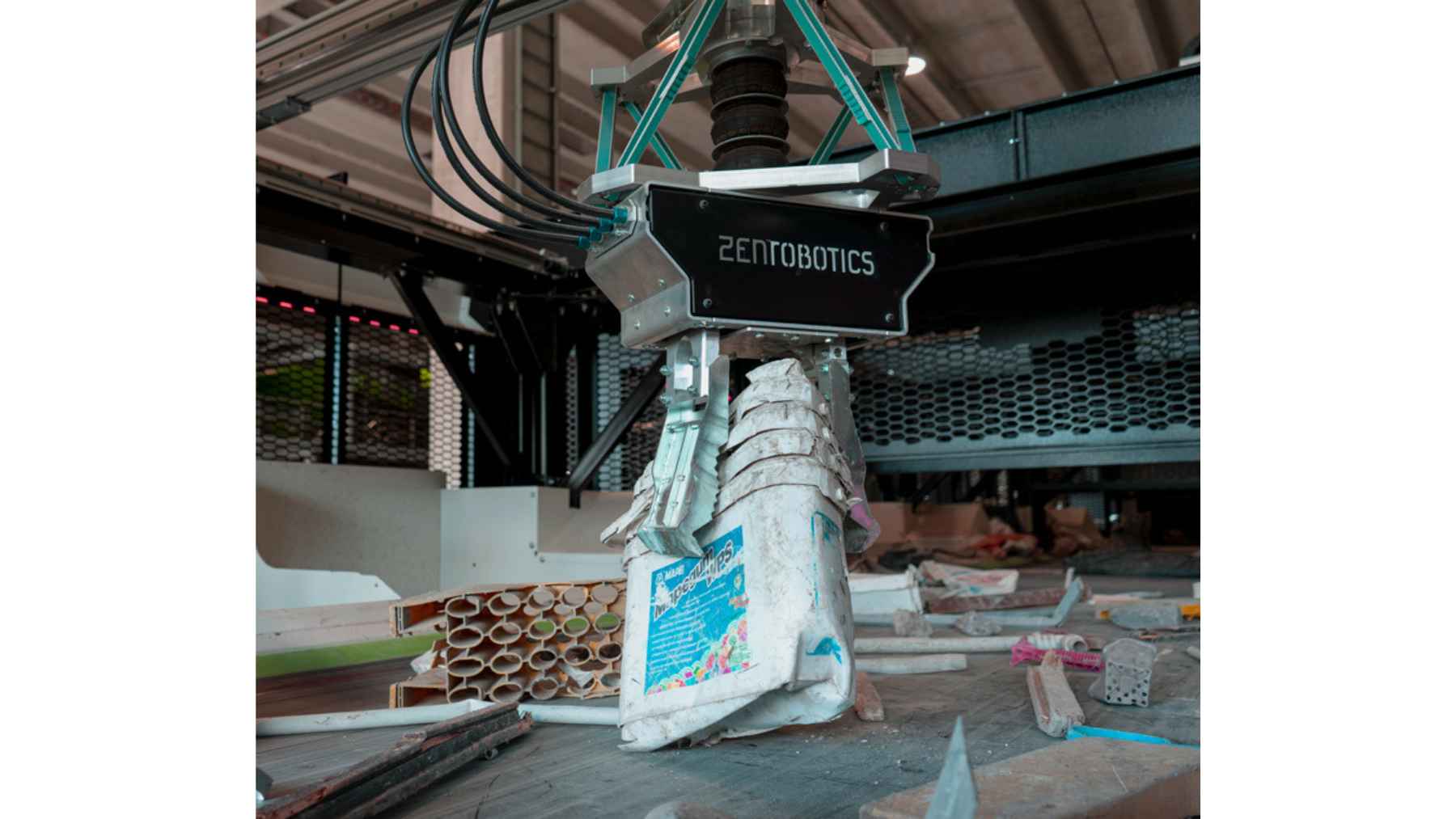
Automation is spreading because speed matters. Terex says its ZenRobotics Heavy Picker can make up to about 2,300 picks per hour per robotic arm and lift items weighing up to about 88 pounds, using sensors to identify what it grabs.
A European Commission case study also points to a safety angle, because automation can reduce hands-on sorting in dusty, heavy, and sometimes dangerous waste streams. In the best setups, robots do the repetitive grabbing while people focus on oversight, maintenance, and quality control.
Carbon capture moves from idea to hardware
Plastic is visible, but air pollution and climate pollution can be harder to grasp because you cannot scoop them with a net. In Xi’an, China, China Daily reported on a 328-foot experimental air-purification tower overseen by the Institute of Earth Environment at the Chinese Academy of Sciences, with early figures suggesting it could move more than 353 million cubic feet of air per day over an effective range of about 3.9 square miles.
The same report stressed that the statistics were preliminary and included doubts about how much an outdoor system can do compared with cutting emissions at the source.
For carbon dioxide, the Climeworks Mammoth direct air capture plant in Iceland uses fans and filters to pull carbon dioxide out of ambient air. It is designed for up to 36,000 metric tons a year, which is about 40,000 tons in U.S. terms, and the company says captured gas can be mineralized for permanent storage in basalt formations with Carbfix in less than two years.
Even at that scale, the numbers are small compared with global emissions, and cost remains a major hurdle. Experts and analysts note that direct air capture is energy-intensive and still expensive, and warn it should not become a substitute for cutting emissions from power, industry, and transportation.
The unglamorous bottleneck is logistics
A cleanup device can be brilliant and still fail in practice if the rest of the chain is weak. Someone has to offload the material quickly, store it safely, and move it to a facility that can handle it.
When river capture, sorting, recycling, and disposal are coordinated, each step makes the next one cheaper and faster. Without that coordination, even the best tech turns into a high-tech mop under a still-running faucet.
And then there is prevention, the part that rarely comes with dramatic photos. Better waste collection, less littering, and smarter product design are not flashy, but they are the only way to slow the flow so the machines are not running nonstop just to keep up.
The main official project update has been published on The Ocean Cleanup’s.