For more than 70 years, two hefty fossil bones sat in the University of Alaska Museum of the North, tagged as woolly mammoth. When researchers radiocarbon dated them through the Adopt a Mammoth program, the ages looked so young they briefly seemed like record-breaking mammoths.
But follow-up testing flipped the script. Stable isotope results and ancient DNA showed the bones belonged to two whales, a common minke whale and a North Pacific right whale, reportedly collected near Fairbanks in the early 1950s, about 250 miles from the nearest coastline.
That solves the mammoth mystery, while leaving a nagging new question, which is how marine remains ended up so far inland.
A mammoth record that vanished overnight
The twist began with Adopt a Mammoth, a project launched in 2022 to systematically radiocarbon date woolly mammoth fossils from mainland Alaska.
Scientists are trying to match physical fossils with other lines of evidence, including environmental DNA in permafrost that suggests small “cryptic” mammoth populations might have survived into the Holocene (the warm period after the last Ice Age). In practical terms, that means checking museum drawers one specimen at a time.
When the two bones were dated, the results came back at roughly 1,854 to 2,731 years old. If those numbers belonged to a mammoth, they would have pushed the mainland record forward by about 10,000 years. One researcher said, “Those would be the youngest mammoth fossils on the planet.”
That kind of shift would ripple into how scientists explain Arctic ecosystem change after the last Ice Age, including habitat changes that helped many large animals disappear.
Most radiocarbon evidence places the loss of mainland Beringia mammoths around 13,000 years ago, while some island mammoths persisted much later, around 4,000 years ago. A late-surviving mainland mammoth would have been a serious outlier.
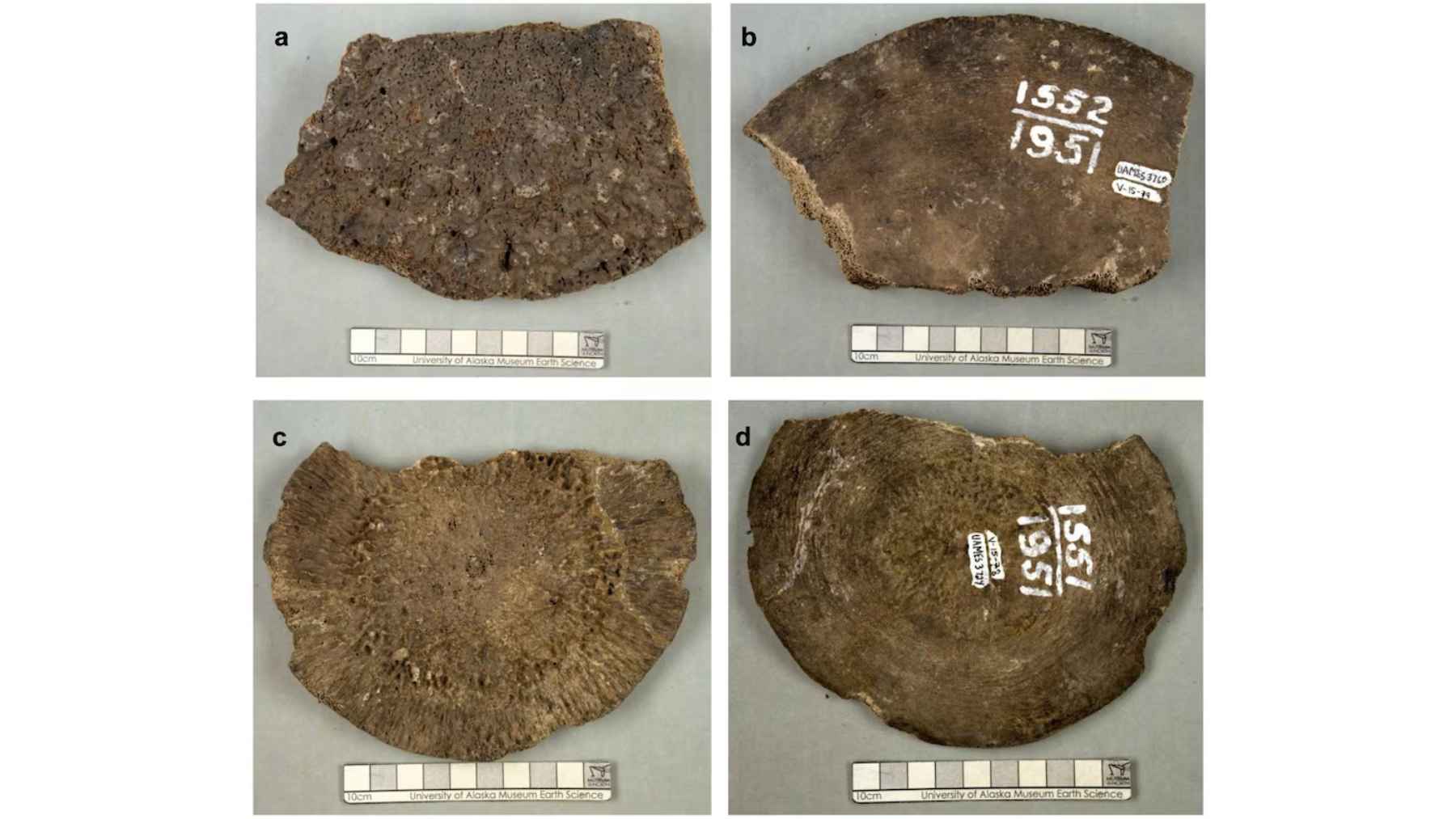
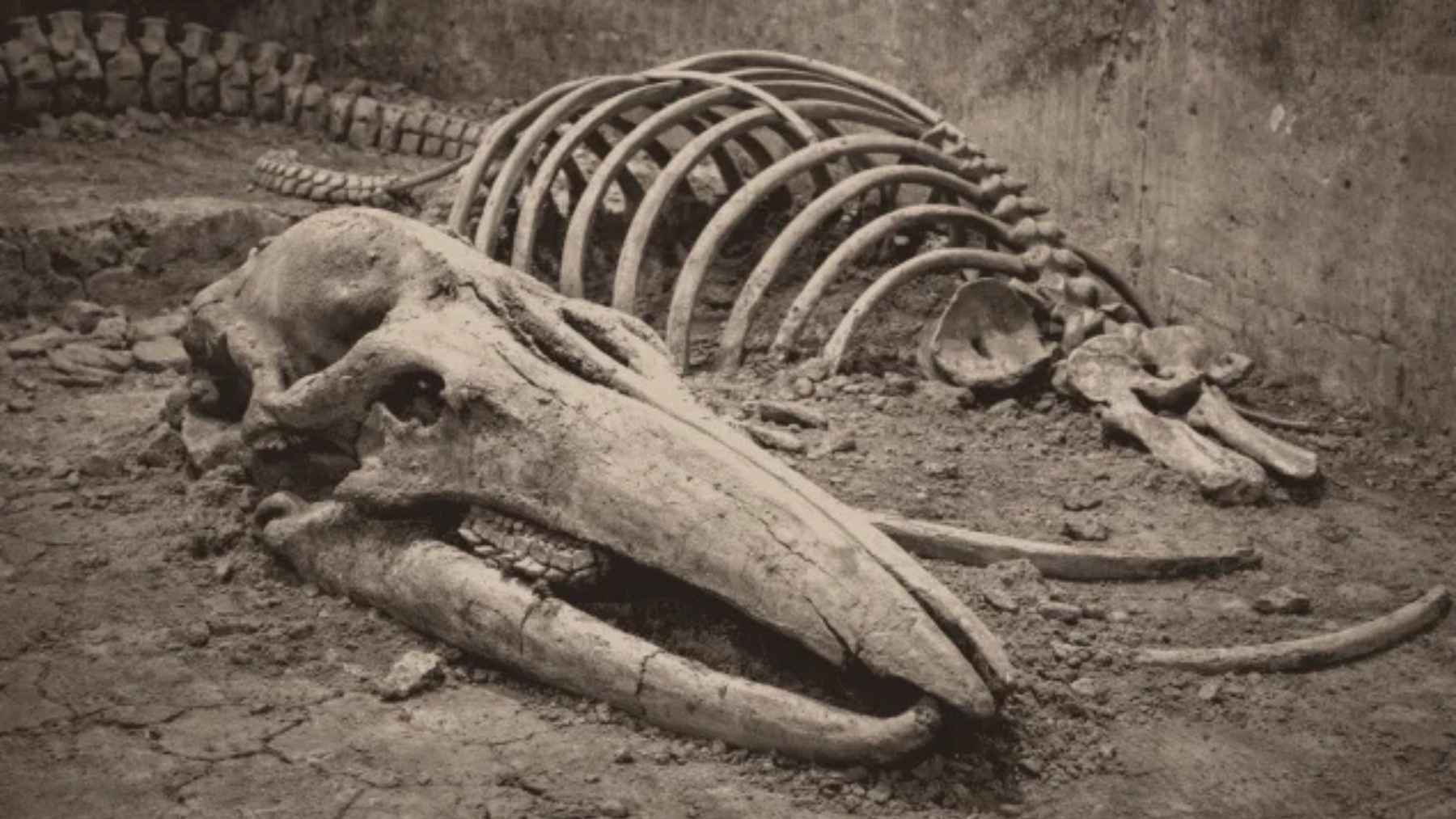
Scientists reanalyzed fossil bones stored in an Alaska museum collection and discovered they belonged to whales rather than mammoths.
The chemical clues that pointed to the sea
Rather than announce an extinction timeline upheaval, the team treated the fossils like a forensic problem. They ran stable isotope tests, which work like a chemical snapshot of an animal’s diet over time. The nitrogen and carbon signatures looked marine, which does not fit a plant-eating mammoth.
Next came ancient DNA, and it delivered the decisive answer. One specimen matched a common minke whale, and the other matched a North Pacific right whale, an endangered species that NOAA scientists believe may number only about 30 animals in the eastern North Pacific today.
As Matthew Wooller put it, “The DNA evidence told us they were whales, but not even the same species of whale.”
There was also a dating wrinkle that is easy to miss if you do not follow radiocarbon science closely. Ocean food webs can make radiocarbon ages appear older than they really are, so once the team knew these were whales, they adjusted the calculations. After that recalibration, the whales likely lived roughly 1,100 and 1,800 years ago.
So how did whale bones reach the Fairbanks area?
Here is the part that makes people pause. The fossils were reportedly found in the early 1950s in the gold mining country around Dome Creek near Fairbanks, far from the ocean. So how does a whale end up in Interior Alaska?
The researchers considered multiple scenarios, from whales moving inland through large river systems to predators dragging bones, but neither fits neatly, especially for a right whale in an inland Fairbanks-area setting.
Trade is not a fringe idea, since the archaeological record shows whale backbone pieces were used for items like tools and plates along the coast. Still, the current evidence does not let scientists confidently pick one explanation.
Then there is the simplest possibility, and maybe the most realistic. Museum collections depend on labels, field notes, and careful cataloging, and a single mix-up can trail a specimen for decades. Because the original collector, Otto Geist, worked both in Interior Alaska and coastal areas, a recordkeeping error could explain how “inland” whale bones ended up filed as Fairbanks finds.
Why an old museum drawer can change modern science
It is tempting to treat this as a quirky museum mistake, but the bigger point is what happened next. A mislabeled fossil did not stay mislabeled once new tools arrived, and the correction itself adds value to the collection. As Wooller noted, putting dates on specimens helps future researchers use them, even when the headline result disappears.
This case also shows why scientists like to stack methods instead of trusting one test. Radiocarbon dates are powerful, but context matters, including what an animal ate and where that carbon came from. Pairing radiocarbon dating with stable isotopes and ancient DNA is what prevented a dramatic but fragile mammoth claim from hardening into “fact.”
There is a practical Alaska angle, too. The University of Alaska Fairbanks says it expects a new radiocarbon dating lab, the only such facility in the state, to open in summer 2026. More local capacity could mean faster testing, fewer shipping delays, and a clearer picture of how past climate shifts reshaped northern ecosystems.
What readers should keep in mind
For the rest of us, the big lesson is not “museums get it wrong.” It is that careful rechecking is part of getting it right, especially when a result looks almost too dramatic to believe. If you have ever chased a missing file because a folder label was off by one word, you already understand the risk.
The other lesson is about healthy uncertainty in deep-time research. Scientists can narrow the options, weigh what is most likely, and still end with an open question, and that is not a failure. It is a roadmap for what evidence needs to show up next.
For now, the inland whale mystery remains unsolved, and that is part of what makes it worth following.
The study was published in Journal of Quaternary Science.