A simple piece of wood found in southern Greece did not look like the kind of object that could shake up archaeology. It was thin, worn, and easy to overlook, but under closer inspection, researchers found marks that suggested something much bigger than a fallen branch.
The discovery at Marathousa 1, an ancient lakeshore site in the Megalopolis Basin, points to what may be the oldest known hand-held wooden tools ever identified. At about 430,000 years old, the objects predate Homo sapiens and offer a rare look at a vanished side of early human technology, one usually erased by rot, water, insects, and time.
A stick that was not just a stick
The main artifact is a worked piece of alder wood, about 31.9 inches long, or a little over 2.5 feet. Researchers believe it may have been used as a digging stick near the edge of an ancient lake, where mud, plants, animal remains, and stone tools were all part of daily survival.
That may sound humble. Yet a digging stick can be a powerful tool when survival depends on finding roots, moving wet soil, stripping bark, or processing resources close at hand. In practical terms, this was not just wood. It was a chosen material, shaped for a purpose.
A second, much smaller wooden object was also found at the site. It was made from willow or poplar, and its function is still uncertain, although researchers say it shows signs of working and possible use. That mystery is part of the story.
Why wood matters
Stone tools dominate museums for a simple reason. Stone survives. Wood usually does not.
That makes the Marathousa 1 discovery so unusual. In most settings, a branch used by early humans would disappear long before an archaeologist ever had a chance to find it. The wet, low-oxygen conditions at the Greek site helped preserve these objects like a natural time capsule.
This matters because the ancient world we see in the ground is not the whole world that existed. For the most part, archaeology preserves the hard stuff. Wood, bark, fibers, skins, and plant materials may have filled everyday life, but they rarely leave a trace.
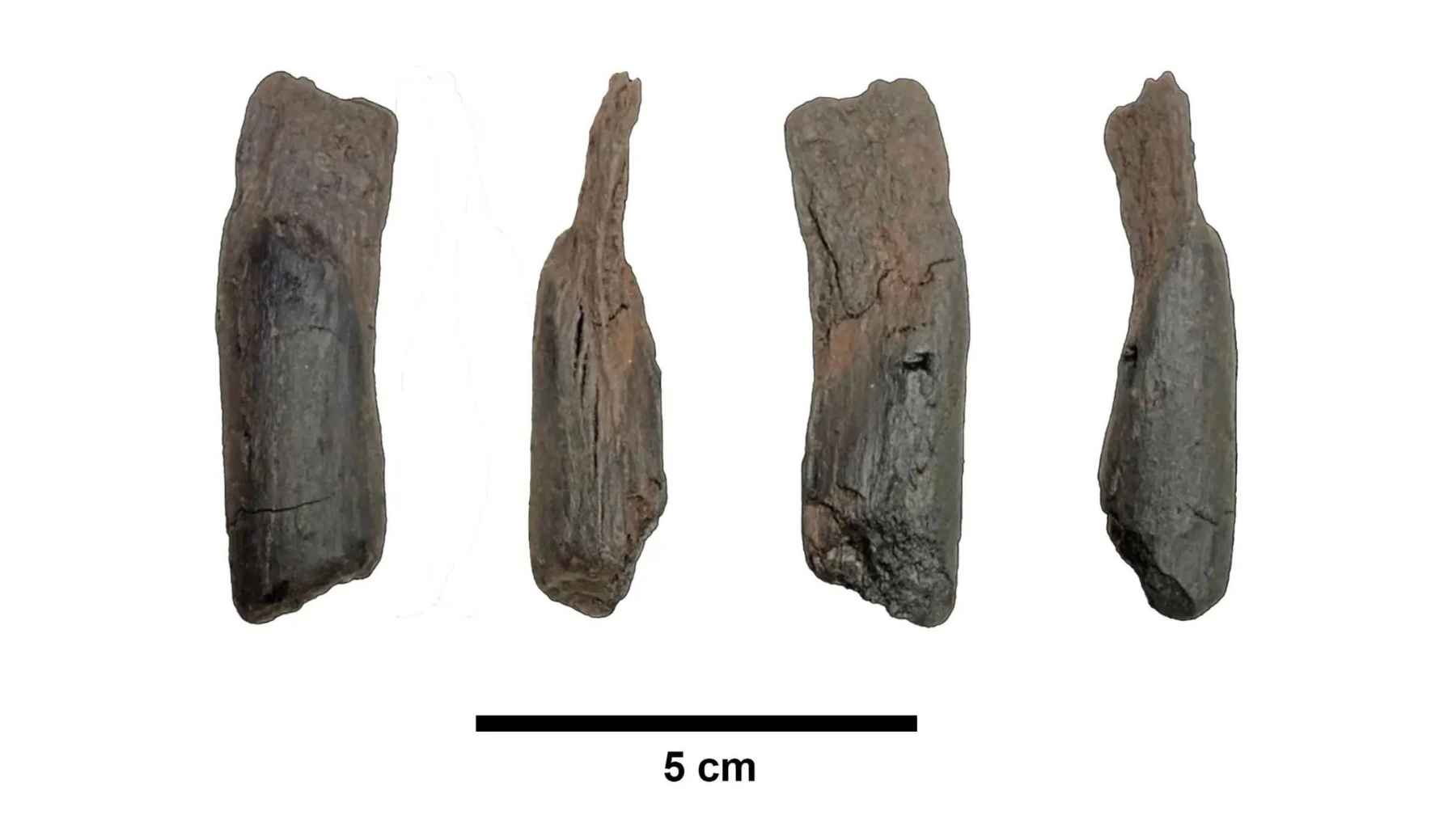
Researchers documented this preserved wooden artifact from the Marathousa 1 site in Greece, where cut marks suggest intentional shaping by early humans about 430,000 years ago.
Before modern humans
The tools are far older than Homo sapiens, who appeared roughly 300,000 years ago. That means these objects were likely made by earlier hominins living during the Middle Pleistocene, a period stretching from about 774,000 to 129,000 years ago.
Who exactly made them? Researchers cannot say for sure because no human remains have been found at the same spot. Possible candidates include early Neanderthals, populations close to them, or groups associated with Homo heidelbergensis.
Still, the larger point is hard to miss. Whoever made these tools knew how to select wood, shape it, and use it. That takes observation, planning, and a good understanding of the surrounding landscape.
A lakeshore full of clues
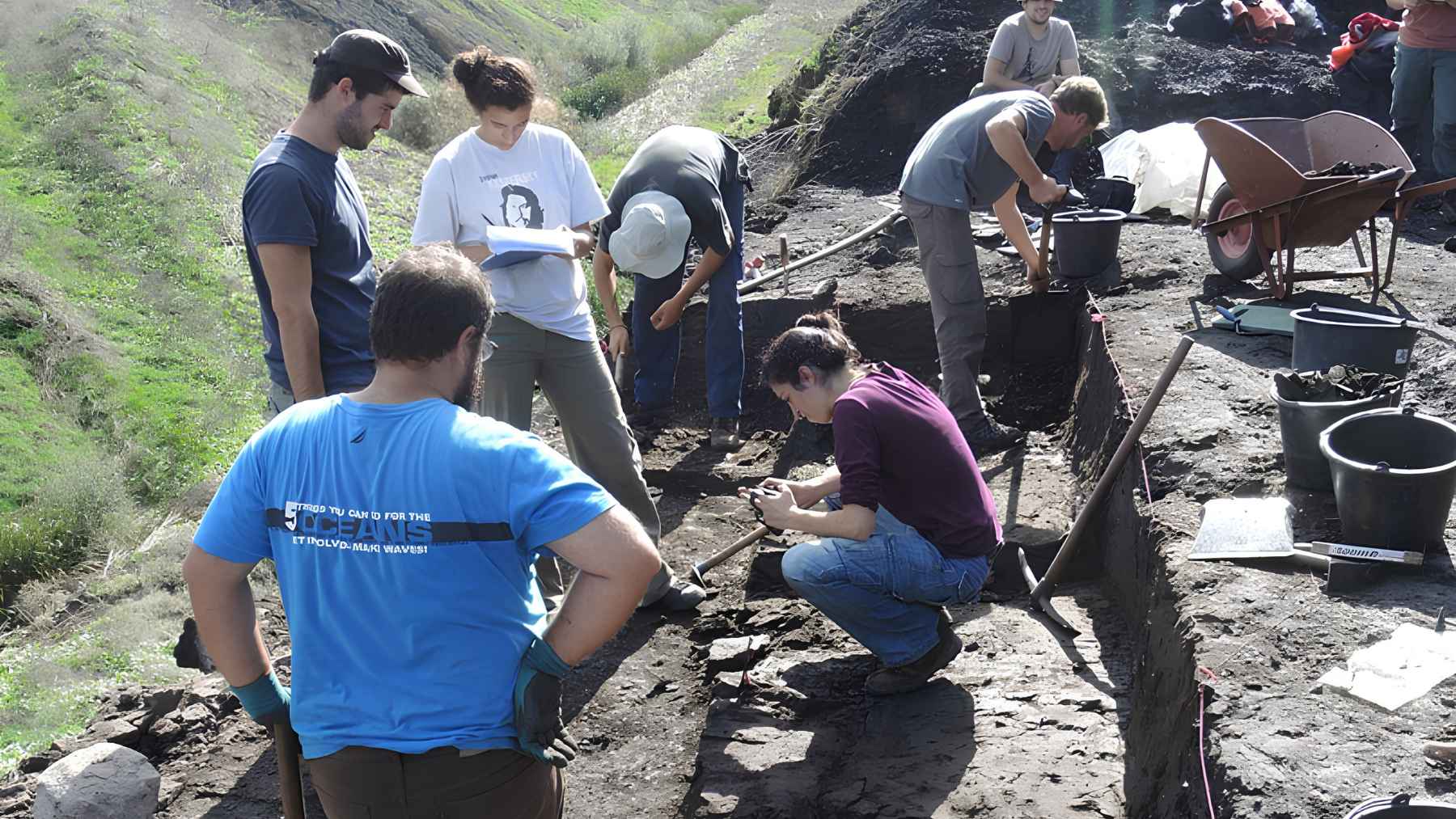
Marathousa 1 was not an empty place with one lucky artifact. The site has also produced stone tools, bone artifacts, and animal remains, including elephant bones with signs linked to butchery. Researchers say the ancient lakeshore was likely a useful place for early humans because it offered water, animals, plants, and raw materials in one area.
Imagine that setting for a moment. Mud underfoot. Large animals nearby. Carnivores passing through. For early humans, a lakeshore could be a pantry, a workshop, and a dangerous neighborhood all at once.
The University of Reading statement notes that a third wooden find, a larger alder trunk fragment, carried marks attributed to a large carnivore rather than human shaping. That detail adds another layer, suggesting humans and predators may have used the same landscape and competed for resources.
A timeline pushed back
Before this discovery, the best-known ancient wooden tools came from places including the United Kingdom, Germany, China, and Zambia. Those finds include weapons, digging sticks, and handles, but the Greek objects appear to be older than the previously known hand-held wooden tools.
There is one older example of hominin wood use from Kalambo Falls in Zambia, dated to about 476,000 years ago. However, researchers interpret that find as structural wood, not a portable hand tool. That distinction is important.
A structure and a hand-held tool both show intelligence, but they reflect different choices. One helps build or support something. The other is carried, used, and perhaps reused in daily tasks. The Greek discovery sits in that second category.
What it says about ancient intelligence
A shaped stick may seem simple next to a smartphone, a car, or even a kitchen knife. Making that tool 430,000 years ago, however, meant solving a practical problem with the materials at hand.
Which wood would work best? How should it be cut? Where should it be held? Would it break in wet soil? These are small decisions, but together they reveal a mind testing and learning from the world.
“The Middle Pleistocene was a critical phase in human evolution, during which more complex behaviors developed,” Professor Katerina Harvati said in the University of Reading release. Dr. Annemieke Milks also noted that researchers found “marks from chopping and carving” on two objects, calling them clear signs that early humans had shaped the wood.
A lost world of wooden tools
At the end of the day, this discovery is not only about one ancient stick. It is about everything that might be missing.
If early humans were making wooden tools nearly half a million years ago in Greece, they may have been doing the same elsewhere. Many of those tools probably vanished without a trace, leaving archaeologists with a record that is rich in stone but thin on the everyday materials people actually touched.
That is why Marathousa 1 feels so important. It reminds us that early human technology was likely more varied, more flexible, and more resourceful than the surviving evidence usually shows.
A small piece of wood has opened a big window. And through it, we can see early humans not as simple survivors, but as practical makers in a difficult world.
The study was published in PNAS.