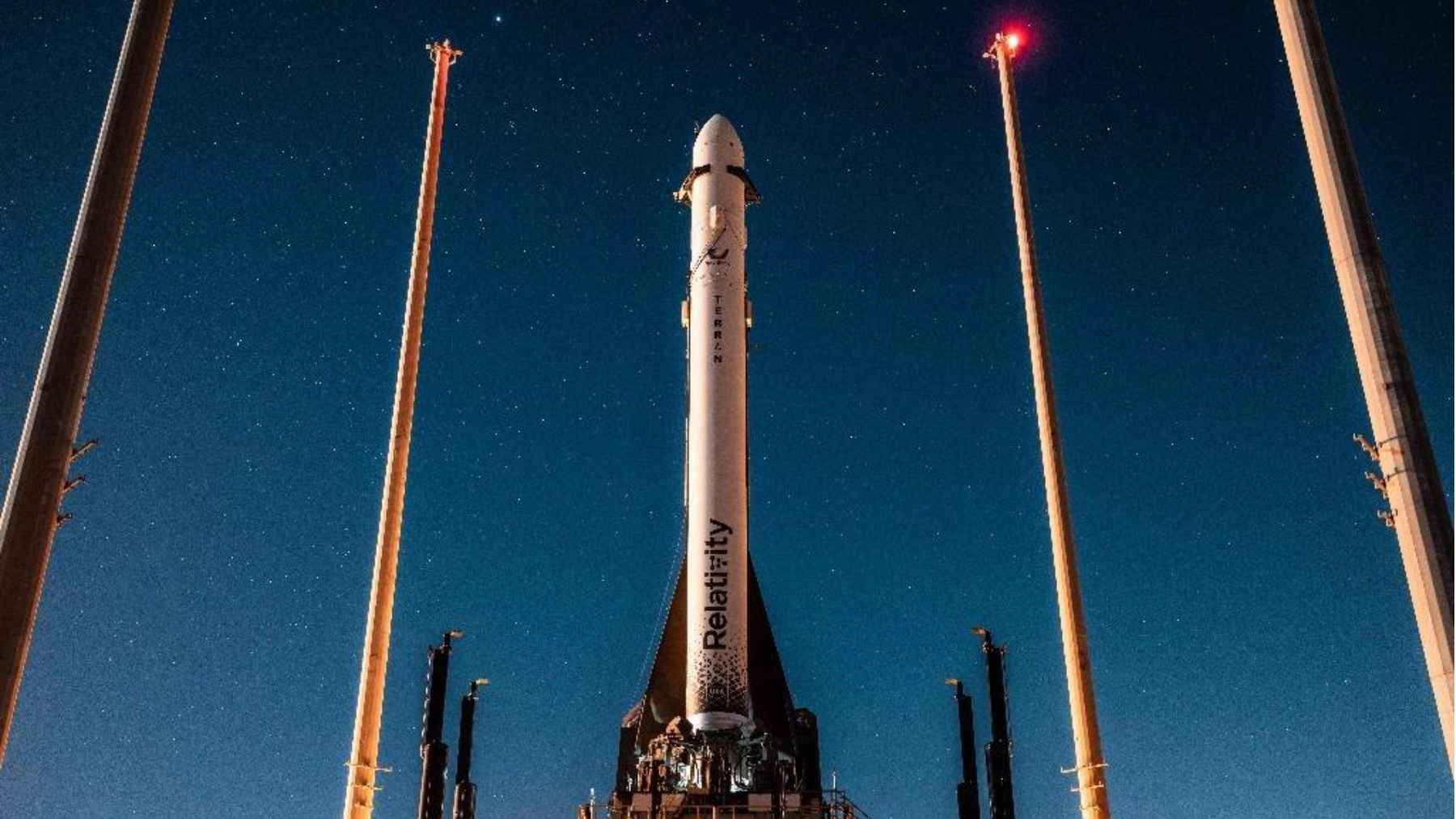
NASA has confirmed a new private partner for its next Mars science mission, and this time the company is not SpaceX. California-based Relativity Space will supply the spacecraft, rocket, and cruise operations needed to carry NASA’s Aeolus instrument suite to the Red Planet in 2028.
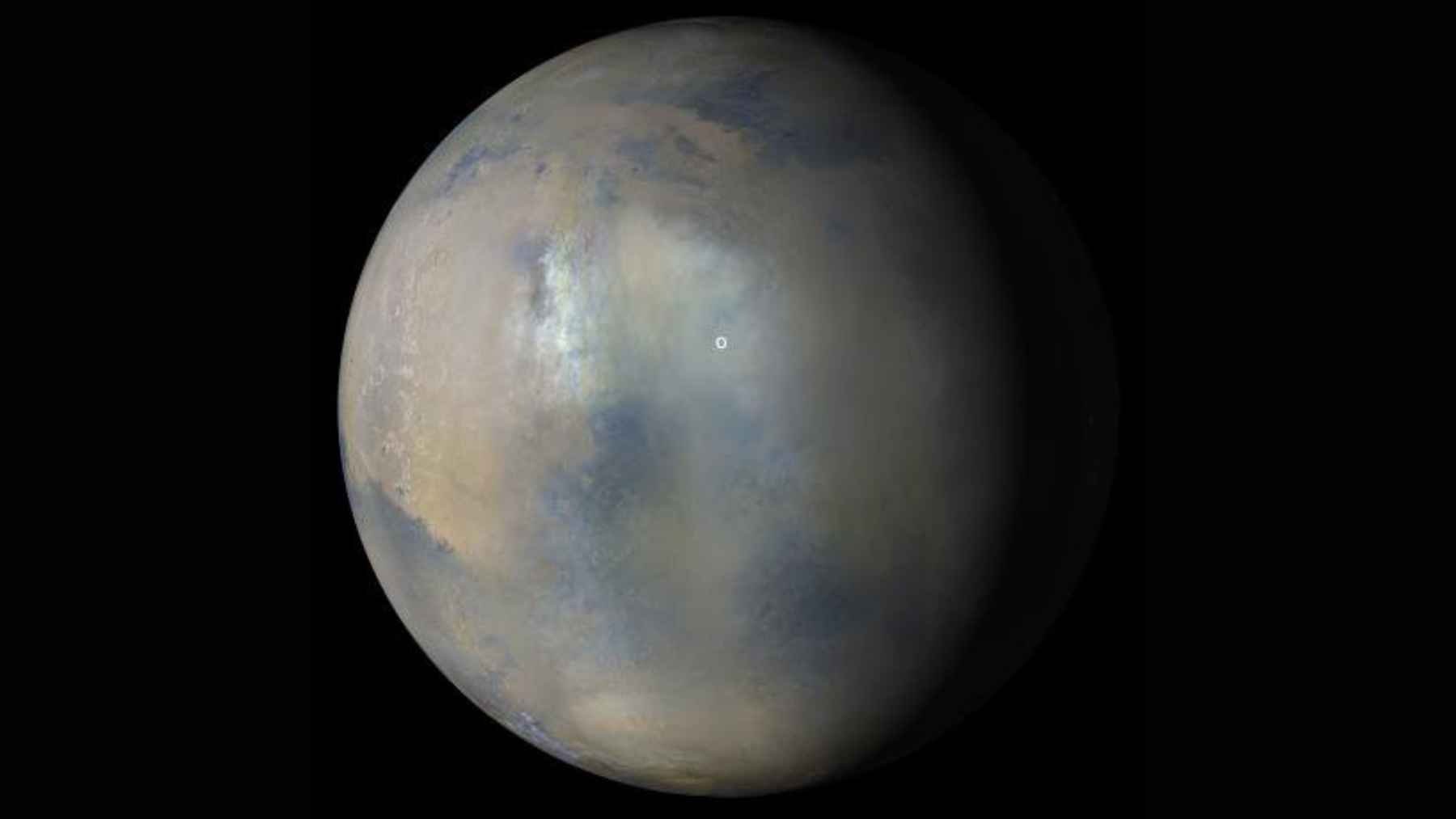
The goal sounds simple at first glance. Aeolus will measure Martian winds, temperatures, dust, and clouds every day on a global scale, giving scientists a sharper picture of a planet where weather can turn from quiet to mission-threatening in a hurry.
A new Mars partner
Relativity Space will be responsible for the Mars-bound spacecraft and the launch system, while NASA will provide the scientific payload. In practical terms, that means NASA keeps its focus on the instruments and the data, while the company handles the vehicle that has to get them there.
“Public-private partnerships like this are a force multiplier for science,” NASA Administrator Jared Isaacman said in the agency’s announcement. NASA says the approach is meant to speed up discovery and get useful Mars data into researchers’ hands more often.
That matters because Mars exploration is no longer just about sending a rover and hoping for the best. If future astronauts are going to pass through the Martian atmosphere and land safely, they will need something closer to a reliable weather report.
What Aeolus will see
Aeolus is made of four complementary instruments, each looking at a different piece of the Martian atmosphere. Together, NASA says they are designed to provide the first integrated daily global view of winds, temperatures, dust, and clouds on Mars.
The first instrument, the Doppler Wind and Temperature Sounder, will measure wind and temperature from the surface up to about 37 miles above the ground. Add to that the Thermal Limb Sounder, which will build vertical temperature profiles and track dust and water ice clouds.
The third is the Surface Radiometric Sensor Package, tasked with studying surface energy balance along with dust and cloud properties. Finally, the Wide-Field Context Camera will capture daily images of atmospheric activity on a planetary scale, giving scientists the wider view they need when the whole planet starts to change.
Why Mars weather matters
Mars may look frozen and still in photographs, but its atmosphere is anything but simple. Dust can rise, winds can shift, and seasonal changes can affect how spacecraft enter, descend, and land.
Think of it like checking the weather before a long road trip, except the road is millions of miles away and the “traffic jam” is a cloud of dust wrapped around another planet. Better models could help engineers design safer robotic landers and, eventually, systems for human crews.
NASA says the data from Aeolus will directly inform entry, descent, and landing systems. That is the difficult final stretch of any Mars mission, where a spacecraft has to slow down, survive heat, handle atmospheric uncertainty, and reach the ground in one piece.
Relativity’s big test
Relativity Space is now led by former Google CEO Eric Schmidt, and the company says it has grown to about 2,000 employees across aerospace, manufacturing, propulsion, software, and related fields. Its main launch vehicle under development is Terran R, described by the company as a reusable medium-to-heavy-lift rocket.
There is a catch, and it is a big one. Relativity’s earlier Terran 1 rocket lifted off in March 2023 but did not reach orbit, though it did pass through key early flight milestones before failing later in the mission.
The company’s Terran R has not yet made its first flight. Relativity said in a 2025 announcement that Terran R’s first launch was planned for late 2026 from Cape Canaveral, Florida, which gives the company a narrow window to prove itself before the planned 2028 Mars mission.
An aging Mars fleet
Aeolus also arrives at a sensitive moment for NASA’s Mars program. The agency recently said farewell to MAVEN, its Mars Atmosphere and Volatile Evolution spacecraft, after more than 11 years in orbit and a decade beyond its original primary mission.
NASA said MAVEN was last heard from on December 6, 2025, after an unexpected loss of signal. A review board later determined that the spacecraft was not recoverable, ending a mission that helped scientists understand how Mars lost much of its atmosphere over time.
That does not mean NASA is lacking eyes on the ground on the red planet. Mars Reconnaissance Orbiter and Mars Odyssey are still working, but they are getting on a bit. Aeolus is meant to add something fresh, focused, and daily to the picture.
One Martian year of data
NASA says it will support Aeolus science operations for at least one Martian year. That is about 687 Earth days, long enough to watch the Red Planet move through a full cycle of seasons.
The instruments will be designed, built, and integrated at NASA’s Ames Research Center in California’s Silicon Valley. Relativity Space will maintain the spacecraft, while NASA develops the data-processing system needed to turn raw measurements into usable science products.
At the end of the day, Aeolus is trying to make Mars a little less mysterious and a little more predictable. For scientists, that means better atmospheric models. For future explorers, it could mean a safer path through the thin, dusty air of another world.
The official statement was published on NASA.