Earth may have spent roughly a billion years with days stuck near 19 hours long, and scientists think an extraordinary tug-of-war involving the Moon and the atmosphere temporarily stopped the planet’s rotation from slowing normally

Published On: August 29, 2026 at 10:15 AM
Follow Us
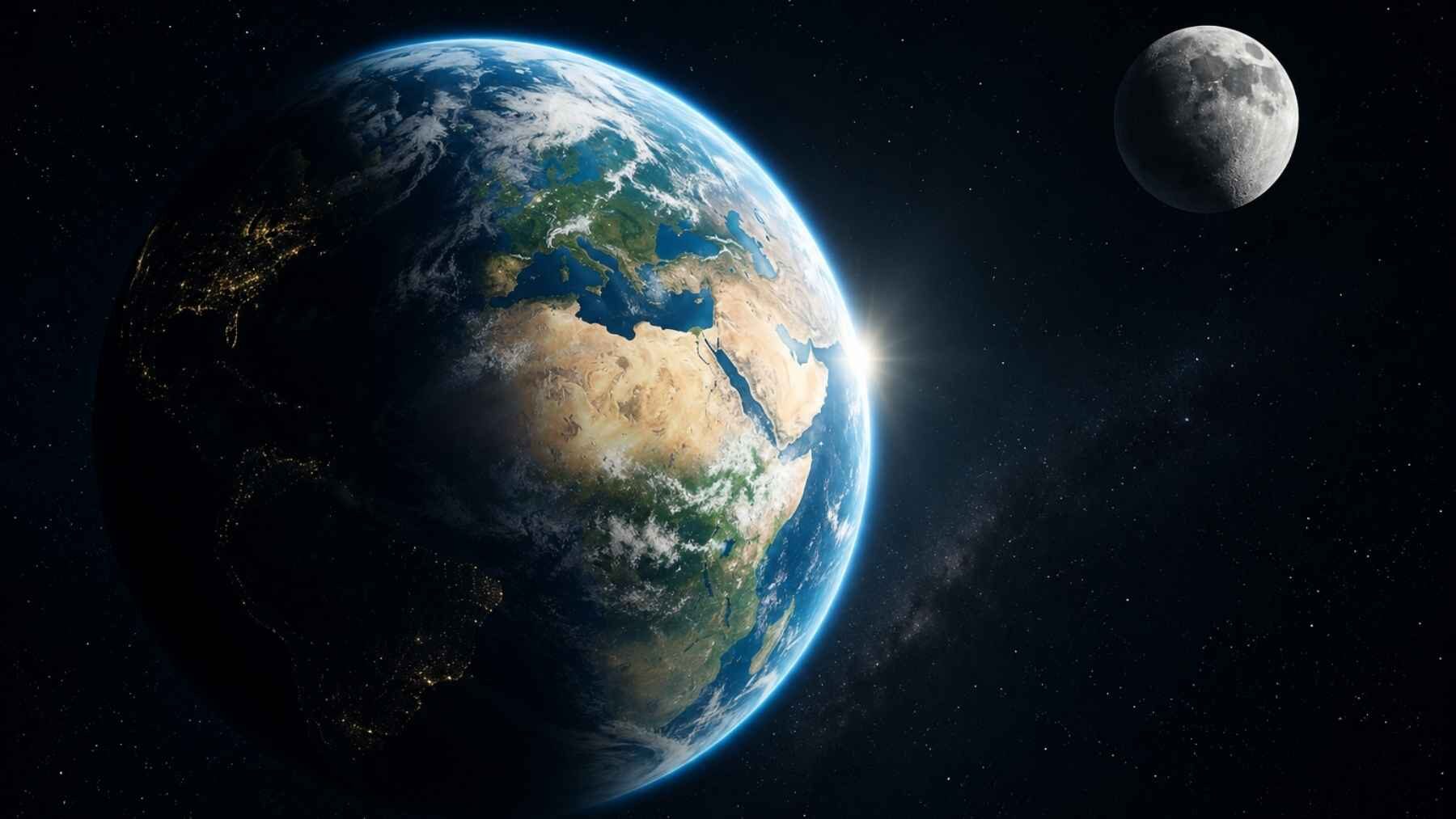
Illustration of Earth and the Moon showing the celestial relationship that gradually affects Earth's rotation.

Two studies that were published in 2023 argued that our planet went through a massive stagnation during the Proterozoic, when Earth’s rotation got stuck between 19 and 19.5 hours for about a billion years.

But also there was a review in 2024 that questioned both the geological evidence and the physical theories behind those studies. Additionaly, another study in 2026 estimated days of about 17.7 to 17.9 hours about 1.787 billion years ago.

The Moon keeps applying the brakes

The Moon does much more than only moving and “controlling” the sea tides. It also gradually slows the Earth’s rotation. Because of this energy transfer, the Moon is pushed away from us by about 3.78 centimeters per year today.

Even so, scientists say we cannot just apply today’s speed to the past. Continents, ocean depths, and coastlines have constantly shifted over time, changing how that energy is lost.
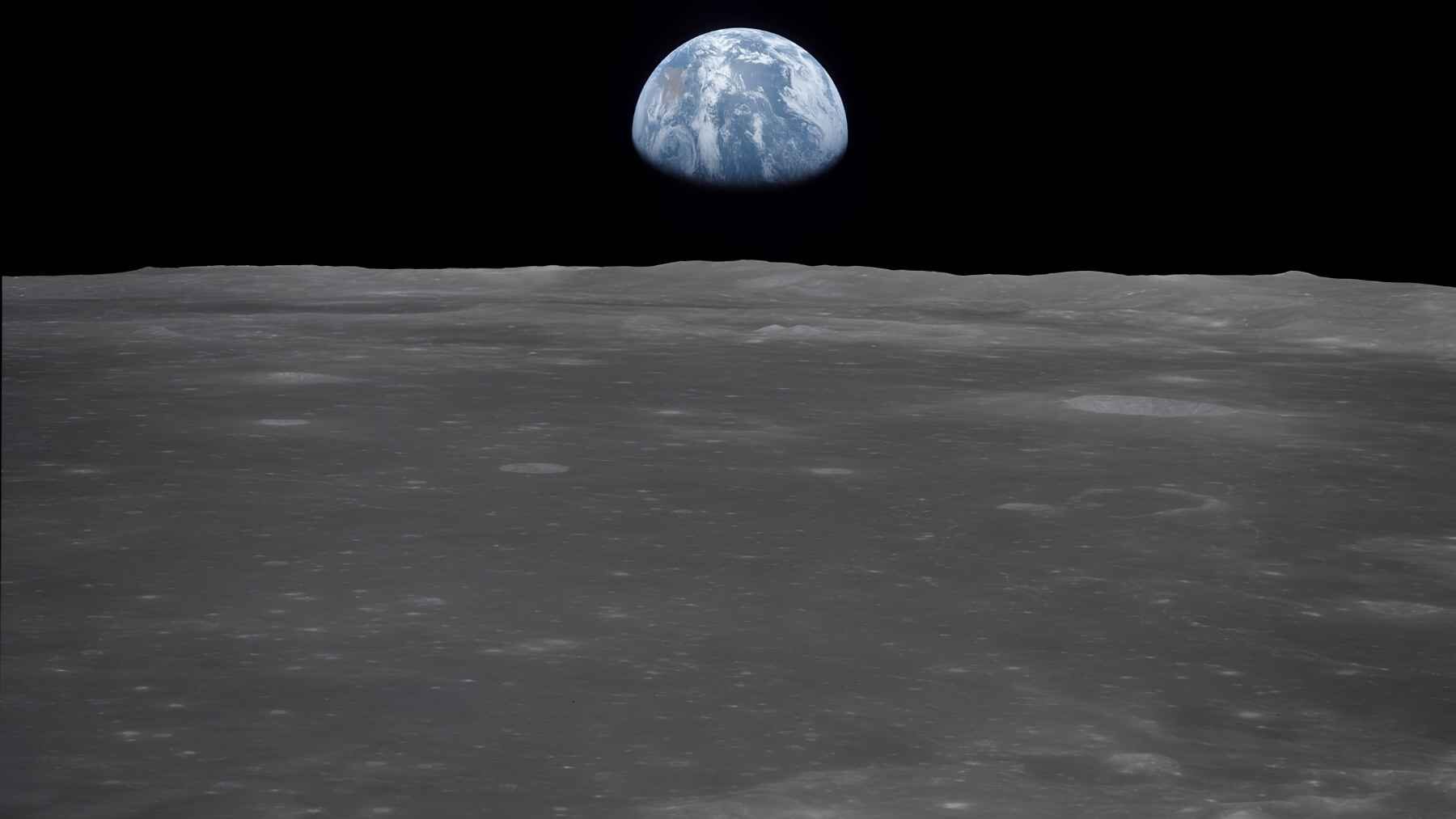
Earth appears above the lunar horizon in a NASA image, a striking view of the two worlds whose gravitational interaction has changed Earth's rotation over time.
Earth appears above the lunar horizon in a NASA image, a striking view of the two worlds whose gravitational interaction has changed Earth’s rotation over time.

The Sun may have pushed back

Sunlight warms the atmosphere unevenly and that actually generates enormous pressure waves. If the duration of half of the day approached the natural resonance of the atmosphere, those waves would strengthen enough for solar gravity to pull Earth forward and speed it up. That is the main explanation for the “19 hours theory”.

How rocks remember a day

Scientists can know how long a day lasted in the past with the use of geological documents and archives since they included information about tidal rhythmites, stromatolites, and cyclostratigraphy that preserve daily, seasonal, and orbital patterns.

However, there are other theories that say that maybe that was not possible. In fact a 2024 review concluded that this 19-hour theory depended a lot on uncertain stromatolite evidence.

YouTube: @NASAScience

New evidence challenges the plateau

The new investigations are taking credibility away from this 19-hour theory. A 2024 Science Advances study examined Chinese formations of between 1.2 to 1.6 billion years old and found no clear evidence for atmospheric day-length locking.

To top it off, a 2024 Astronomy & Astrophysics study found that the physics was not that accurate either; the loss of energy in the ground would weaken the thermal tide, preventing that equilibrium.

What scientists can say now

We know for sure that “Earth’s days were shorter in the distant past, and the Moon is still slowing us down today. But whether Earth’s day actually got stuck at 19 hours for hundreds of million of years is still an open question.

The latest study was published in the journal Symmetry.

Kevin Montien

Social communicator and journalist with extensive experience in creating and editing digital content for high-impact media outlets. He stands out for his ability to write news articles, cover international events and his multicultural vision, reinforced by his English language training (B2 level) obtained in Australia.

Related Post

Three tall men walking together on a street in Amsterdam with Dutch canal houses behind them

Dutch men grew about 20 centimeters in 150 years, going from among Europe’s shortest to its tallest, and a simulation shows natural selection explains less than half a centimeter of that change

September 20, 2026 at 6:33 AM
Microscopy images of epithelial tissue showing keratin networks and cell nuclei

Scientists stretched living tissue for hours and watched its internal keratin scaffolding rebuild itself into thick networks spanning multiple cells, but the strangest part came when the same process gradually pushed the nuclei out of the protective cages surrounding them

September 20, 2026 at 5:38 AM
Brown and white mouse sitting on a white background

A drug first developed for spinal cord injuries reduced DNA damage and brain inflammation in mice with Alzheimer’s, and because it already passed a safety trial in 109 people, researchers believe it could reach patients faster

September 19, 2026 at 12:38 PM
Fossil bone next to the 1985 field notebook from an Antarctic expedition

A fossil collected in Antarctica in 1985 sat in a museum drawer for 40 years labeled as a marine reptile, until scientists took another look and discovered the four-inch bone belonged to a 20-foot titanosaur that lived roughly 82 million years ago

September 19, 2026 at 5:06 AM
Entrance to the Goyet Caves in Belgium, a limestone cave with a metal gate

Ancient DNA from Belgium and France suggests Europe’s last Neanderthals were not isolated, inbred groups slowly dying out, and none of their genomes show recent modern human ancestry even though our species had already arrived in the region

September 18, 2026 at 10:20 AM
Three South Korean women standing side by side on a street in Seoul

South Korean women born in 1996 were about 20 centimeters taller on average than those born in 1896, the biggest gain recorded for women worldwide, and researchers say childhood nutrition and living conditions explain more than genes

September 17, 2026 at 2:57 PM