Angelina Jolie’s foundation has looked after the Samlaut forest in northwestern Cambodia for 20 years, and a June 2026 field note says its rangers cleared “close to 7,800 meters of wire snares” in 2025, about 4.8 miles.
Jolie does not own that forest. On its site the foundation describes the Samlaut Multiple Use Area as “a protected zone of 60,994 hectares of forest,” which is 150,720 acres, spread across parts of Battambang and Pailin provinces near the Thai border, and it works alongside the Ministry of Environment there.
It began with landmines
Jolie fell for Cambodia while shooting Lara Croft: Tomb Raider there, and in 2002 she adopted her son Maddox from an orphanage in Battambang. The foundation that carries his name started a year later.
The foundation’s history page says it “started with one aim: to work alongside local communities to clear the most heavily mined land in Cambodia.” Once that land was safe, it “expanded into environmental conservation, livelihood programs, and building clinics and schools.”
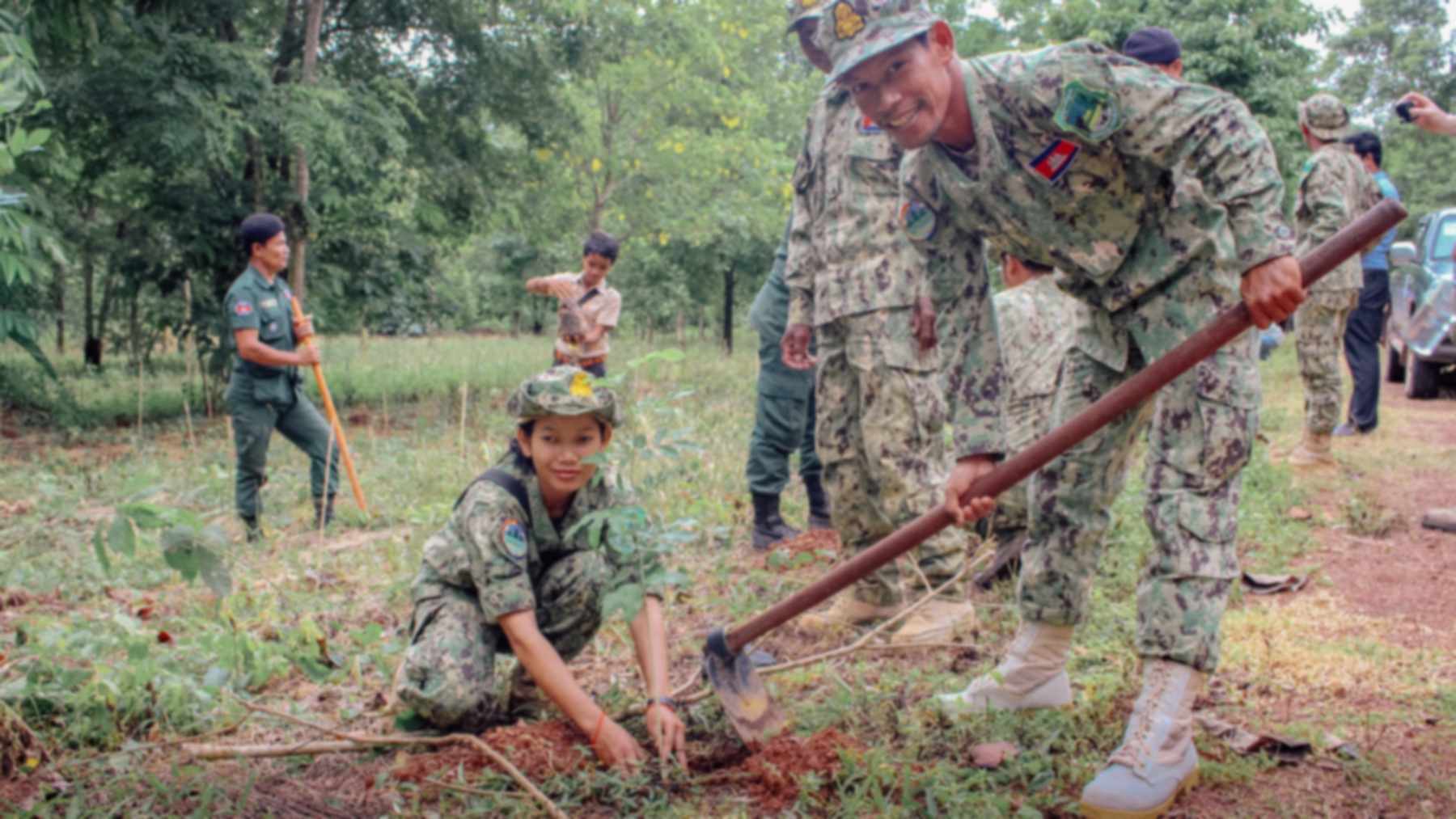
Samlaut was the first and the last stronghold of the Khmer Rouge, and about 57,000 people live there today. The foundation took on the forest in 2006 and trained local residents as rangers, who became government officials under the Ministry of Environment in 2016.
Local rangers patrol the forest
The foundation says it works with the government “to patrol and protect the SMUA with a special focus on strengthening law enforcement, community awareness and education on the importance of conservation of natural resources and protection of wildlife, and reforestation by planting trees.” Since 2018 its headquarters in Samlout has also been “the base for the ranger unit patrolling the protected forest.”
Elephants and pangolins showed up on camera
To find out what lived in the forest, the foundation commissioned the conservation group Fauna & Flora to survey it with Cambodia’s Ministry of Environment between October 2021 and June 2022, with money from the foundation and from Fauna & Flora International. The Samlout Biodiversity Report came out in 2024.
“The most significant findings were made through the camera trap programme with the presence of Endangered and Critically Endangered species such as Asian elephant, dhole and Sunda pangolin confirmed from the core of the MUA,” the authors write.
Those camera traps logged 44 species, with 10 independent records of Asian elephants, four of Sunda pangolins and three of dholes, a wild dog of Asian forests. The bird team counted 142 species.
The authors call the area “one of the last remnants of forest in north-western Cambodia.” Their cameras also photographed a man carrying a gun and a sambar deer missing a foot, “almost certainly due to a snare wound.”
Honey that depends on standing trees
The foundation’s beekeeping program began in 2019. “Learning from unsustainable projects around cultivating wild honey, we started to train local farmers on sustainable beekeeping techniques,” its timeline says. Its field note says local beekeepers made 1,392 liters (368 gallons) of honey in 2025. As the note puts it, “beekeeping offers something rare: an income that depends on the forest staying intact.”
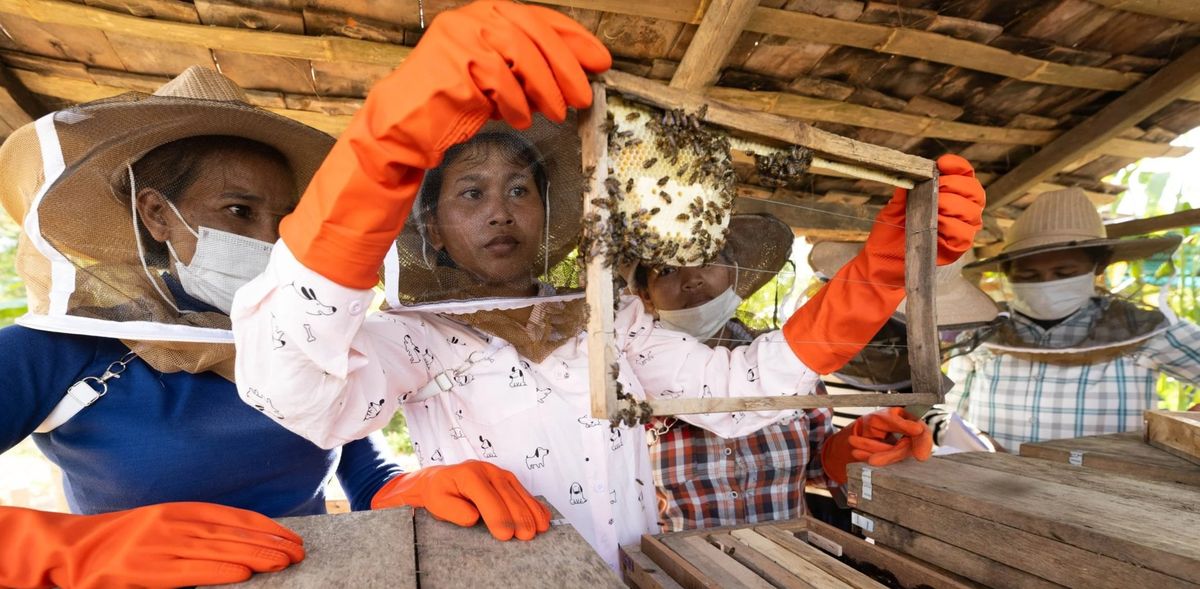
The foundation says much of this effort is about “putting beekeeping in the hands of women,” and local women were encouraged to join from the program’s first year. Its timeline adds that beekeeping revenue “has demotivated farmers in using pesticides on their farm.”
A UNESCO video from the Women for Bees program shows Jolie with the beekeepers in Cambodia in 2022.
Counting the seedlings that survive
In April 2023, rangers, forestry officers and villagers walked five replanted sites in the Sangker River Basin with a team from the International Centre for Environmental Management. Between 71 and 94 percent of the seedlings had survived, the foundation’s reforestation note says.
The note sums up the approach as “restoration measured not by how many trees go in the ground, but by how many are still standing the following year.”
A forest near a contested border
In July 2025, armed clashes broke out along the Cambodia-Thailand border. Samlaut lies in Battambang and Pailin provinces near that border, and the foundation runs its forest work there with Cambodia’s Ministry of Environment.
What the figures leave out
“The biggest pressure on the forest is land encroachment, along with illegal logging and hunting, which our rangers work to detect and stop,” the foundation says on its site.
The survey was a single snapshot. “Many of the higher elevation and remoter areas of the MUA, where more interesting records would likely be made, were not possible to visit due to security concerns,” the authors write.
“Undoubtedly, there remains much more to discover in the Samlout MUA, but the findings reported here show that it remains an important part of Cambodia’s protected area system,” the authors conclude.
Photo: Maddox Foundation