Skip the tree lot: some national forests sell permits to cut your own Christmas tree from $5, and fourth graders with an Every Kid Outdoors pass qualify for a free one
In some national forests, cutting your own Christmas tree takes a permit, and forests in Washington, Montana and Colorado set their own price and rules.

· 4 min read
Key points
- Each national forest sets its own permit price, dates, household limit and cutting map.
- Gifford Pinchot and Lolo charge $5 per tree, with limits of five and three trees per household.
- The Forest Service says the harvest thins dense stands of small trees and helps other trees grow larger.
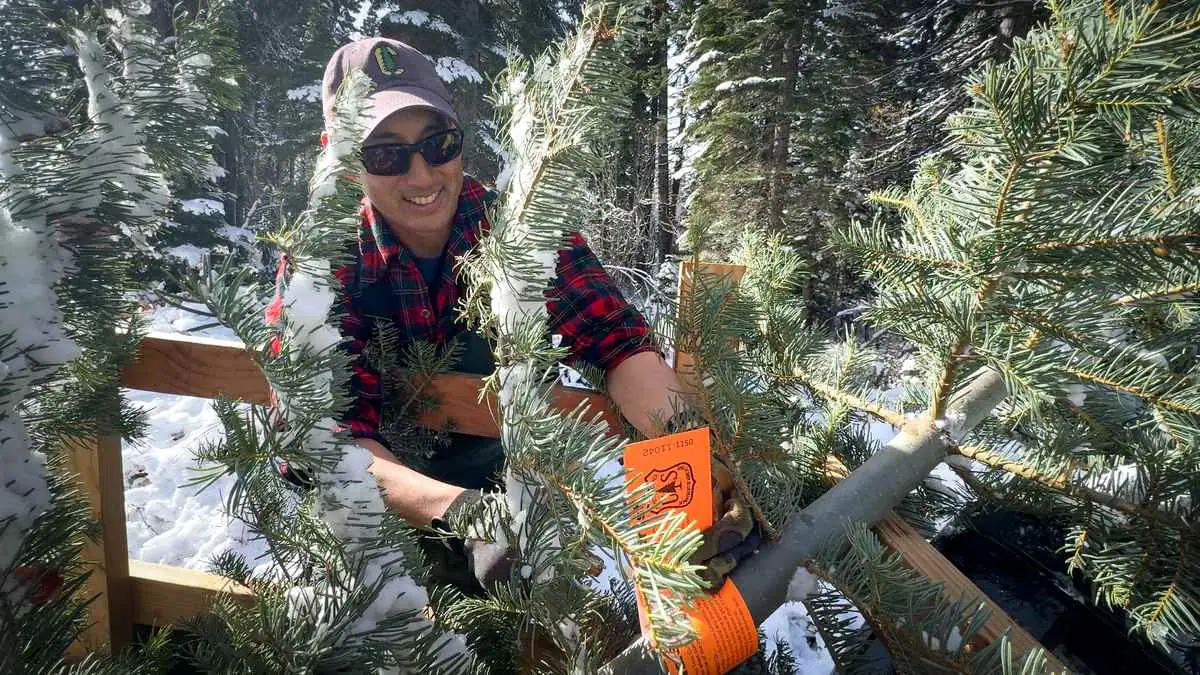
The Christmas tree does not have to come from a parking lot or a farm. In some national forests, the U.S. Forest Service sells permits that let families go into the woods and cut their own.
There is no single national price or season for these permits. Each forest sets its own fee, its own dates, its own limit per household and its own map of where cutting is allowed. Anyone planning a trip this weekend has to check the page of the specific forest they want to visit.
Three Forest Service announcements from November 2026 show how much the rules can differ, from Washington to Montana and Colorado.
Washington: $5 and five trees
On the Gifford Pinchot National Forest in Washington, permits cost $5 each. They were already available on Recreation.gov when the forest announced them on November 10, and in-person sales began on November 12.
In person, they are sold at three ranger district offices (Mount Adams, Cowlitz Valley and Mount St. Helens) and through local vendors. Additional administrative fees may apply to online purchases.
Each household may buy up to five permits, and each one is valid for a single tree. The permit includes a map of the areas closed to cutting. A printed copy of the permit must be carried while cutting.

The district offices open Monday, Wednesday and Friday from 9 a.m. to 4 p.m., with a lunch break from noon to 1 p.m. Office and vendor hours may vary, so the forest recommends calling ahead.
Montana: $5, three trees
On the Lolo National Forest in Montana, the price is also $5.00 per tree. The limit there is three trees. Permits have been sold at district offices and on Recreation.gov since November 12, according to the forest's release dated November 16.
Buying online requires setting up or logging in to a Recreation.gov account. The forest asks buyers to read the need-to-know information carefully before they pay.
Colorado: online, with closed areas
The Arapaho and Roosevelt National Forests in Colorado sell their permits online through Recreation.gov, they announced on November 20. Cutting is allowed across most of the Canyon Lakes Ranger District in Larimer County and the Sulphur Ranger District in Grand County.
It is not permitted on national forest land in Clear Creek, Gilpin or Boulder counties. Wilderness and roadless areas are also closed. So are the Cache la Poudre Wild and Scenic River corridor, the Fraser Experimental Forest, the Winter Park and Mary Jane ski areas, campgrounds and trailheads.
The forests' permit page adds rules of its own. Permits are on sale until January 6, 2027, with no refunds. The trunk must be six inches or less in diameter.
The cut must be six inches or less from the ground, and no tree may be cut within 75 feet of a road or trail. Cutting runs from November 21 in Canyon Lakes and from November 7 in Sulphur, through January 6. According to the November 20 release, partners staff information sites in Red Feather Lakes and the Poudre Canyon on the weekends of November 28-29 and December 5-6, from 10 a.m. to 2 p.m.
The fourth-grade pass
Fourth graders can get a free permit through the Every Kid Outdoors program. The details depend on the forest.
In Montana and Colorado, fourth graders with an Every Kid Outdoors pass are eligible for a free permit. They apply by entering the pass or voucher number when buying it, and a $2.50 reservation fee is applied.
In Washington, fourth-grade students first get an Every Kid Outdoors paper voucher online. They can then present the voucher or pass at any national forest office to receive a complimentary permit.
Why the forests allow it
The Forest Service presents the harvest as good for the forest. "Cutting a Christmas tree improves forest health, thinning densely populated stands of small-diameter trees," the Arapaho and Roosevelt release says.
"Removing these trees in designated areas helps other trees grow larger and can open areas that provide forage for wildlife," it adds. The Lolo release says local forest health experts identify areas that benefit from thinning trees "that tend to be the perfect size for Christmas trees."
Go prepared for winter
The forests also warn that a tree hunt is a winter trip. Gifford Pinchot notes that many forest roads are not maintained for winter travel and that weather can change rapidly.
It recommends traction devices, a shovel, extra food and water, warm clothing, blankets, a flashlight and a first-aid kit.
Visitors should also bring a saw and rope or straps for the ride home. Harvesting a tree often takes longer than expected, so the forest advises starting early and leaving well before dark.
In Colorado, the Arapaho and Roosevelt page warns that the forest will likely have two or more feet of snow. It asks visitors to be back at their vehicle by 3 p.m. Its November 20 release warned that seasonal road closures would begin early the following week and asked visitors not to block Forest Service gates.
Andrew Avitt, USDA Forest Service
Adrián Villellas
Writer at ECOnewsAdrián Villellas is a computer engineer and entrepreneur in the fields of digital marketing and advertising technology. He has led projects in data analysis, sustainable advertising, and solutions for new audiences. He also contributes to scientific initiatives related to astronomy and space observation. He writes for science, technology, and environmental media outlets, where he makes complex topics and innovative advances accessible to a broad audience.
More from Adrián VillellasComments · 0
Rules ›No comments yet. Be the first to share your view.