In October 1948, the Donora smog hung over a Pennsylvania river town for days and killed 20 people, and a federal study found 5,910 residents, 42.7% of the area, reported illness
A 1949 Public Health Service report counted 5,910 people sickened by the 1948 Donora smog, from 16% of young children to 60% of those 65 and older.

· 4 min read
Key points
- Of those affected, 1,440 were severely ill, 10.4% of the area population.
- The smog reached Donora on Wednesday, October 27, 1948, and rain cleared it on Sunday afternoon.
- Surgeon General Leonard Scheele called it the first thorough investigation into every facet of an air-pollution problem.
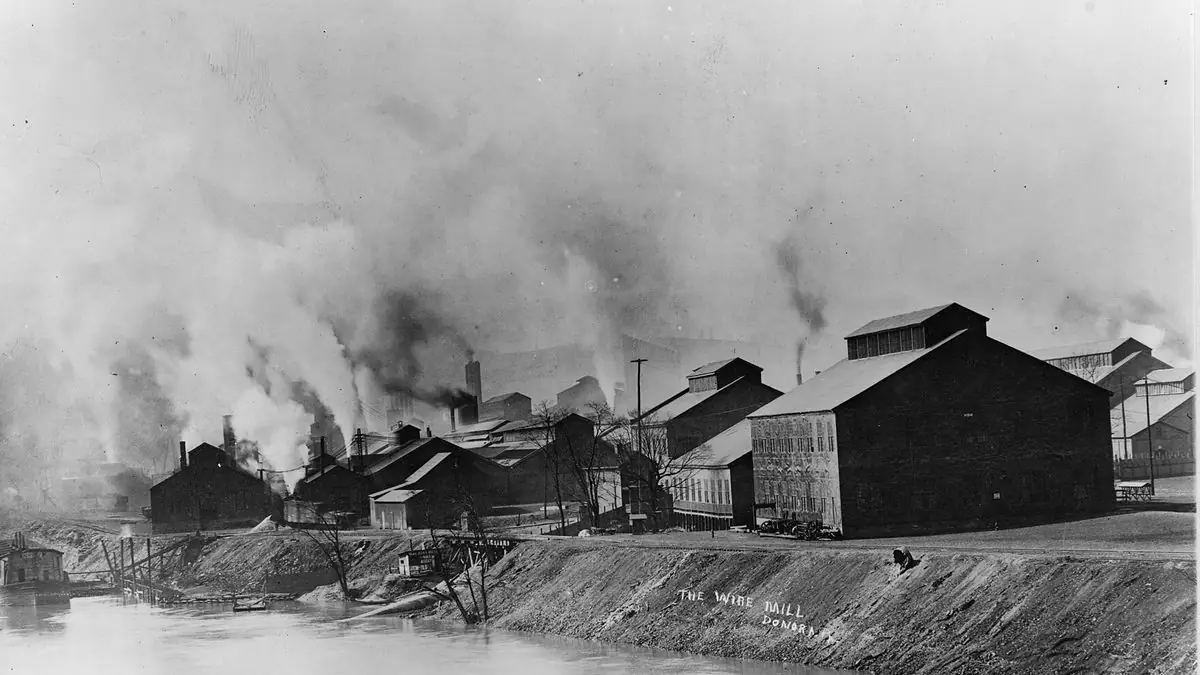
During the last week of October 1948, a heavy smog settled over the area around Donora, an industrial town on the Monongahela River about 30 miles south of Pittsburgh. In the days that followed, the Donora smog killed 20 people.
A total of 5,910 people, or 42.7% of the population of the Donora area, reported some illness from the smog. Those figures come from the federal Public Health Service's Public Health Bulletin No. 306, a preliminary report published in 1949.
"The whole Nation was shocked when 20 persons died and several thousand more became ill," wrote Oscar R. Ewing, administrator of the Federal Security Agency, in the report's opening note. Until then, he added, smoke had been regarded as a nuisance and annoyance rather than a serious hazard to health.
A town in a river bend
Donora sits on the inside of a sharp horseshoe bend in the river. The community of Webster lies directly across, linked by a bridge. In 1948, about 14,000 people lived in the area: some 13,000 in Donora and about 1,000 in Webster, according to the report.
The riverbank was occupied by a steel and wire plant and by a zinc plant. Hills rose to about 1,100 feet on the east bank and 1,150 feet on the Donora side, above a river-bank altitude of 760 feet.
Weather men described the conditions as a temperature inversion with little or no air movement over a wide area. It covered western Pennsylvania, eastern Ohio and parts of Maryland and Virginia. The stagnant air let pollutants build up into dense smog, especially in industrial areas.
Five days of smog
The smog reached Donora on the morning of Wednesday, October 27. Streamers of carbon appeared to hang motionless in the air, and visibility was so poor that even natives of the area got lost, the report says.
On Friday, a marked increase in illness began across the area. By that evening, the physicians' telephone exchange was flooded with calls, and many people were sent to nearby hospitals.
There was, nevertheless, no general alarm about the smog's effects. The annual Halloween parade went ahead on Friday evening, and on Saturday afternoon a high school football game between Donora and Monongahela drew a large crowd.
The first death had come early that Saturday, at 2 a.m., and by 11:30 that night 17 people were dead. Two more died on Sunday, and another person who fell ill during the smog died on November 8.
Rain finally cleared the smog on Sunday afternoon. On Tuesday, a call reached the Public Health Service's Division of Industrial Hygiene in Washington asking for help. The request was later formally repeated on behalf of the Donora Borough Council, the Pennsylvania Department of Health and the United Steelworkers of America.
What the investigators found
Some 25 people were assigned to the federal field team, joined by staff from the federal Weather Bureau. The report presents the results of five months of intensive field work. The community survey covered 1,308 households with 4,613 people, and physicians completed 516 interviews.
Of those affected, 2,148 were mildly ill, 2,322 moderately and 1,440 severely, the report says. That was 15.5%, 16.8% and 10.4% of the population.
Illness rates varied sharply with age, according to the summary of findings. The share of people affected rose from 16% of children under 6 to 60% of those 65 and older. Half of all adults in the area reported some illness.
A 2018 review in the American Journal of Public Health names three factors the Public Health Service identified. They are emissions from the steel and wire plant and the zinc works, the inversion and the valley's geography.
Those emissions included hydrogen fluoride, carbon monoxide, nitrogen dioxide, sulfur compounds and heavy metals, the review says. The investigators could not pin the disaster on a single contaminant.
The team recommended cutting the plants' emissions and setting up weather alerts for conditions likely to bring another smog, according to the review. It also notes that a final report was never published.
A turning point
Surgeon General Leonard A. Scheele called the study "the opening move in what may develop into a major field of operation in improving the Nation's health." In his foreword, he wrote that only one similar incident had come before, in Belgium's Meuse Valley in 1930, when 60 people died.
The Donora study, he wrote, was "the first thorough investigation into every facet of an air-pollution problem." The 2018 review, whose title calls Donora the event that inspired the Clean Air Act, says it was one of the events that catalyzed the first national steps on air pollution.
Library of Congress, Prints and Photographs Division
Javier Niño
Writer at ECOnewsJavier Niño has been a Spanish National Police officer since 2017 and a journalist specialising in employment, labour law and Social Security, with more than seven years of writing experience. At ECOnews he covers environment, energy and sustainability news, focusing on how new regulations and court rulings affect people in their everyday lives.
More from Javier NiñoComments · 0
Rules ›No comments yet. Be the first to share your view.