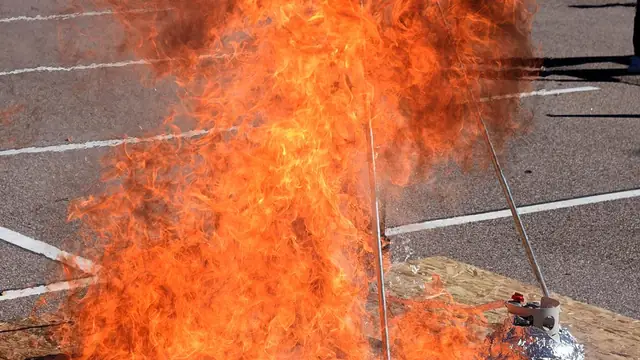
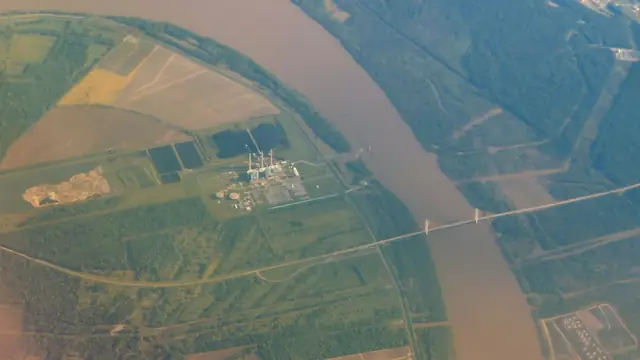
The Army detonated 68 drums of degraded lead azide in Iowa, and the governor says the EPA has so far detected zero airborne lead as checks on soil and water go on
Residents near the Iowa Army Ammunition Plant can request EPA soil sampling, and an expert explains when a blood-lead test makes sense after lead azide.

· 4 min read
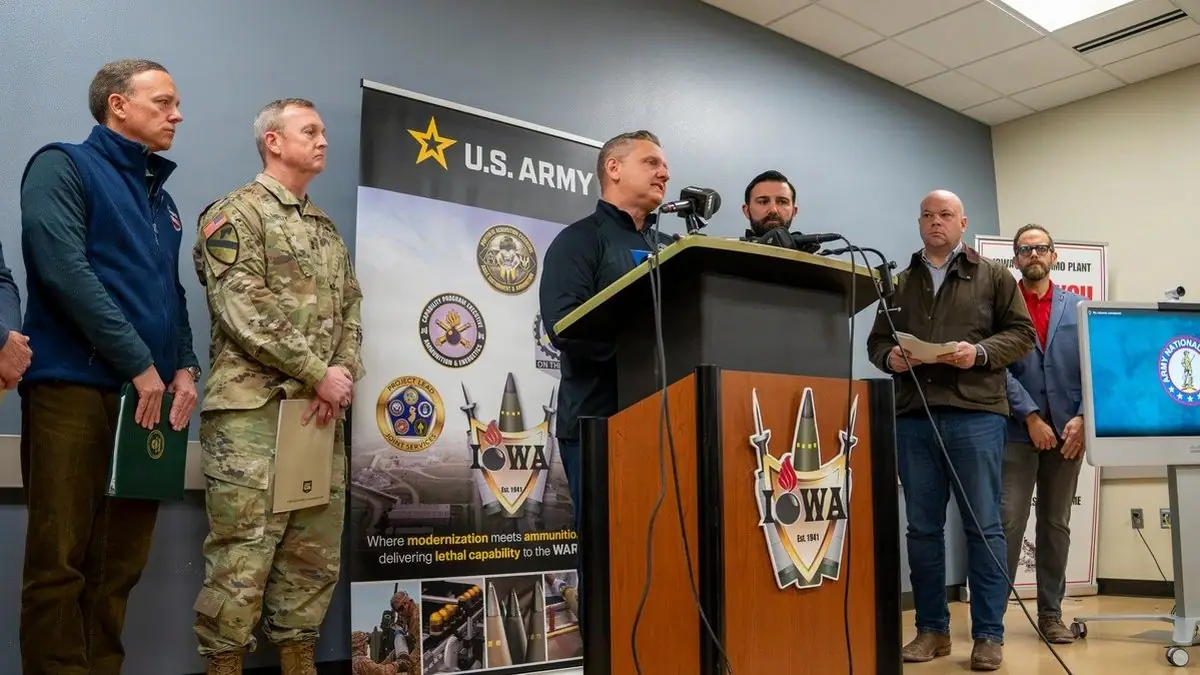
The U.S. Army has destroyed about sixty-eight drums of degraded lead azide at the Iowa Army Ammunition Plant in Middletown, in a controlled detonation on Wednesday, November twenty-fifth. Inspectors had found the explosive crystallized, which made it extremely sensitive and impossible to move or treat. Iowa Governor Kim Reynolds said early information from the EPA shows zero detection of airborne lead in the region, calling it a best-case scenario. The preliminary results are only a start, and the EPA is still testing air, soil and water. The blast was contained with earth, sand, water, foam and a concrete bunker. Residents are asked to wet-wipe outdoor surfaces after the all-clear. Anyone who wants soil or surface-water sampling can call the EPA's sampling line at 1-833-649-9624. A University of Virginia expert says it will take time to know how much lead, if any, was released.
Key points
- The blast took place at about 9 a.m. on November 25 in Middletown.
- Iowa agencies will keep checking air, soil and water in the days ahead.
- Residents can ask the EPA to sample soil or surface water.
The U.S. Army has destroyed the unstable lead azide stored at the Iowa Army Ammunition Plant in Middletown. It took place on Wednesday, November 25, at about 9 a.m., according to the Missouri Department of Natural Resources.
The first results are preliminary. Iowa Governor Kim Reynolds said that, according to initial information, the federal Environmental Protection Agency (EPA) has "zero detection of airborne lead in the region."
"This is a best-case scenario for the residents of Middletown and its surrounding communities," Reynolds said in a statement after the blast. Her office said state agencies will keep monitoring as more information on air, soil and water quality becomes available.
Why the Army blew it up
During a routine safety inspection, inspectors found severe degradation and crystallization in about 68 drums of lead azide stored in earth-covered magazines. Together they held more than 9,700 pounds of net explosive weight, the Army said.
Lead azide is an explosive compound that contains lead. In its crystallized state, the Army said, it becomes an ultra-sensitive primary explosive that can go off with minimal friction, vibration, heat or shock.
That ruled out moving the drums or treating them with chemicals, according to the Army. Crystallized lead azide had built up on the barrels and their lids. That kept them from being moved or opened.

"The barrels of lead azide have deteriorated rapidly over the past eight months," said Col. Aaron Teller, commander of the 71st Explosive Ordnance Disposal Group.
The EPA had issued the Army an emergency permit for the operation on November 18. An EPA letter to the governor referred to a detonation on Monday, November 23. The Army then set it for Wednesday, November 25.
Acting Secretary of the Army Adam Telle said at a briefing the day before that experts agreed a controlled, mitigated detonation was "far preferable to an uncontrolled, spontaneous detonation of that substance." ATF Director Robert Cekada warned that swings in temperature made the material just as dangerous as freezing weather.
Earth, sand, water and foam
The federal team used several layers to contain the blast and limit how far lead could spread. These included earth, sand, water and two feet of high-expansion foam, in addition to the concrete bunker where the detonation took place, according to Missouri officials.
Before the blast, FEMA supported a recommended relocation for residents of Middletown and nearby areas within a five-mile cone extending southwest of the plant. Residents outside that zone but inside the wider advisory area were urged to shelter in place. In neighboring Illinois, officials told people in the plume's path to stay inside for 24 to 48 hours.
Reynolds had issued a disaster emergency proclamation for Des Moines, Lee and Van Buren counties ahead of the operation.
What the monitoring shows so far
The EPA was testing air, water and soil in the area before, during and after the detonation, according to Missouri officials. Right after the blast, it began intensive air sampling nearest the site, they said.
Missouri said the EPA currently reports no detectable traces of lead heading toward the state. Middletown lies 57 miles north of the Missouri state line.
Missouri has 10 drinking water systems within 100 miles of the site. The state partnered with communities to monitor those that use surface water. All of the surface-water systems already have treatment that can address lead, the state said.
Under the emergency permit, the Army must sample and monitor before and after the detonation. It must also clean up contaminated areas and report on each of these steps, according to the EPA.
What residents can do now
The Army's guidance asks residents, after the all-clear, to wet-wipe high-contact outdoor surfaces. Examples include patios, decks, window sills and outdoor play equipment.
Infants, children under six, pregnant women and people with chronic illnesses are more vulnerable to lead dust, the Army said. FEMA said its hotel rooms for relocated residents run through Friday, November 27, with extensions available on request.
People who want soil or surface-water sampling can call the EPA's sampling line at 1-833-649-9624, giving their name, phone number and address.
Aaron Reuben, a clinical neuropsychologist at the University of Virginia, says it will take time to know how much lead, if any, was released. His general advice to people who think they were exposed is to ask for a blood-lead test at their next routine visit. Ideally it should be within a few weeks, because lead circulates in the blood only briefly after an acute exposure.
"Small, one-off exposures are unlikely to create noticeable symptoms of poisoning or harm a person's health in a meaningful way," Reuben said. Lead builds up in the body, though, so he says small exposures maintained over long periods can be a concern.
U.S. Army photo by Staff Sgt. Daniel Hernandez
Glossary for this story
- EPA
- The Environmental Protection Agency: the U.S. federal agency in charge of protecting air, water and land and enforcing environmental laws.
Jordi Company
Writer at ECOnewsJordi Company is a well-known figure in Catalan publishing and a pioneer of the free press model, with 40 years of experience in television, radio and print. He has founded and led several media groups and today heads ECOticias.com, an environmental news outlet read in Spanish and English around the world and an audience leader since 2004. He is a member of the International Network of Writers for the Earth (RIET), among other organisations.
More from Jordi CompanyComments · 0
Rules ›No comments yet. Be the first to share your view.