Thanksgiving is the peak day of the year for US home cooking fires, says the NFPA, and its top tip is never to leave the kitchen while cooking on the stovetop
An estimated 1,139 home cooking fires were reported on Thanksgiving 2024, 321% above a normal day. What the NFPA and federal agencies advise.

· 3 min read
Key points
- Christmas Day and Christmas Eve rank second and third for cooking fires.
- The USFA counted an estimated 170,000 home cooking fires in 2021.
- The NFPA strongly discourages turkey fryers that use cooking oil.
No day of the year brings more home cooking fires in the United States than Thanksgiving. An estimated 1,139 home cooking fires were reported to U.S. fire departments on Thanksgiving Day in 2024, according to the National Fire Protection Association (NFPA).
That figure is 321% above the daily average, the NFPA said in a release published on November 12, 2026. Christmas Day and Christmas Eve ranked second and third, with both close to twice the daily average.
Why the holiday kitchen is riskier
"We consistently see a dramatic spike in home cooking fires on Thanksgiving Day, which comes as no surprise, since cooking is a leading cause of home fires year-round," said Lorraine Carli, vice president of Outreach and Advocacy at NFPA.
She added: "When people are preparing multiple dishes and entertaining guests, along with other distractions, it's that much easier to lose sight of what's on the stove or in the oven – and that's when the likelihood of fire increases," Carli said.
On average from 2020 to 2024, 80% of all fires reported to U.S. fire departments on Thanksgiving involved cooking equipment. Those fires accounted for 35% of the associated civilian injuries. There were no civilian deaths within that five-year period, the NFPA said.
Cooking fires all year long
The holiday peak sits on top of a problem that lasts all year. According to the NFPA, cooking causes 48% of all reported U.S. home fires and 35% of home fire injuries. It is also a leading cause of home fire deaths, at 16%.

Federal figures point the same way: the U.S. Fire Administration (USFA) says fire departments responded to an estimated 170,000 home cooking fires in 2021. Those fires caused an estimated 135 deaths, 3,000 injuries and more than $494 million in property loss.
In the USFA data, unattended equipment was the leading factor in nonconfined home cooking fires, at 37%. The NFPA also names unattended cooking as the leading contributing factor in home cooking fires and fire fatalities.
What to do at the stove
The NFPA's first tip is simple: never leave the kitchen while cooking on the stovetop. Frying or sautéing with oil needs continuous attention.
When a turkey is in the oven, the NFPA advises staying home and checking it regularly. It also recommends timers for dishes with long cooking times.
The NFPA says to keep things that can catch fire at least three feet from the cooking area. That includes oven mitts, wooden utensils, food wrappers and towels. The NFPA also warns against long sleeves and hanging fabrics near a heat source.
Children and pets should also stay at least three feet away from the stove and from areas where hot food or drinks are prepared or carried. Hot dishes should be kept away from the edges of tables and counters, the NFPA adds.
When a pan catches fire
The NFPA recommends keeping a lid beside the pan while cooking. If a small grease fire starts, slide the lid over the pan to smother the flames and turn off the burner.
Leave the lid on, because the fire could start again, and let the pan cool for a long time.
Never use water on a grease fire, warns the Consumer Product Safety Commission (CPSC).
For an oven fire, the NFPA says to turn off the heat and keep the door closed. Open it only once you are sure the fire is out, standing to the side. If in doubt, call the fire department.
The CPSC also recommends a working smoke alarm on each level of the home, outside sleeping areas and inside bedrooms.
The trouble with oil turkey fryers
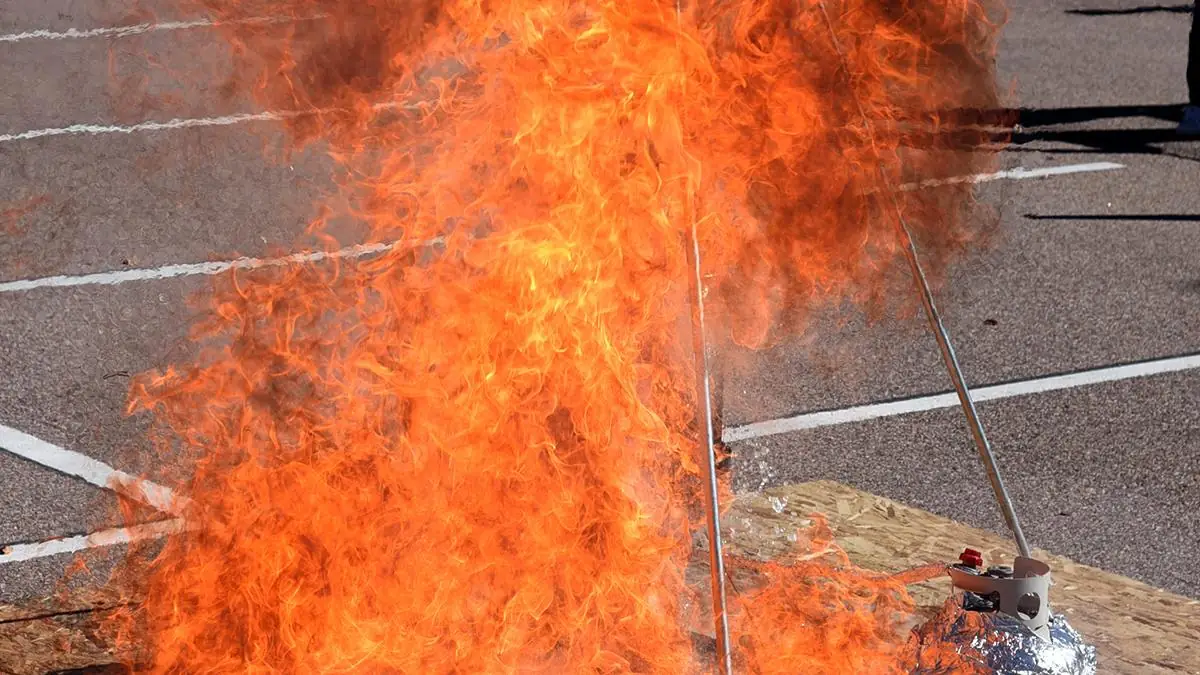
The NFPA strongly discourages turkey fryers that use cooking oil, which can cause devastating burns. As safer options, it suggests an infrared fryer, an air fryer or an electric turkey fryer. Another is to buy a fried turkey from a grocery store or restaurant.
For people who still fry with oil, the CPSC sums up its tips from its November 2025 holiday release in the acronym COOK. Follow the manufacturer's instructions and never overheat the oil, which should have a high smoke point, and never overfill the pot. Keep the fryer out of the garage, off the deck and away from the house.
"Keeping a close eye on what's cooking and minimizing distractions can greatly reduce the risk of cooking fires," Carli said.
The USFA's cooking fire safety page also says to stand by your pan. If you leave the kitchen, turn the burner off.
Photo: U.S. Air Force/Robb Lingley
Jordi Company
Writer at ECOnewsJordi Company is a well-known figure in Catalan publishing and a pioneer of the free press model, with 40 years of experience in television, radio and print. He has founded and led several media groups and today heads ECOticias.com, an environmental news outlet read in Spanish and English around the world and an audience leader since 2004. He is a member of the International Network of Writers for the Earth (RIET), among other organisations.
More from Jordi CompanyComments · 0
Rules ›No comments yet. Be the first to share your view.