Andrea Kealoha, Hawaii oceanographer, after over 140 volunteers sampled the coast: "The analyses are revealing clear hotspots of runoff"
Over 140 volunteers took 770 water samples after Hawaii's March Kona storms. A UH oceanographer says runoff left clear nutrient hotspots on the coast.

· 3 min read
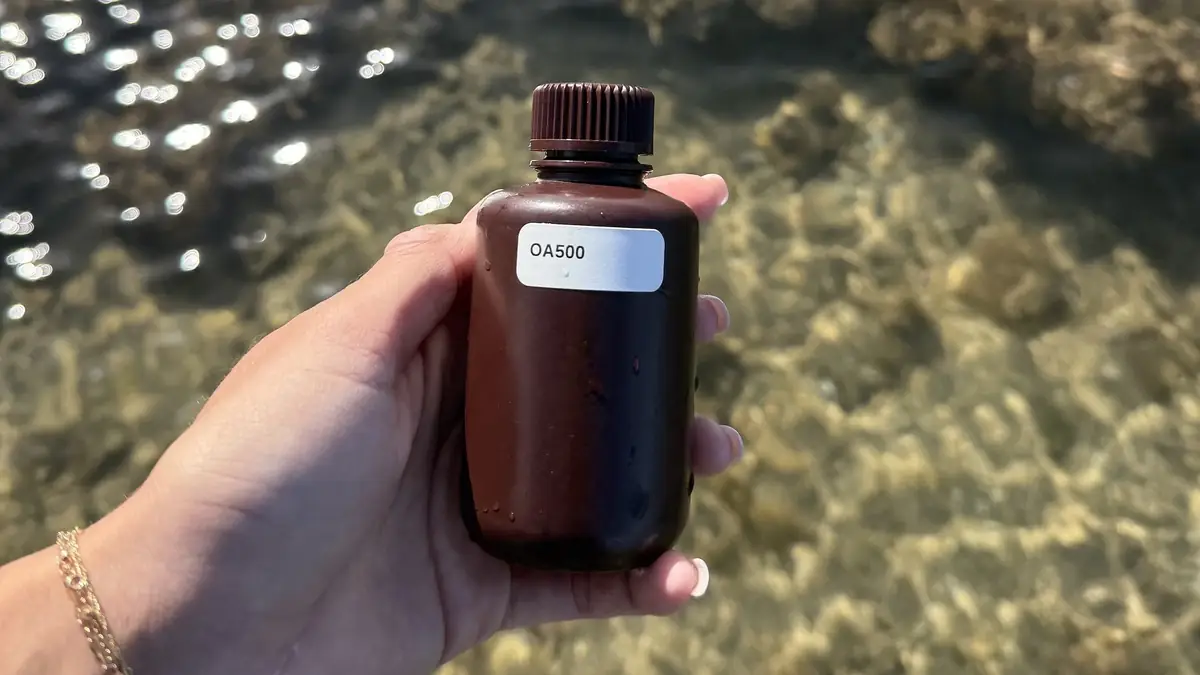
Scientists at the University of Hawaii at Mānoa say runoff from the March Kona low storms left clear hotspots of nutrients along the coast. Oceanographer Andrea Kealoha's lab has analyzed more than seven hundred fifty water samples, collected by more than one hundred forty community volunteers on Oʻahu, Molokaʻi, Lānaʻi and Maui. Several sites showed high levels of nitrogen and phosphorus, which are common in fertilizers and sewage. At high levels, they can trigger harmful algae blooms that stress reefs. Two storms hit in quick succession, and the governor estimated preliminary statewide damage could top one billion dollars. The team is now studying why some areas are more vulnerable to runoff, looking at land use and other factors. Other labs are still testing the samples for pesticides, heavy metals and other contaminants. Anyone can see where each sample was taken on a public online dashboard.
Key points
- About 5,000 residents of Oʻahu's North Shore were ordered to evacuate during the second storm.
- Several sites showed high nitrogen and phosphorus, nutrients common in fertilizers and sewage.
- Two Kona lows hit Hawaii from March 10 to 16 and from March 19, 2026.
- Other labs are still testing the samples for pesticides, metals and microbes.
Nutrient hotspots linked to runoff from Hawaii's March storms have shown up at several coastal sites, according to University of Hawaii at Mānoa oceanographer Andrea Kealoha. Her lab has analyzed more than 750 water samples collected by more than 140 community volunteers on Oʻahu, Molokaʻi, Lānaʻi and Maui.
"The analyses are revealing clear hotspots of runoff and elevated nutrients associated with the Kona low storm," said Kealoha, an assistant professor of oceanography at the School of Ocean and Earth Science and Technology (SOEST). The university published the update on November 20, 2026.
The samples were taken after two Kona low storms hit the islands this spring, from March 10 to 16 and again from March 19, 2026.
Two storms in ten days
In March, two Kona lows arrived back to back. The second struck before the state could stabilize critical infrastructure damaged by the first, Governor Josh Green wrote in his request for federal help on March 23.
During the second storm, about 5,000 residents of Oʻahu's North Shore were ordered to evacuate as floodwaters rose. Emergency crews carried out more than 230 rescues on March 20 alone, with support from the Hawaii National Guard.
Landslides, fallen trees and mud closed highways on Maui, Oʻahu, Hawaiʻi Island and Kauaʻi. Parts of Hāna were temporarily cut off. The state announced a federal major disaster declaration on April 8.
The floods also reached the water itself. Wastewater discharges were reported at several Oʻahu sites, including Ahuimanu Stream, Kawa Stream and Nuʻupia Pond. Brown Water Advisories were issued for Oʻahu, Maui, Hawaiʻi Island and Kauaʻi, according to the governor's letter.
That letter estimated that statewide damage from the two storms could top $1 billion. The state called the figure preliminary.
Volunteers with sample bottles
As the rain kept falling, residents began asking what the floodwater had carried from the uplands down to the reefs. Three SOEST scientists who were themselves affected by the storms, Nyssa Silbiger, Andrea Kealoha and Sara Kahanamoku, set up a project called "What's in Your Water?" to find out.
They asked for help on social media and by email. In a single week, volunteers collected more than 770 samples from beaches, favorite swimming spots and remote coastline. The group included families, students, nurses and surfers.
Some volunteers simply walked to the water near their homes. Others traveled to remote places such as Kalaupapa, or went offshore by boat to widen the map of samples. Sample bottles were provided to the volunteers.
Kahanamoku, an assistant researcher from Waialua, said the idea came while she was helping with cleanup efforts. "I kept hearing my neighbors ask about what the floodwaters brought down from the uplands," she said.
What the water showed
Kealoha's lab measured nutrients and salinity in more than 750 of the samples. Several sites around the islands showed high levels of nitrogen and phosphorus.
Nitrogen and phosphorus are common in fertilizers and sewage. At high levels, they can trigger harmful algae blooms that stress reef systems, according to the university.
Kealoha's team is now trying to understand why some areas are more vulnerable to runoff than others. It is looking at land use and other environmental factors, so the work is not finished.
More tests still under way
Other university labs are testing the same samples for pesticides, heavy metals and organic matter, and looking for microbes and other contaminants. Those results were not part of the November update.
Kahanamoku and collaborator Samuel Kekuewa are also comparing the March floods with older ones. They will use sediment cores from sites on Oʻahu and Molokaʻi hit by the storms to see how this year's events compare with floods from 100 or even 1,000 years ago.
A public map of every sample
Silbiger, an associate professor of oceanography, has put the project online as a live data dashboard. Anyone can see where each sample was taken, what the team is measuring and why, and the timeline for processing the samples.
She said the response showed how much people care about their coastline. "Science has the greatest impact when community members and scientists work as a team," Silbiger said.
The project is funded by SOEST, the Harold K.L. Castle Foundation, the Hawaiʻi Community Foundation, the Hawaiʻi Alliance for Community-Based Economic Development and the Division of Aquatic Resources.
Kealoha's remarks appear in the university's announcement, Water quality after Kona storms assessed by UH scientists, community, published by SOEST on November 20 and shared by UH News on November 23, 2026.
Photo: Haley Poppinga / University of Hawaii SOEST
Glossary for this story
- Pesticides
- Chemicals used to kill pests, weeds or fungi on crops.
ECOnews Newsroom
Writer at ECOnewsA team of journalists specializing in socio-environmental news, sustainability, climate change, the environment, responsible consumption, and innovation. At EcoNews, we provide clear, reliable, and relevant coverage of the environmental and social challenges shaping our era.
More from ECOnews NewsroomComments · 0
Rules ›No comments yet. Be the first to share your view.