If the US reached 80% renewable power, solar and wind farms could produce as much as 10% more electricity than the grid could immediately use or store, MIT researchers find
Excess renewable power would come mostly in spring, in 7-to-12-hour windows from midday on, and steel mills or AI training could use it.

· 4 min read
A new study from MIT and Georgia Tech finds that a US grid running on 80 percent renewable power would sometimes make more electricity than it can use or store. In cost-effective systems, solar and wind farms could produce as much as 10 percent more than the grid can immediately handle. The surplus did not disappear even when researchers assumed storage costs an order of magnitude below today's battery prices. It is largest in spring, with smaller amounts in mid to late fall, and usually lasts seven to 12 hours from midday through the afternoon. The authors suggest putting that power to work instead of wasting it. Steel furnaces, material mills, fertilizer and concrete production, and AI training could all be scheduled around these windows. Running factories in bursts is harder, the authors acknowledge, so next they plan to study the cost of the equipment needed. The study appeared in the journal Joule.
Key points
- The model used 40 years of US weather data, plus storage costs and regional demand.
- The biggest surpluses would come in spring, typically for 7 to 12 hours from midday.
- Steel furnaces, mills, fertilizer and concrete plants or AI training could use them.
A grid that runs mostly on renewable power will sometimes make more power than anyone can use. A new study from MIT and Georgia Tech puts a number on that surplus for the United States. It also finds that the surplus arrives in fairly predictable windows.
The researchers modeled a future in which 80 percent of the electricity supplied to US customers comes from renewables. In systems built to do that cost-effectively, solar and wind farms could produce as much as 10 percent more power than the grid could immediately use or store.
If nobody uses it, that excess electricity goes to waste. The study appeared on November 24 in the journal Joule, MIT announced the same day.
Forty years of weather data
The team used an energy systems model that combines wind, solar and energy storage to meet different shares of electricity demand. It can simulate how such systems might operate hour by hour over decades. The researchers tried different mixes of wind and solar capacity.
They fed it 40 years of data on weather extremes and on swings in wind and solar resources across the country. They also added storage costs and regional electricity demand profiles.
Because all these costs are changing, the team tested many combinations of technologies, said Jessika Trancik. She is a professor in MIT's Institute for Data, Systems, and Society and a senior author of the study.
The lead author is Micah Ziegler, a former postdoc at the institute and now an assistant professor at Georgia Tech. Aliza Khurram, now at the Toyota Research Institute, and PhD student Shannon Hwang are co-authors.
Cheap batteries are not enough
The surplus does not go away when storage gets cheap, according to the researchers. The finding held even with storage costs far below today's battery prices.
"We found that considerable excess energy could be available even in systems with very low-cost storage, including at costs an order of magnitude lower than what battery storage costs today," Ziegler said.
The result also stayed largely consistent across the country in many future scenarios. The surplus is less tied to location than one might expect and is broadly available nationwide, Trancik said.
Spring is the season of surplus
The model shows the largest potential excess in the spring, with smaller amounts in the mid- to late fall. These periods typically last seven to 12 hours, usually from midday through the afternoon, and sometimes stretch over several days.
That regularity matters for engineers, Ziegler explained. A pattern that shows up across many possible energy systems is more robust to uncertainty about the future, he said.
Today, grid operators facing more supply than demand often store the excess or reduce output. The US Energy Information Administration has described this in California. When more solar power is produced than the grid can use, operators might have to curtail it to prevent overgeneration, the agency says.
In that 2023 analysis, the EIA said battery storage in California had grown from 0.2 gigawatts in 2018 to 4.9 gigawatts by April 2023. It added that a "duck curve," the midday dip in demand left for conventional power plants, was becoming visible at the national level.
Trancik sees that wasted energy differently. "Another way to think about that curtailed energy is as an opportunity to use this excess electricity for some other processes," she said.
Steel, fertilizer and AI training
Instead of wasting that power, the authors suggest scheduling some industrial work around it. Electric arc furnaces for steel and mills that grind raw materials could be switched on during these windows.
The electricity could also make seasonal products such as fertilizer or concrete, used more in spring, summer and fall. Flexible computing is another option. AI training jobs can be timed for the hours, or even months, when surpluses are likely.
That matters as data centers draw more and more power. "Excesses could instead be used productively in a range of processes including making materials and training AI models," Ziegler said.
Running factories in bursts is harder than running them nonstop, the authors acknowledge. Cheaper machinery or equipment shared between sites could help. The researchers hope their results will guide processes designed to run efficiently for a few hours at a time.
Next, the team plans to study the cost of the infrastructure and equipment needed to use these surpluses. Doing that cheaply could reduce some costs of the shift to low-carbon energy, Ziegler said.
The work was funded by MIT Climate Grand Challenges, the MIT Energy Initiative and other MIT programs, Georgia Tech and the National Science Foundation, among others.
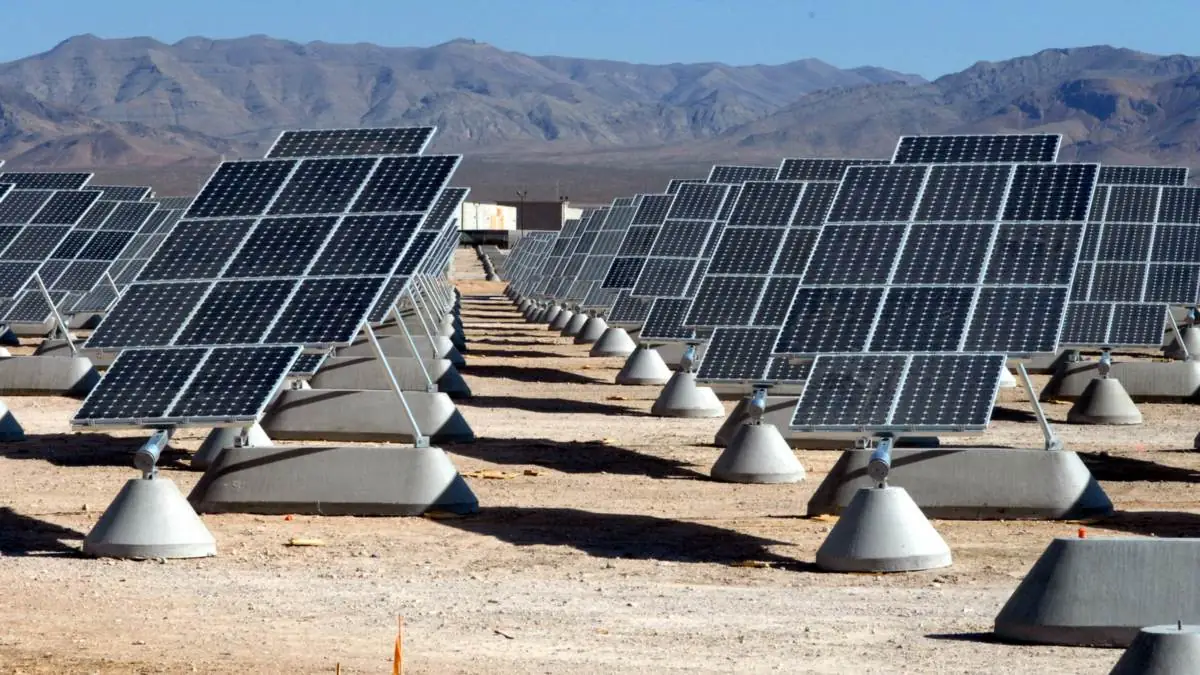
Image: US Air Force (public domain)
Glossary for this story
- Renewable energy
- Energy from sources that are naturally replenished, such as sunlight, wind, water and biomass.
- Battery storage
- Storing extra electricity, mostly in large batteries, to use it later when it is needed.
- Solar power
- Electricity made from sunlight, usually with panels whose cells turn light directly into current.
- Gigawatt
- One billion watts, roughly the output of a large power plant.
Adrián Villellas
Writer at ECOnewsAdrián Villellas is a computer engineer and entrepreneur in the fields of digital marketing and advertising technology. He has led projects in data analysis, sustainable advertising, and solutions for new audiences. He also contributes to scientific initiatives related to astronomy and space observation. He writes for science, technology, and environmental media outlets, where he makes complex topics and innovative advances accessible to a broad audience.
More from Adrián VillellasComments · 0
Rules ›No comments yet. Be the first to share your view.