Vishal Verma, University of Illinois environmental engineer, on the Iowa lead dust plume: "lead-containing particles are 2-4 times denser than ordinary soil dust"
Lead dust from the Iowa Army blast generally settles faster than soil dust, an Illinois engineer says; closed windows and wet cleaning cut exposure.

· 4 min read
The Army plans to detonate about 10,000 pounds of unstable lead azide at the Iowa Army Ammunition Plant in Middletown on Wednesday, November 25, at about nine in the morning Central time. University of Illinois engineer Vishal Verma says lead particles are two to four times denser than ordinary soil dust, so they generally settle faster than soil particles of similar size. The finest particles, though, can drift much farther and can reach deep into the lungs. Weather matters a great deal. In a temperature inversion the plume stays low and travels farther, while rain or snow can pull particles to the ground. The Army's latest map shows about 27 square miles above the federal limit for windows. Verma advises staying indoors when told to, keeping windows closed, using HEPA air cleaners, and wet-mopping instead of dry sweeping. Outdoors, a well-fitted N95 mask helps.
Key points
- Farm ponds, livestock tanks, rain barrels and cisterns may be more vulnerable, Verma says.
- Damp wiping and mopping beat dry sweeping, dusting or leaf blowers.
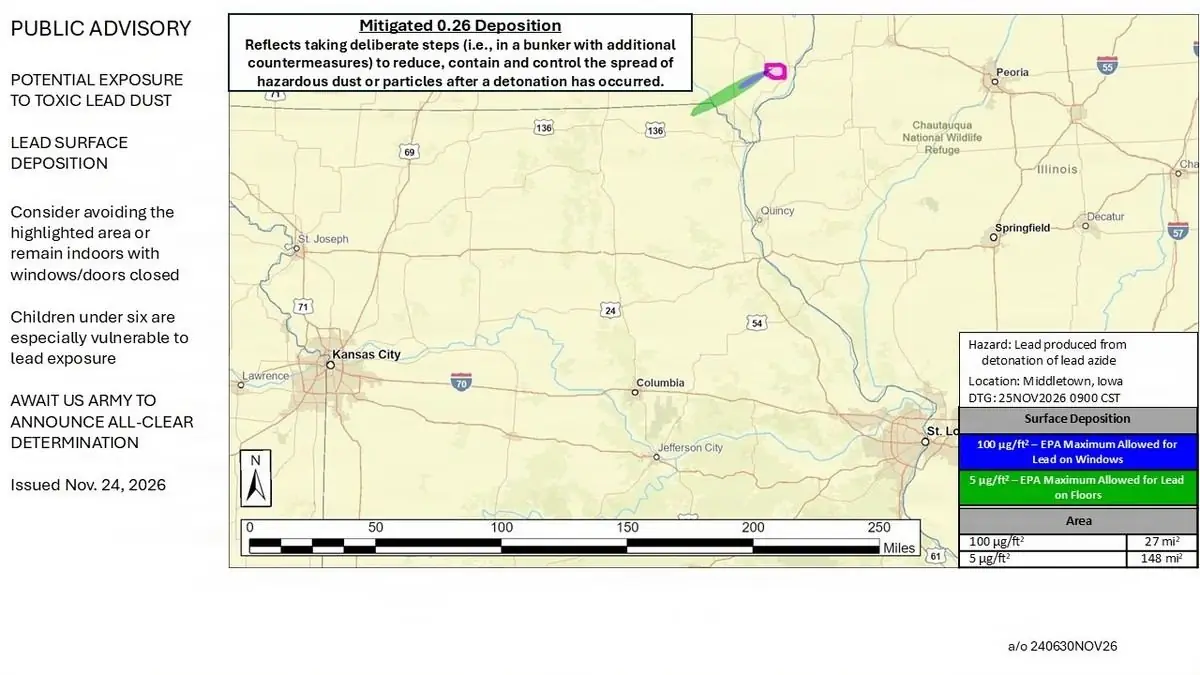
- The Army map puts 27 square miles above the EPA window limit for lead dust.
Lead dust from Wednesday's planned Army detonation in Iowa should generally settle faster than ordinary soil dust of the same size, a University of Illinois engineer says. The finest particles, however, can travel much farther.
"Because lead-containing particles are 2-4 times denser than ordinary soil dust, they generally settle faster than soil particles of comparable size," said Vishal Verma, a professor of civil and environmental engineering at the University of Illinois Urbana-Champaign.
Verma explained how scientists forecast contamination plumes, and what residents can do, in a university Q&A published on November 23. The Army still plans the detonation for Wednesday, November 25, at about 9:00 in the morning Central time, according to its public safety advisory dated November 24.
The schedule has already shifted once. The Army moved the detonation to Wednesday to allow for better weather and to have all mitigation measures in place.
The plan for Wednesday
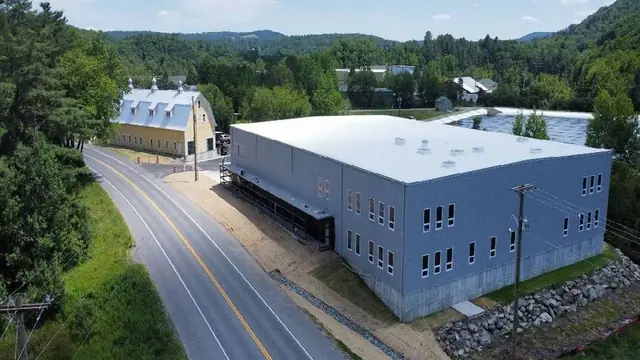
The Army Sustainment Command will destroy unstable, degraded lead azide at the Iowa Army Ammunition Plant in Middletown. According to the Illinois Environmental Protection Agency, two controlled detonations are planned. The university puts the total at approximately 10,000 pounds.
A routine inspection on March 11, 2026, found that the decades-old lead azide had partially crystallized, the Army says. That made it increasingly sensitive to friction, shock and cold winter temperatures, raising the risk of a spontaneous explosion.

The material will be detonated in earth-covered magazines, reinforced concrete structures built to hold explosives. Before and during the blast, misters will saturate the soil above and around them with water. Sand barriers about two stories high, a water wall and foam barriers are also planned.
The Army still expects some lead to leave the site, and its latest deposition map shows about 27 square miles above 100 micrograms per square foot. That is the EPA maximum allowed for lead on windows. It also shows about 148 square miles above 5 micrograms, the limit for floors.
How the plume behaves
Modelers weigh three main factors, Verma said: the strength of the source, the weather and the shape of the land. Here, source strength covers how much lead is released and how much becomes airborne. Particle size and how high the explosion lofts them count too.
The weather at the moment of the blast is key. In a temperature inversion, cooler air sits beneath warmer air, and the plume stays low and concentrated, he explained. It can then travel farther before it dilutes.
Rain or snow, by contrast, can pull particles out of the air and deposit them on the ground, Verma said. That makes local weather during and right after the release a strong influence on where the lead ends up.
Larger particles, tens of micrometers across or more, tend to land relatively close to the source. Finer ones can stay airborne for hours or longer and drift much farther at lower concentrations. They are also of greater health concern because they can reach deep into the lungs, Verma said.
Ponds, tanks and barrels
Verma called surface water contamination a legitimate concern. It is generally expected to be more localized, though, particularly near the source and in smaller water bodies.
Large rivers such as the Mississippi would dilute lead substantially, he said. Smaller, relatively stagnant water may be more vulnerable, such as farm ponds, livestock watering tanks, rain barrels and cisterns that collect runoff from roofs. Most lead compounds bind strongly to soil, so they tend to stay near where they land.
What residents can do
Verma stressed that "individuals cannot control the source of emissions or the broader atmospheric transport of the plume." Personal steps can still cut exposure, he said.
In affected areas, he advised following official advisories and staying indoors when told to. Windows should stay closed, with heating and cooling set to recirculate. Portable air cleaners with HEPA filters help, and surfaces should be cleaned with damp wiping and mopping.
He warned against dry sweeping, dusting or leaf blowers, which can kick particles back into the air. Taking shoes off at the door also helps.
Anyone who must spend time outdoors in affected areas can wear a properly fitted N95 respirator, which captures 95% of such particles. A P100, N100 or R100 filter is even better, capturing 99.97% of particles in this size range.
Much of that matches the Army's own guidance for residents outside the evacuation zone, who are urged to shelter in place and turn off bathroom and kitchen exhaust fans. They should also cover feed and water for livestock and crops. Illinois officials had already told people in the plume's path to stay inside for 24 to 48 hours.
FEMA is supporting relocation for Middletown residents from November 24. The zone is a 5-mile cone extending southwest of the plant. Lodging is provided through Friday, November 27, according to the Army.
Infants and children under 6, pregnant women and people with chronic diseases may be more sensitive to lead, the Army notes. New deposition maps are due six hours before the blast and then every hour. Illinois posts updates on its state page.
Image: U.S. Army Sustainment Command (public domain)
Glossary for this story
- EPA
- The Environmental Protection Agency: the U.S. federal agency in charge of protecting air, water and land and enforcing environmental laws.
Javier Niño
Writer at ECOnewsJavier Niño has been a Spanish National Police officer since 2017 and a journalist specialising in employment, labour law and Social Security, with more than seven years of writing experience. At ECOnews he covers environment, energy and sustainability news, focusing on how new regulations and court rulings affect people in their everyday lives.
More from Javier NiñoComments · 0
Rules ›No comments yet. Be the first to share your view.