Gas prices just fell 16 cents a gallon in a week before Thanksgiving, but US drivers are still paying 58 cents more than a year ago and diesel is $1.86 higher
Gas prices have fallen for nine straight weeks, the EIA says, yet diesel at $5.695 a gallon and Brent crude near $100 keep holiday fuel costs high.

· 3 min read

Key points
- Regular gasoline averaged $3.642 a gallon on Monday, November 23, the lowest since early March.
- Prices have dropped every week since late September, about 84 cents in total.
- The EIA forecasts gasoline at $3.73 and diesel at $5.03 a gallon on average in 2027.
Gas prices heading into Thanksgiving are lower than they were a week ago. The average price of regular gasoline in the United States fell to $3.642 a gallon on Monday, November 23, according to the U.S. Energy Information Administration's weekly fuel update.
That is 16.3 cents lower than the week before. It is also the lowest national average since early March.
But the relief has limits. The same pump price is still 58.1 cents higher than a year ago, and diesel has climbed far more.
Nine weeks of falling prices
The decline did not start this week. The national average has fallen every week since late September, when it stood at $4.478 a gallon, the EIA's weekly price history shows.
Since then, drivers have seen prices drop by about 84 cents a gallon. The last three weekly cuts were the steepest of the streak, at 15.8, 19 and 16.3 cents.
This year's highest weekly average came in May, at $4.50 a gallon. In late February, gasoline cost $2.937.
Where gas fell the most
Every region the EIA tracks posted a drop over the past week. The Midwest led the way, with a fall of 22.4 cents to $3.380 a gallon.
Ohio saw the sharpest cut among the states listed in the report, at 36.4 cents, to $3.032. Cleveland was close behind, down 32.1 cents to $3.124.
The Gulf Coast remains the cheapest region at $3.125, while Texas averaged $3.033. At the other end, the West Coast averaged $4.805, and California drivers paid $5.274 a gallon.
San Francisco barely moved, slipping 2.5 cents to $5.264. Chicago fell 24 cents, to $3.953.
Diesel is the bigger worry
Diesel prices are falling too, but from a much higher level. The national average for on-highway diesel was $5.695 a gallon on November 23, down 24.2 cents in a week.
Even so, that is $1.864 more than a year ago, when diesel cost $3.831. Diesel fuels trucks, trains and farm equipment, so its price feeds into the cost of moving goods.
Diesel hit $6.529 a gallon in late September, the highest weekly average in the EIA series this year. It has dropped about 83 cents since then.
The March price shock
The current prices still reflect a sharp jump earlier this year. In the week to March 9, the national gasoline average rose 48.7 cents, from $3.015 to $3.502 a gallon.
Diesel rose even faster that week, by 96.2 cents to $4.859. By early April, the national average was above $4.10 a gallon for gasoline and above $5.60 for diesel, according to the weekly series.
Why prices are still high
The EIA explained the backdrop in its Short-Term Energy Outlook, released on November 10. Crude oil prices rose for a third straight month in October, it said.
Falling global inventories, attacks on oil tankers in the Persian Gulf, constrained shipping capacity and higher transportation costs all tightened supply. The agency expects the Brent crude oil price to stay near $100 a barrel for the rest of the year.
U.S. commercial crude oil inventories fell to 410 million barrels at the end of October. That was the lowest end-of-October level since 2014, according to the outlook.
What comes next year
The EIA expects U.S. gasoline and diesel prices to decline in 2027. Even so, it raised its forecast for both fuels from the previous month's outlook.
Gasoline is now forecast to average $3.73 a gallon next year, 5% higher than the agency expected in October. Diesel is projected at $5.03 a gallon, 12% higher than last month's forecast.
The agency also assumes that global markets for petroleum products will face supply constraints through the end of 2027. It forecasts that Brent will gradually fall to an average of $77 a barrel in the fourth quarter of 2027.
Natural gas tells a different story. A warm start to November has pushed U.S. prices down, the EIA said. It now expects the Henry Hub spot price to average $2.87 per million British thermal units from November through March, 16% lower than its October forecast.
For holiday drivers
For drivers heading out for the holiday this week, the cheaper pump price is real. A 15-gallon fill-up costs about $2.45 less than it did a week earlier, based on the EIA averages.
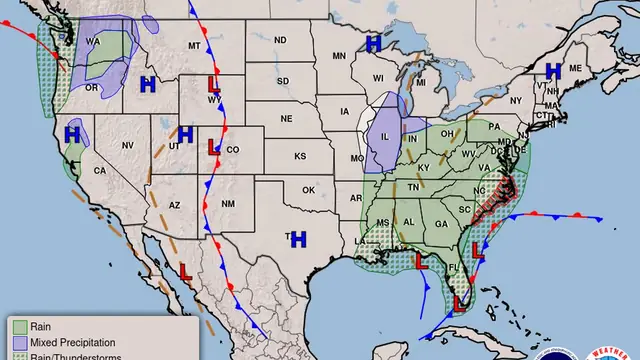
Weather may be a bigger obstacle than fuel costs on the East Coast, where a coastal storm is expected to bring flooding and strong winds on Thanksgiving.
Photo: U.S. Air Force/Airman Amanda Lovelace (public domain)
Adrián Villellas
Writer at ECOnewsAdrián Villellas is a computer engineer and entrepreneur in the fields of digital marketing and advertising technology. He has led projects in data analysis, sustainable advertising, and solutions for new audiences. He also contributes to scientific initiatives related to astronomy and space observation. He writes for science, technology, and environmental media outlets, where he makes complex topics and innovative advances accessible to a broad audience.
More from Adrián VillellasComments · 0
Rules ›No comments yet. Be the first to share your view.